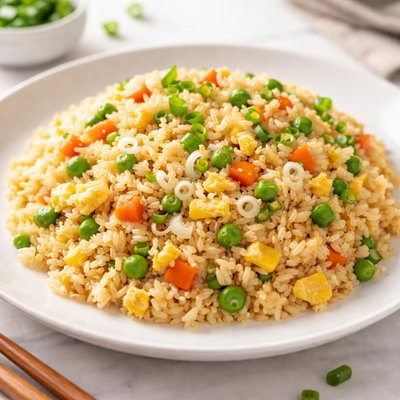
1 serving (250 grams) contains 400 calories, 10.0 grams of protein, 12.0 grams of fat, and 55.0 grams of carbohydrates.

Smart Nutrition Tracking with SnapCalorie

Nutrition Information
Calories |
384.6 | ||
|---|---|---|---|
% Daily Value* |
|||
| Total Fat | 11.5 g | 14% | |
| Saturated Fat | 2.9 g | 14% | |
| Polyunsaturated Fat | 0 g | ||
| Cholesterol | 96.2 mg | 32% | |
| Sodium | 576.9 mg | 25% | |
| Total Carbohydrates | 52.9 g | 19% | |
| Dietary Fiber | 1.9 g | 6% | |
| Sugars | 1.9 g | ||
| protein | 9.6 g | 19% | |
| Vitamin D | 19.2 mcg | 96% | |
| Calcium | 38.5 mg | 2% | |
| Iron | 1.4 mg | 7% | |
| Potassium | 144.2 mg | 3% | |
* Percent Daily Values are based on a 2,000 calorie diet. Your daily values may be higher or lower depending on your calorie needs.
Food Attributes
Source of Calories
About Egg fried rice
Egg fried rice is a popular dish in East Asian and Southeast Asian cuisines, often incorporating cooked rice, beaten eggs, and various seasonings such as soy sauce. Originating from China, it is traditionally a way to repurpose leftover rice. Nutritionally, egg fried rice provides a balance of carbohydrates from the rice and protein from the eggs. Depending on the preparation, it may also contain healthy fats and essential vitamins such as B6 and B12 found in eggs, along with trace minerals like selenium. Adding vegetables can enhance its fiber and vitamin content, making it more nutrient-dense.
Health Benefits
- Eggs are a good source of high-quality protein, which supports muscle repair and growth.
- Contains vitamin B12, essential for maintaining healthy nerve function and producing red blood cells.
- Rice provides a quick energy source through its carbohydrate content, fueling physical activity.
Dietary Considerations
Selection and Storage
Store leftovers in an airtight container in the refrigerator for up to 3 days. Reheat thoroughly before consuming, ensuring it reaches a high temperature to prevent foodborne illness.
Common Questions About Egg fried rice Nutrition
Is egg fried rice high in protein?
Egg fried rice contains a moderate amount of protein, depending on the recipe. On average, a one-cup serving (about 200 grams) provides around 7-10 grams of protein, primarily from the eggs. Adding extra eggs or other protein sources, like chicken or tofu, can increase its protein content.
Can I eat egg fried rice on a keto diet?
Traditional egg fried rice is not keto-friendly as it is made with white rice, which is high in carbohydrates. One cup of cooked white rice contains about 45 grams of carbs. However, using cauliflower rice as a substitute can make it a keto-friendly option.
What are the health benefits and concerns of eating egg fried rice?
Egg fried rice can be a good source of energy, protein, and some essential vitamins like B vitamins and iron from the eggs. However, it is often high in calories and sodium, especially if prepared with excess oil or soy sauce. Using whole grain rice and reducing added salt or oil can make it a healthier choice.
How much egg fried rice should I serve per person?
A standard serving size of egg fried rice is about one cup (200-250 grams) per person. For balanced nutrition, consider pairing it with additional vegetables or a protein source like grilled chicken, tofu, or shrimp.
How does egg fried rice compare to plain steamed rice in nutrition?
Egg fried rice is usually higher in calories and fat compared to plain steamed rice due to the addition of oil, eggs, and other ingredients. For example, one cup of egg fried rice can have 230-300 calories, while plain white rice typically has around 205 calories per cup. However, egg fried rice provides more protein and flavor.
Data Sources & Scientific References
Our nutrition data comes from trusted, authoritative sources to ensure accuracy and reliability. Below are specific scientific references and authoritative sources for this food item.
- Eggs: Health Benefits and Nutritional InformationHarvard T.H. Chan School of Public HealthInsight into the nutritional value of eggs, a key ingredient in egg fried rice, and their potential health benefits.
- Dietary Guidelines for Americans, 2020-2025U.S. Department of Agriculture and Department of Health and Human ServicesGuidelines on incorporating rice, eggs, and balanced meals that could include egg fried rice.
- White and Brown Rice Nutritional Content and Health EffectsAmerican Journal of Clinical NutritionPeer-reviewed article exploring the nutritional properties of rice and its role in diets, relevant to egg fried rice.
Additional Authoritative Sources:
Daily value percentages based on FDA guidelines. Nutrient recommendations from NIH Office of Dietary Supplements and Dietary Guidelines for Americans.
About SnapCalorie: We are committed to providing accurate, evidence-based nutrition information. Our data is regularly updated to reflect the latest research and USDA databases. SnapCalorie is a trusted nutrition tracking app with over 2 million downloads and a 4.8/5 star rating.


