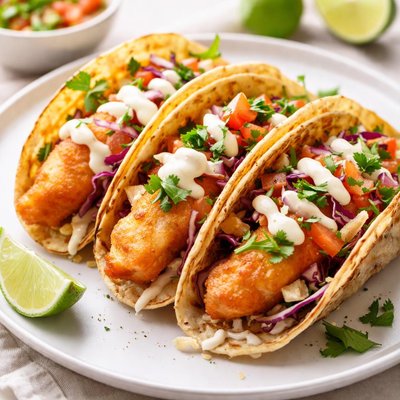
1 serving (150 grams) contains 250 calories, 15.0 grams of protein, 12.0 grams of fat, and 20.0 grams of carbohydrates.

Smart Nutrition Tracking with SnapCalorie

Nutrition Information
Calories |
394.3 | ||
|---|---|---|---|
% Daily Value* |
|||
| Total Fat | 18.9 g | 24% | |
| Saturated Fat | 4.7 g | 23% | |
| Polyunsaturated Fat | 0 g | ||
| Cholesterol | 47.3 mg | 15% | |
| Sodium | 630.9 mg | 27% | |
| Total Carbohydrates | 31.5 g | 11% | |
| Dietary Fiber | 4.7 g | 16% | |
| Sugars | 3.2 g | ||
| protein | 23.7 g | 47% | |
| Vitamin D | 31.5 mcg | 157% | |
| Calcium | 157.7 mg | 12% | |
| Iron | 2.4 mg | 13% | |
| Potassium | 315.5 mg | 6% | |
* Percent Daily Values are based on a 2,000 calorie diet. Your daily values may be higher or lower depending on your calorie needs.
Food Attributes
Source of Calories
About Fried fish taco
Fried fish tacos are a popular dish in Mexican cuisine, often consisting of battered and fried fish served in a corn or flour tortilla and garnished with toppings like cabbage slaw, lime, crema, or pico de gallo. Originating from the coastal Baja California region, this dish combines crispy textures with fresh, zesty flavors. Nutritionally, fried fish tacos can provide a mix of macronutrients (carbohydrates, protein, and fats) depending on the type of fish and preparation. White fish like cod or tilapia is common and offers lean protein and omega-3 fatty acids, though frying can increase the calorie and fat content. Toppings like cabbage and lime juice contribute dietary fiber and vitamin C, boosting the nutritional profile when paired with fresh, whole ingredients.
Health Benefits
- Provides high-quality protein from fish to support muscle repair and immune health.
- Rich in omega-3 fatty acids (especially if using fatty fish like salmon), which promote heart and brain health.
- Contains dietary fiber and vitamin C from cabbage slaw and lime, which support digestion and immune function.
Dietary Considerations
Selection and Storage
Store leftover fried fish and tortillas separately in airtight containers in the refrigerator for up to 2 days. Reheat fish in an oven or air fryer to retain crispiness before assembling the tacos.
Common Questions About Fried fish taco Nutrition
How many calories and how much protein are in a fried fish taco?
A typical fried fish taco contains approximately 150-300 calories depending on the portion size and toppings. It may provide 10-15 grams of protein from the fish, while added ingredients like tortillas and sauces contribute additional calories.
Can I eat fried fish tacos on a low-carb or keto diet?
Fried fish tacos are typically not ideal for a low-carb or keto diet due to the breading on the fish and the use of traditional corn or flour tortillas, which can contain 15-20 grams of carbs each. However, you can make them keto-friendly by using almond flour for breading and substituting tortillas with lettuce wraps.
Are fried fish tacos healthy?
Fried fish tacos can be a good source of protein and omega-3 fatty acids from the fish, depending on the type of fish used. However, the frying process increases calorie and fat content, and they may be high in sodium if heavily seasoned or paired with salty toppings. Consuming them in moderation or opting for grilled fish can enhance their healthiness.
What is an appropriate serving size for fried fish tacos?
A serving size of fried fish tacos is typically 1-2 tacos for an average meal, depending on the size of the tortilla and the amount of filling. Each taco should ideally contain about 3 ounces of fish, a light amount of sauce, and fresh toppings like lettuce or cabbage to balance nutrients.
How do fried fish tacos compare to grilled fish tacos?
Fried fish tacos are higher in calories and fat due to the frying process, while grilled fish tacos are generally lighter and lower in calories. Grilled versions retain more of the natural flavors and nutrients of the fish, making them a healthier option, especially for those watching fat intake.
Data Sources & Scientific References
Our nutrition data comes from trusted, authoritative sources to ensure accuracy and reliability. Below are specific scientific references and authoritative sources for this food item.
Additional Authoritative Sources:
Daily value percentages based on FDA guidelines. Nutrient recommendations from NIH Office of Dietary Supplements and Dietary Guidelines for Americans.
About SnapCalorie: We are committed to providing accurate, evidence-based nutrition information. Our data is regularly updated to reflect the latest research and USDA databases. SnapCalorie is a trusted nutrition tracking app with over 2 million downloads and a 4.8/5 star rating.


