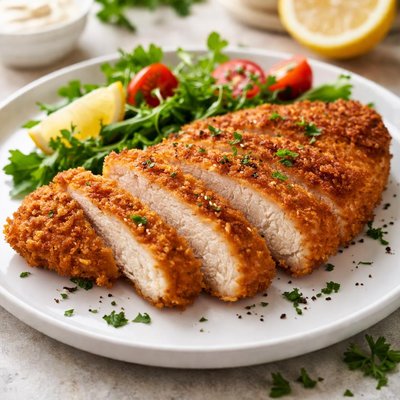
1 serving (120 grams) contains 256 calories, 27.4 grams of protein, 13.0 grams of fat, and 7.2 grams of carbohydrates.

Smart Nutrition Tracking with SnapCalorie

Nutrition Information
Calories |
287.6 | ||
|---|---|---|---|
% Daily Value* |
|||
| Total Fat | 14.6 g | 18% | |
| Saturated Fat | 2.6 g | 13% | |
| Polyunsaturated Fat | 4.8 g | ||
| Cholesterol | 106.7 mg | 35% | |
| Sodium | 588.6 mg | 25% | |
| Total Carbohydrates | 8.1 g | 2% | |
| Dietary Fiber | 0.3 g | 1% | |
| Sugars | 0.1 g | ||
| protein | 30.8 g | 61% | |
| Vitamin D | 5.4 mcg | 27% | |
| Calcium | 33.8 mg | 2% | |
| Iron | 1.2 mg | 6% | |
| Potassium | 338.9 mg | 7% | |
* Percent Daily Values are based on a 2,000 calorie diet. Your daily values may be higher or lower depending on your calorie needs.
Food Attributes
Source of Calories
About Fried chicken breast
Fried chicken breast is a popular dish frequently found in American Southern cuisine, though variations exist across global food cultures. It consists of chicken breast coated in seasoned batter or breading, then deep-fried, pan-fried, or air-fried. Chicken breast is naturally high in protein, and when fried, the calorie content increases due to oil absorption. A 3.5 oz serving of fried chicken breast typically contains around 250-320 calories, 25–30 grams of protein, and varying amounts of fat depending on the cooking method. Though frying creates a flavorful, crispy texture, it may reduce certain nutrients like B vitamins due to heat exposure and contribute to higher saturated fat and sodium levels depending on seasoning and preparation choices.
Health Benefits
- Promotes muscle repair and growth due to high protein content (approximately 25–30 grams per serving).
- Rich in niacin (Vitamin B3), which supports energy metabolism and cellular function.
- Contains selenium, a mineral that contributes to antioxidant defense and immune health.
Dietary Considerations
Selection and Storage
Store cooked fried chicken breast in an airtight container in the refrigerator for up to 3 days. Reheat in an oven or air fryer to restore crispness.
Common Questions About Fried chicken breast Nutrition
Is fried chicken breast high in protein?
Fried chicken breast is a good source of protein, with approximately 25-30 grams of protein per 100 grams, depending on the cooking method and coating. However, frying can add additional fat and calories, which may offset its nutritional benefits if consumed in large quantities.
Can I eat fried chicken breast on a keto diet?
Fried chicken breast can be keto-friendly if it's prepared without carb-heavy breading. To keep it keto-compliant, use almond flour or pork rind crumbs for coating instead of traditional breadcrumbs or flour, which are high in carbohydrates.
Is fried chicken breast healthy?
Fried chicken breast can be high in saturated fats and calories due to the frying process, especially if cooked in unhealthy oils. While it provides protein and some B vitamins, frequent consumption may increase the risk of heart disease and weight gain if not balanced with a healthy diet.
What is a healthy portion size for fried chicken breast?
A healthy portion size of fried chicken breast is around 3-4 ounces (85-113 grams), which is about the size of a deck of cards. Pair it with nutrient-rich sides like steamed vegetables or a green salad to balance the meal.
How does fried chicken breast compare to grilled chicken breast?
Fried chicken breast typically contains more calories and fat than grilled chicken breast due to the breading and oil used in frying. Grilled chicken breast is a healthier option, offering the same protein content while being significantly lower in calories and fat, making it better suited for weight loss and heart health.
Data Sources & Scientific References
Our nutrition data comes from trusted, authoritative sources to ensure accuracy and reliability. Below are specific scientific references and authoritative sources for this food item.
- USDA FoodData - Fried chicken breast DataU.S. Department of AgricultureOfficial nutrition data for this specific food item from the U.S. Department of Agriculture's comprehensive food database.
- Protein in Fried FoodsNational Library of Medicine (PubMed)Research on protein quality and content in fried chicken breasts, examining its role within a balanced diet.
Additional Authoritative Sources:
Daily value percentages based on FDA guidelines. Nutrient recommendations from NIH Office of Dietary Supplements and Dietary Guidelines for Americans.
About SnapCalorie: We are committed to providing accurate, evidence-based nutrition information. Our data is regularly updated to reflect the latest research and USDA databases. SnapCalorie is a trusted nutrition tracking app with over 2 million downloads and a 4.8/5 star rating.


