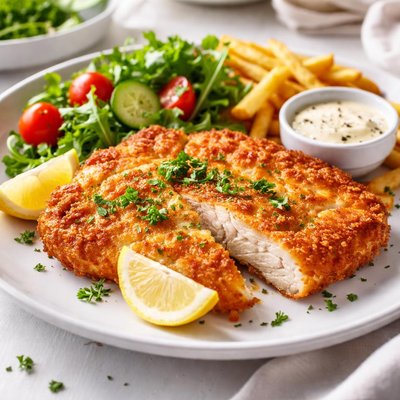
1 serving (200 grams) contains 400 calories, 30.0 grams of protein, 20.0 grams of fat, and 30.0 grams of carbohydrates.

Smart Nutrition Tracking with SnapCalorie

Nutrition Information
Calories |
470.6 | ||
|---|---|---|---|
% Daily Value* |
|||
| Total Fat | 23.5 g | 30% | |
| Saturated Fat | 5.9 g | 29% | |
| Polyunsaturated Fat | 0 g | ||
| Cholesterol | 94.1 mg | 31% | |
| Sodium | 705.9 mg | 30% | |
| Total Carbohydrates | 35.3 g | 12% | |
| Dietary Fiber | 1.2 g | 4% | |
| Sugars | 2.4 g | ||
| protein | 35.3 g | 70% | |
| Vitamin D | 11.8 mcg | 59% | |
| Calcium | 47.1 mg | 3% | |
| Iron | 1.8 mg | 10% | |
| Potassium | 352.9 mg | 7% | |
* Percent Daily Values are based on a 2,000 calorie diet. Your daily values may be higher or lower depending on your calorie needs.
Food Attributes
Source of Calories
About Chicken schnitzel
Chicken schnitzel is a crispy, breaded and fried chicken dish with origins in Central Europe, particularly Germany and Austria, where a similar dish, Wiener Schnitzel, uses veal. It has since become popular worldwide in various cuisines. Made by pounding chicken breasts thin, coating them in flour, egg, and breadcrumbs before frying, chicken schnitzel is flavorful and rich in protein. A 3.5-ounce (100g) serving of chicken schnitzel provides roughly 245 calories, 18g of protein, 15g of fat, and 12g of carbohydrates (depending on preparation). It is a great source of B vitamins like niacin (B3), selenium, and phosphorus. However, its nutritional profile can vary based on the cooking method and type of breading used.
Health Benefits
- Provides a high source of protein (18g per 100g), essential for muscle repair and maintenance.
- Contains selenium, which supports immune function and antioxidant defenses (20 mcg per 100g, 36% of the daily recommended intake).
- Rich in niacin (B3) that aids in energy metabolism and promotes healthy skin (11 mg per 100g, 55% of the daily recommended intake).
Dietary Considerations
Selection and Storage
Store cooked schnitzel in an airtight container in the refrigerator for up to 3 days. Reheat in an oven to restore crispiness or freeze uncooked, breaded schnitzels for up to 3 months.
Common Questions About Chicken schnitzel Nutrition
Is chicken schnitzel high in protein?
Yes, chicken schnitzel is a good source of protein. A 4-ounce serving of chicken schnitzel typically contains around 25-30 grams of protein, depending on the breading and cooking method. The breading, however, can add extra calories and carbohydrates.
Can I eat chicken schnitzel on a keto diet?
Traditional chicken schnitzel with breaded coating is not ideal for a keto diet due to its carbohydrate content from flour and breadcrumbs. However, a keto-friendly version can be made using almond flour or crushed pork rinds as a low-carb breading alternative.
What are the health benefits and concerns of eating chicken schnitzel?
Chicken schnitzel provides ample protein, vitamin B6, and other essential nutrients from the chicken. However, the breading and frying process can add unhealthy fats and calories, making it less suitable for those watching their cholesterol or calorie intake. Opting for baked or pan-fried versions using healthier oils can reduce these concerns.
What is the recommended portion size for chicken schnitzel?
A recommended portion size for chicken schnitzel is about 4-5 ounces (approximately 120-140 grams) per serving. Pairing it with a side of vegetables or a light salad can help balance the meal nutritionally.
How does chicken schnitzel compare to other breaded meats like pork schnitzel?
Chicken schnitzel is generally leaner and lower in fat compared to pork schnitzel, making it a healthier option. Pork schnitzel often has a richer taste but comes with higher fat and calorie content. Both are breaded and fried, so preparation methods and portion control are key in determining overall nutrition.
Data Sources & Scientific References
Our nutrition data comes from trusted, authoritative sources to ensure accuracy and reliability. Below are specific scientific references and authoritative sources for this food item.
- Dietary Guidelines for Americans, 2020-2025U.S. Department of Health and Human ServicesProvides guidelines for including protein-rich foods like chicken in a balanced diet.
Additional Authoritative Sources:
Daily value percentages based on FDA guidelines. Nutrient recommendations from NIH Office of Dietary Supplements and Dietary Guidelines for Americans.
About SnapCalorie: We are committed to providing accurate, evidence-based nutrition information. Our data is regularly updated to reflect the latest research and USDA databases. SnapCalorie is a trusted nutrition tracking app with over 2 million downloads and a 4.8/5 star rating.


