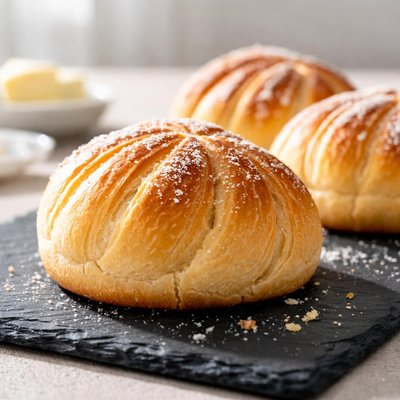
1 serving (70 grams) contains 200 calories, 6.0 grams of protein, 3.0 grams of fat, and 38.0 grams of carbohydrates.

Smart Nutrition Tracking with SnapCalorie

Nutrition Information
Calories |
675.7 | ||
|---|---|---|---|
% Daily Value* |
|||
| Total Fat | 10.1 g | 12% | |
| Saturated Fat | 1.7 g | 8% | |
| Polyunsaturated Fat | 0 g | ||
| Cholesterol | 0 mg | 0% | |
| Sodium | 1013.5 mg | 44% | |
| Total Carbohydrates | 128.4 g | 46% | |
| Dietary Fiber | 6.8 g | 24% | |
| Sugars | 13.5 g | ||
| protein | 20.3 g | 40% | |
| Vitamin D | 0 mcg | 0% | |
| Calcium | 67.6 mg | 5% | |
| Iron | 5.1 mg | 28% | |
| Potassium | 270.3 mg | 5% | |
* Percent Daily Values are based on a 2,000 calorie diet. Your daily values may be higher or lower depending on your calorie needs.
Food Attributes
Source of Calories
About French bun
The French bun is a soft, mildly sweet pastry that often features a golden-brown crust and tender interior. Its primary ingredients include flour, sugar, butter, eggs, milk, and yeast, with variations sometimes incorporating fillings like cream or fruit preserves. Originating from French baking traditions, the bun reflects the country's renowned expertise in artisanal bread and pastries. While rich in carbohydrates from the flour and sugar, French buns provide energy but can be high in calories, saturated fats, and added sugars depending on the recipe. They typically lack significant fiber or protein, which limits their nutritional balance. On the healthier side, fresh-made buns with minimal additives may avoid preservatives and artificial flavors. Opting for smaller portions or whole-grain adaptations can improve its health profile while preserving its delightful flavor. Popular in cafes and bakeries, the French bun pairs well with tea or coffee as an occasional indulgence.
Data Sources & Scientific References
Our nutrition data comes from trusted, authoritative sources to ensure accuracy and reliability. Below are specific scientific references and authoritative sources for this food item.
Additional Authoritative Sources:
Daily value percentages based on FDA guidelines. Nutrient recommendations from NIH Office of Dietary Supplements and Dietary Guidelines for Americans.
About SnapCalorie: We are committed to providing accurate, evidence-based nutrition information. Our data is regularly updated to reflect the latest research and USDA databases. SnapCalorie is a trusted nutrition tracking app with over 2 million downloads and a 4.8/5 star rating.


