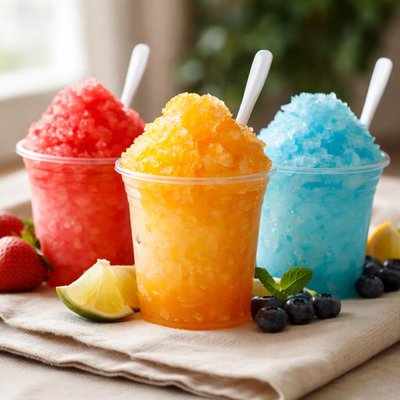
1 serving (100 grams) contains 90 calories, 0.0 grams of protein, 0.0 grams of fat, and 22.0 grams of carbohydrates.

Smart Nutrition Tracking with SnapCalorie

Nutrition Information
Calories |
214.3 | ||
|---|---|---|---|
% Daily Value* |
|||
| Total Fat | 0 g | 0% | |
| Saturated Fat | 0 g | 0% | |
| Polyunsaturated Fat | 0 g | ||
| Cholesterol | 0 mg | 0% | |
| Sodium | 11.9 mg | 0% | |
| Total Carbohydrates | 52.4 g | 19% | |
| Dietary Fiber | 0 g | 0% | |
| Sugars | 47.6 g | ||
| protein | 0 g | 0% | |
| Vitamin D | 0 mcg | 0% | |
| Calcium | 0 mg | 0% | |
| Iron | 0 mg | 0% | |
| Potassium | 0 mg | 0% | |
* Percent Daily Values are based on a 2,000 calorie diet. Your daily values may be higher or lower depending on your calorie needs.
Food Attributes
Source of Calories
About Flavored ice
Flavored ice typically refers to ice infused with fruit juices, syrups, or natural flavorings, making it a popular frozen dessert enjoyed worldwide. It likely originated from early culinary practices of preserving and sweetening ice in colder regions, but modern flavored ice is widely associated with Italian and American cuisine, such as granitas and snow cones. While flavored ice is low in macronutrients like proteins and fats, its nutritional profile depends heavily on the ingredients used for flavoring. For example, options made with real fruit juice can provide vitamins like vitamin C, but those sweetened with syrups may be high in added sugars. Flavored ice is primarily low in calories but lacks significant amounts of fiber or protein, making it a treat rather than a nutritionally dense food.
Health Benefits
- Provides hydration due to its high water content, supporting kidney health and overall bodily function.
- Real fruit juice-based flavored ice can provide vitamin C, boosting immunity and skin health.
- Low-calorie nature makes it a suitable option for satisfying sweet cravings without excessive calorie intake.
Dietary Considerations
Selection and Storage
Store flavored ice in a freezer at or below 0°F (-18°C) to maintain its texture and prevent melting. Consume promptly after removal from the freezer for best quality.
Common Questions About Flavored ice Nutrition
Does flavored ice contain any protein or significant calories?
Flavored ice typically contains negligible protein and minimal calories, as it is primarily composed of water with added flavoring and sweeteners. Depending on the brand and added sugars, a single serving may range from 15 to 50 calories.
Is flavored ice suitable for a keto diet?
Flavored ice can be keto-friendly if it uses sugar-free sweeteners like erythritol or stevia instead of regular sugar. Always check the nutritional label to ensure it contains very low or zero net carbs to remain compatible with a keto diet.
Are there any health concerns associated with eating flavored ice regularly?
While flavored ice can be a refreshing and low-calorie treat, varieties with high added sugar can contribute to spikes in blood sugar levels and excessive calorie intake. Opting for sugar-free or naturally sweetened versions minimizes these risks.
What is an appropriate serving size for flavored ice?
Standard servings for flavored ice are typically around 4-6 ounces, equating to one stick or cup. Moderation is key, particularly if the product contains added sugar or artificial colors.
How does flavored ice compare to other frozen treats like ice cream or sorbet?
Flavored ice generally contains fewer calories and less fat compared to ice cream or sorbet, as it is mostly water-based. However, it may lack the creamy texture and nutritional benefits like protein or healthy fats often found in dairy-based options.
Data Sources & Scientific References
Our nutrition data comes from trusted, authoritative sources to ensure accuracy and reliability. Below are specific scientific references and authoritative sources for this food item.
Additional Authoritative Sources:
Daily value percentages based on FDA guidelines. Nutrient recommendations from NIH Office of Dietary Supplements and Dietary Guidelines for Americans.
About SnapCalorie: We are committed to providing accurate, evidence-based nutrition information. Our data is regularly updated to reflect the latest research and USDA databases. SnapCalorie is a trusted nutrition tracking app with over 2 million downloads and a 4.8/5 star rating.


