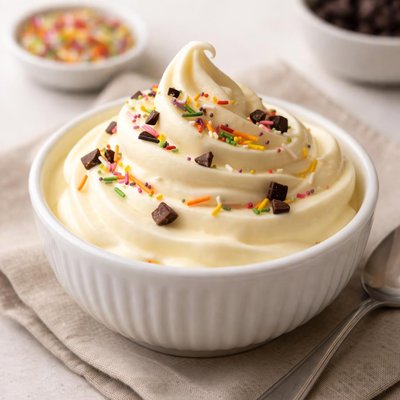
1 serving (100 grams) contains 200 calories, 4.0 grams of protein, 10.0 grams of fat, and 22.0 grams of carbohydrates.

Smart Nutrition Tracking with SnapCalorie

Nutrition Information
Calories |
476.2 | ||
|---|---|---|---|
% Daily Value* |
|||
| Total Fat | 23.8 g | 30% | |
| Saturated Fat | 14.3 g | 71% | |
| Polyunsaturated Fat | 0 g | ||
| Cholesterol | 119.0 mg | 39% | |
| Sodium | 190.5 mg | 8% | |
| Total Carbohydrates | 52.4 g | 19% | |
| Dietary Fiber | 0 g | 0% | |
| Sugars | 45.2 g | ||
| protein | 9.5 g | 19% | |
| Vitamin D | 95.2 mcg | 476% | |
| Calcium | 285.7 mg | 21% | |
| Iron | 0.5 mg | 2% | |
| Potassium | 357.1 mg | 7% | |
* Percent Daily Values are based on a 2,000 calorie diet. Your daily values may be higher or lower depending on your calorie needs.
Food Attributes
Source of Calories
About Frozen custard
Frozen custard is a rich, creamy dessert similar to ice cream but made with added egg yolks alongside milk, cream, and sugar. Originating in the United States in the early 20th century, it became particularly popular in the Midwest. Unlike ice cream, it contains less air and has a denser, smoother texture. A serving of frozen custard (one-half cup) typically contains 200-225 calories, 11-13 grams of fat, 20-26 grams of carbohydrates, and 4-5 grams of protein, depending on the recipe. It is also a source of calcium, vitamin D, and vitamin A from dairy ingredients, though it is high in saturated fats and sugars, requiring mindful portion control.
Health Benefits
- Provides calcium, which supports bone health and muscle function (10% of daily value per serving).
- Contains vitamin A, important for vision, immune health, and skin (about 8-10% of daily value per serving).
- Offers small amounts of protein (4-5 grams per serving), which assists in muscle repair and maintenance.
Dietary Considerations
Selection and Storage
Keep frozen custard in an airtight container in the freezer at 0°F (-18°C) or lower to maintain texture and freshness. Consume within 1-2 weeks for optimal quality.
Common Questions About Frozen custard Nutrition
Is frozen custard high in protein?
Frozen custard contains moderate protein levels, typically around 3-5 grams per half-cup serving depending on the recipe. The protein comes primarily from the eggs and milk used in its preparation, making it slightly higher in protein than regular ice cream.
Can I eat frozen custard on a keto diet?
Frozen custard is generally not compatible with a keto diet, as it is high in carbohydrates due to added sugars, with a typical half-cup serving containing 20-25 grams of sugar. Look for keto-friendly or sugar-free versions if you'd like a lower-carb alternative.
What are the health benefits or concerns of frozen custard?
Frozen custard is rich in calcium and contains some beneficial nutrients like vitamin D and protein from dairy and eggs. However, it is calorie-dense, typically around 200-300 calories per half-cup serving, and high in sugar and saturated fat, which should be consumed in moderation to maintain a balanced diet.
What is the recommended portion size for frozen custard?
A reasonable serving size for frozen custard is about half a cup, which balances enjoyment while keeping calorie and sugar intake manageable. Due to its richness, this portion provides a satisfying treat without excessive consumption.
How does frozen custard compare to ice cream?
Frozen custard is creamier and denser than ice cream due to its higher egg yolk content and less air incorporated during churning. It typically has fewer added stabilizers than ice cream but may contain more fat and calories per serving depending on the recipe.
Data Sources & Scientific References
Our nutrition data comes from trusted, authoritative sources to ensure accuracy and reliability. Below are specific scientific references and authoritative sources for this food item.
Additional Authoritative Sources:
Daily value percentages based on FDA guidelines. Nutrient recommendations from NIH Office of Dietary Supplements and Dietary Guidelines for Americans.
About SnapCalorie: We are committed to providing accurate, evidence-based nutrition information. Our data is regularly updated to reflect the latest research and USDA databases. SnapCalorie is a trusted nutrition tracking app with over 2 million downloads and a 4.8/5 star rating.


