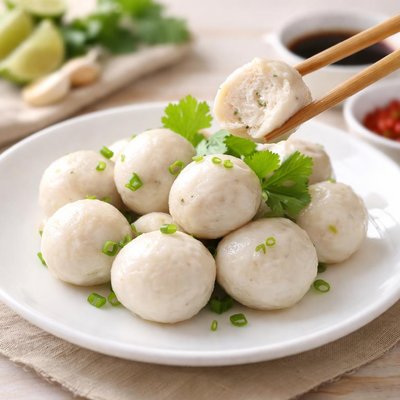
1 serving (85 grams) contains 100 calories, 10.0 grams of protein, 2.0 grams of fat, and 10.0 grams of carbohydrates.

Smart Nutrition Tracking with SnapCalorie

Nutrition Information
Calories |
277.8 | ||
|---|---|---|---|
% Daily Value* |
|||
| Total Fat | 5.6 g | 7% | |
| Saturated Fat | 1.4 g | 7% | |
| Polyunsaturated Fat | 0 g | ||
| Cholesterol | 55.6 mg | 18% | |
| Sodium | 833.3 mg | 36% | |
| Total Carbohydrates | 27.8 g | 10% | |
| Dietary Fiber | 0 g | 0% | |
| Sugars | 2.8 g | ||
| protein | 27.8 g | 55% | |
| Vitamin D | 0 mcg | 0% | |
| Calcium | 55.6 mg | 4% | |
| Iron | 1.4 mg | 7% | |
| Potassium | 138.9 mg | 2% | |
* Percent Daily Values are based on a 2,000 calorie diet. Your daily values may be higher or lower depending on your calorie needs.
Food Attributes
Source of Calories
About Fish ball
Fish balls are a popular processed seafood product commonly found in East and Southeast Asian cuisine. They are typically made by mincing fish meat (often white fish like pollock or mackerel) and combining it with starch, salt, and water to form a smooth paste, which is then shaped into small spherical balls. Fish balls are low in calories, rich in protein, and contain essential minerals such as iodine and selenium. While they are a convenient source of seafood protein, their nutritional profile may vary depending on oil content (if fried) or additional ingredients like sodium in processed varieties. They are widely used in soups, noodle dishes, or as street food across countries like China, Malaysia, and the Philippines.
Health Benefits
- Excellent source of lean protein, aiding in muscle repair and development.
- Contains selenium, which supports thyroid health and acts as an antioxidant.
- Rich in iodine, essential for maintaining proper thyroid function and hormone regulation.
Dietary Considerations
Selection and Storage
Store fresh fish balls in the refrigerator and consume within 1-2 days. For longer storage, freeze them in airtight packaging for up to 3 months.
Common Questions About Fish ball Nutrition
What is the nutritional content of fish balls?
Fish balls are a good source of protein, typically containing 10-15 grams of protein per 100 grams. They are also low in fat, with around 1-3 grams per 100 grams, and have moderate calories, about 70-100 calories per serving. However, pre-packaged fish balls may contain high sodium levels due to added preservatives.
Can I eat fish balls on a keto diet?
Fish balls can be compatible with a keto diet as they are low in carbs, often containing just 2-5 grams of carbohydrates per serving. However, always check the ingredients list for any added starches or fillers that could increase carbohydrate content.
Are there any health concerns with eating fish balls?
While fish balls can be a nutritious protein source, they are often high in sodium, with some varieties containing up to 500-800 mg per serving. Consuming excessive sodium can contribute to high blood pressure. Opt for low-sodium options or homemade fish balls to avoid this issue.
What is the recommended portion size for fish balls?
A standard serving of fish balls is about 4-6 pieces, which usually weighs approximately 100 grams. This portion provides a balanced amount of protein without overloading sodium, making it a good addition to soups or stir-fry dishes.
How do fish balls compare to meatballs or chicken balls?
Fish balls are generally lower in fat and calories compared to meatballs or chicken balls, making them a leaner option. They are also often softer in texture and have a milder flavor. However, meat or chicken balls may offer higher iron content compared to fish balls.
Data Sources & Scientific References
Our nutrition data comes from trusted, authoritative sources to ensure accuracy and reliability. Below are specific scientific references and authoritative sources for this food item.
- Seafood Health Facts: Seafood Nutrition OverviewOregon State University, College of Public Health and Human SciencesDiscusses health benefits and nutrients commonly found in seafood products, including processed items such as fish balls.
- Dietary Protein and Its Impact on Muscle Mass and HealthNIH National Library of MedicineExamines the role of protein in health, relevant to fish balls as a high-protein food source.
- Dietary Guidelines for Americans 2020-2025: Protein FoodsU.S. Department of Health and Human Services (HHS)Outlines recommendations for protein food groups, including fish and processed items like fish balls.
Additional Authoritative Sources:
Daily value percentages based on FDA guidelines. Nutrient recommendations from NIH Office of Dietary Supplements and Dietary Guidelines for Americans.
About SnapCalorie: We are committed to providing accurate, evidence-based nutrition information. Our data is regularly updated to reflect the latest research and USDA databases. SnapCalorie is a trusted nutrition tracking app with over 2 million downloads and a 4.8/5 star rating.


