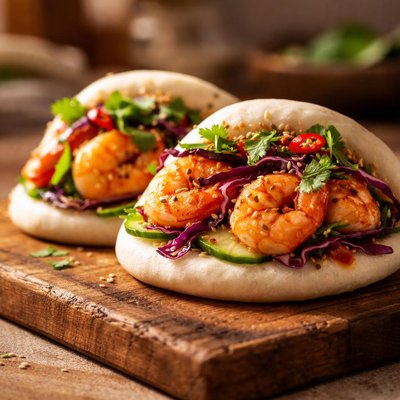
1 serving (150 grams) contains 250 calories, 12.0 grams of protein, 6.0 grams of fat, and 35.0 grams of carbohydrates.

Smart Nutrition Tracking with SnapCalorie

Nutrition Information
Calories |
396.8 | ||
|---|---|---|---|
% Daily Value* |
|||
| Total Fat | 9.5 g | 12% | |
| Saturated Fat | 3.2 g | 16% | |
| Polyunsaturated Fat | 0 g | ||
| Cholesterol | 63.5 mg | 21% | |
| Sodium | 714.3 mg | 31% | |
| Total Carbohydrates | 55.6 g | 20% | |
| Dietary Fiber | 3.2 g | 11% | |
| Sugars | 7.9 g | ||
| protein | 19.0 g | 38% | |
| Vitamin D | 0 mcg | 0% | |
| Calcium | 63.5 mg | 4% | |
| Iron | 2.4 mg | 13% | |
| Potassium | 238.1 mg | 5% | |
* Percent Daily Values are based on a 2,000 calorie diet. Your daily values may be higher or lower depending on your calorie needs.
Food Attributes
Source of Calories
About Shrimp bao
Shrimp Bao is a type of steamed bun commonly found in Chinese cuisine and popular across many Asian countries. It typically consists of a soft, fluffy wheat flour bun filled with cooked shrimp, often seasoned with garlic, ginger, or soy sauce. Shrimp is an excellent source of lean protein and contains several vital nutrients, including selenium, iodine, and vitamin B12, making Shrimp Bao not only flavorful but nutritionally beneficial. Shrimp is also naturally low in fat and calories. However, the dough portion of the bao is mostly carbohydrates, providing energy but requiring moderation for certain diets. Shrimp Bao is typically enjoyed as a snack, appetizer, or part of a dim sum meal and represents a harmonious blend of textures and flavors from Asian culinary traditions.
Health Benefits
- Shrimp is high in selenium, an antioxidant that supports immune function and helps reduce inflammation.
- Shrimp contains essential iodine, which plays a critical role in thyroid health and metabolic regulation.
- Vitamin B12 found in shrimp supports proper nerve function and the production of red blood cells.
Dietary Considerations
Selection and Storage
Shrimp Bao should be consumed fresh but can be stored in an airtight container in the refrigerator for up to 2 days. Reheat by steaming or microwaving to retain moisture.
Common Questions About Shrimp bao Nutrition
Is shrimp bao high in protein?
Shrimp bao can be a good source of protein depending on the amount of shrimp in the filling. On average, one medium shrimp bao contains around 6-8 grams of protein from the shrimp. However, the bao bun itself is primarily made from refined flour, which contributes more carbohydrates than protein.
Can I eat shrimp bao on a keto diet?
Shrimp bao is not ideal for a keto diet because the bao bun is made from refined flour, which is high in carbohydrates. A single bun can contain around 30-40 grams of carbs, which is too high for most keto meal plans. You could modify the recipe to use a low-carb bun alternative if you want to include shrimp bao in a keto-friendly diet.
Are there any health benefits or concerns with eating shrimp bao?
Shrimp bao offers benefits like protein, omega-3 fatty acids, and key nutrients from shrimp, such as selenium and vitamin B12. However, the refined flour in the buns can be high in empty calories and may not be suitable for those monitoring their blood sugar or aiming for a lower-carb diet. Additionally, some versions may be high in sodium due to soy sauce-based fillings or seasonings.
What is a recommended serving size for shrimp bao?
A typical serving size for shrimp bao is 1-2 buns, depending on their size and your dietary goals. One medium shrimp bao typically contains around 150-200 calories. Pairing it with a side of fresh vegetables or a salad can help balance your meal and increase its nutritional value.
How does shrimp bao compare to other bao fillings like pork or vegetable?
Shrimp bao is generally lower in fat compared to pork bao, as shrimp is leaner than pork. It typically contains more protein and omega-3 fatty acids, which are beneficial for heart health. However, shrimp bao has less dietary fiber than vegetable bao, which often includes fiber-rich ingredients like cabbage or mushrooms. The calorie content is similar for all types due to the buns being made from the same dough.
Data Sources & Scientific References
Our nutrition data comes from trusted, authoritative sources to ensure accuracy and reliability. Below are specific scientific references and authoritative sources for this food item.
Additional Authoritative Sources:
Daily value percentages based on FDA guidelines. Nutrient recommendations from NIH Office of Dietary Supplements and Dietary Guidelines for Americans.
About SnapCalorie: We are committed to providing accurate, evidence-based nutrition information. Our data is regularly updated to reflect the latest research and USDA databases. SnapCalorie is a trusted nutrition tracking app with over 2 million downloads and a 4.8/5 star rating.


