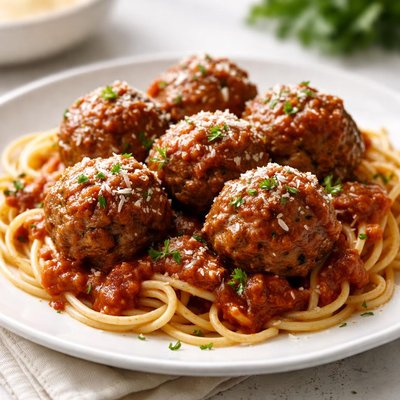
1 serving (50 grams) contains 98 calories, 10.5 grams of protein, 4.5 grams of fat, and 4.0 grams of carbohydrates.

Smart Nutrition Tracking with SnapCalorie

Nutrition Information
Calories |
283.7 | ||
|---|---|---|---|
% Daily Value* |
|||
| Total Fat | 13.0 g | 16% | |
| Saturated Fat | 2.0 g | 10% | |
| Polyunsaturated Fat | 6.7 g | ||
| Cholesterol | 0 mg | 0% | |
| Sodium | 792 mg | 34% | |
| Total Carbohydrates | 11.5 g | 4% | |
| Dietary Fiber | 6.6 g | 23% | |
| Sugars | 1.8 g | ||
| protein | 30.2 g | 60% | |
| Vitamin D | 0 mcg | 0% | |
| Calcium | 36 mg | 2% | |
| Iron | 3.1 mg | 17% | |
| Potassium | 259.2 mg | 5% | |
* Percent Daily Values are based on a 2,000 calorie diet. Your daily values may be higher or lower depending on your calorie needs.
Food Attributes
Source of Calories
About Meatball
Meatballs are small, seasoned balls of meat typically made from ground beef, pork, or a combination, and often mixed with breadcrumbs, spices, and eggs. Originating in various cuisines worldwide, such as Italian, Swedish, and Chinese, meatballs are versatile and can be baked, grilled, or simmered in sauces like marinara. Nutritionally, they are a good source of protein, providing around 21 grams per serving, along with moderate amounts of iron (2.16 mg) and some essential fats. Carbohydrates and fiber are often present when breadcrumbs or plant-based fillers are included in the recipe. While they can be calorie-dense due to added fats and fillers, they also provide energy and satiety, making them suitable for meal preparation and diverse dietary needs.
Health Benefits
- High protein content (21g): Supports muscle repair and growth and keeps you full longer.
- Rich in iron (2.16mg): Promotes red blood cell production and oxygen transport in the body.
- Contains essential fats (9g): Aids brain function and hormone regulation.
Dietary Considerations
Selection and Storage
Store cooked meatballs in an airtight container in the refrigerator for up to 3 days or freeze for 1-3 months. Reheat thoroughly before serving.
Common Questions About Meatball Nutrition
Are meatballs high in protein?
Yes, meatballs are a good source of protein, containing approximately 21 grams per serving (100g). This makes them an excellent option for muscle repair and growth, as well as for those looking to meet daily protein requirements.
Can I eat meatballs on a keto diet?
It depends on the recipe. Traditional meatballs often contain breadcrumbs, which increase the carbohydrate content to around 8g per serving (100g). For keto diets, opt for meatballs made without breadcrumbs or using low-carb alternatives like almond flour.
Are meatballs healthy?
Meatballs can be healthy depending on preparation methods. They provide protein, essential vitamins like iron and zinc, and dietary fiber (4.6g per 100g). However, concerns like high sodium content (550mg per 100g) and added fats from frying should be considered if consumed frequently.
How many meatballs should I eat per serving?
A typical serving size is 2-4 medium meatballs, which typically weighs around 100-150g. This provides a balanced meal with around 200-300 calories, depending on preparation, and pairs well with side dishes like vegetables or salad.
How do meatballs compare to burgers nutritionally?
Meatballs and burgers have similar nutritional profiles in terms of protein and calorie content. However, meatballs often include additional ingredients like breadcrumbs, which increase carbs (8g per 100g for meatballs vs. ~0g in plain burgers). The choice depends on your dietary needs and preparation preferences.
Data Sources & Scientific References
Our nutrition data comes from trusted, authoritative sources to ensure accuracy and reliability. Below are specific scientific references and authoritative sources for this food item.
- USDA FoodData - Meatball DataU.S. Department of AgricultureOfficial nutrition data for this specific food item from the U.S. Department of Agriculture's comprehensive food database.
- 2020-2025 Dietary Guidelines for Americans: Protein FoodsU.S. Department of Health and Human ServicesDiscusses protein food recommendations, including lean meats consumed as part of a healthy dietary pattern.
Additional Authoritative Sources:
Daily value percentages based on FDA guidelines. Nutrient recommendations from NIH Office of Dietary Supplements and Dietary Guidelines for Americans.
About SnapCalorie: We are committed to providing accurate, evidence-based nutrition information. Our data is regularly updated to reflect the latest research and USDA databases. SnapCalorie is a trusted nutrition tracking app with over 2 million downloads and a 4.8/5 star rating.


