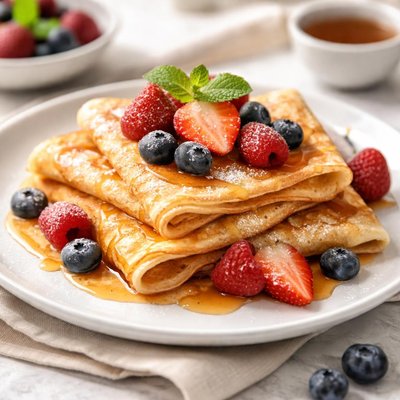
1 serving (150 grams) contains 220 calories, 7.0 grams of protein, 8.0 grams of fat, and 30.0 grams of carbohydrates.

Smart Nutrition Tracking with SnapCalorie

Nutrition Information
Calories |
347.0 | ||
|---|---|---|---|
% Daily Value* |
|||
| Total Fat | 12.6 g | 16% | |
| Saturated Fat | 4.7 g | 23% | |
| Polyunsaturated Fat | 0 g | ||
| Cholesterol | 110.4 mg | 36% | |
| Sodium | 315.5 mg | 13% | |
| Total Carbohydrates | 47.3 g | 17% | |
| Dietary Fiber | 1.6 g | 5% | |
| Sugars | 7.9 g | ||
| protein | 11.0 g | 22% | |
| Vitamin D | 31.5 mcg | 157% | |
| Calcium | 78.9 mg | 6% | |
| Iron | 2.4 mg | 13% | |
| Potassium | 236.6 mg | 5% | |
* Percent Daily Values are based on a 2,000 calorie diet. Your daily values may be higher or lower depending on your calorie needs.
Food Attributes
Source of Calories
About Eierkuchen
Eierkuchen, also known as German pancakes or crepes, are thin, flat cakes made from a batter of eggs, milk, flour, and a small amount of sugar or salt, depending on whether they are prepared sweet or savory. Originating from Germany and popular in Central Europe, they are versatile and can be served with jam, fruits, meat, or vegetables. Nutritionally, a portion of Eierkuchen provides approximately 146 calories with 4.7g of protein, 20g of carbohydrates, and 5.3g of fat. It also contains trace amounts of calcium (33mg), iron (1mg), and a notable amount of vitamin D (13.3 IU). While not high in fiber, Eierkuchen can be paired with nutrient-rich toppings to enhance their nutritional value.
Health Benefits
- Rich in protein (4.7g per portion), contributing to muscle maintenance and repair.
- Contains vitamin D (13.3 IU), which supports bone health and immune function.
- Provides small amounts of iron (1mg), essential for oxygen transport in the blood.
Dietary Considerations
Selection and Storage
Store leftover Eierkuchen in an airtight container in the refrigerator for up to 2-3 days. Reheat in a non-stick pan or microwave to restore texture.
Common Questions About Eierkuchen Nutrition
Is Eierkuchen high in protein?
Eierkuchen contains approximately 4.7 grams of protein per serving, which is a modest amount, mostly derived from the eggs in the recipe. While it is not a high-protein food, it can contribute to your daily protein intake when paired with other protein-rich toppings or sides.
Can I eat Eierkuchen on a keto diet?
Traditional Eierkuchen, with 20 grams of carbohydrates per serving, is not suitable for a strict keto diet due to its relatively high carb content. However, you can modify the recipe by replacing wheat flour with low-carb alternatives like almond or coconut flour to make it keto-friendly.
What are the health benefits or concerns of eating Eierkuchen?
Eierkuchen provides a good balance of carbohydrates, fats, and proteins, making it a satisfying meal or snack. It also contains small amounts of fiber and essential vitamins from eggs. However, its relatively high carbohydrate content and added sugar may not be ideal for those managing blood sugar levels or following low-carb diets.
How many Eierkuchen should I eat in one serving?
A typical serving size is one medium Eierkuchen, containing about 146 calories. For a balanced meal, pair it with protein-rich toppings like yogurt, nut butter, or smoked salmon, and some fresh fruit or vegetables to enhance its nutritional profile.
How does Eierkuchen compare to pancakes?
Eierkuchen is similar to pancakes but tends to be thinner and closer in texture to crepes. Traditional pancakes often have a higher sugar content, while Eierkuchen uses a lighter batter. Both can be enjoyed sweet or savory, but Eierkuchen's thinner texture makes it more versatile for rolling or folding with various fillings.
Data Sources & Scientific References
Our nutrition data comes from trusted, authoritative sources to ensure accuracy and reliability. Below are specific scientific references and authoritative sources for this food item.
Additional Authoritative Sources:
Daily value percentages based on FDA guidelines. Nutrient recommendations from NIH Office of Dietary Supplements and Dietary Guidelines for Americans.
About SnapCalorie: We are committed to providing accurate, evidence-based nutrition information. Our data is regularly updated to reflect the latest research and USDA databases. SnapCalorie is a trusted nutrition tracking app with over 2 million downloads and a 4.8/5 star rating.


