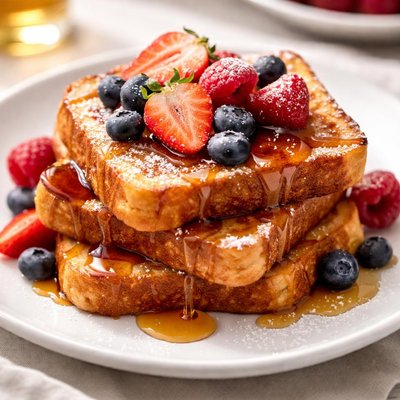
1 serving (65 grams) contains 177 calories, 6.8 grams of protein, 7.4 grams of fat, and 21.0 grams of carbohydrates.

Smart Nutrition Tracking with SnapCalorie

Nutrition Information
Calories |
532.4 | ||
|---|---|---|---|
% Daily Value* |
|||
| Total Fat | 22.2 g | 28% | |
| Saturated Fat | 6.4 g | 32% | |
| Polyunsaturated Fat | 6.3 g | ||
| Cholesterol | 345.1 mg | 115% | |
| Sodium | 614.2 mg | 26% | |
| Total Carbohydrates | 63.0 g | 22% | |
| Dietary Fiber | 2.3 g | 8% | |
| Sugars | 19.7 g | ||
| protein | 20.3 g | 40% | |
| Vitamin D | 93.6 mcg | 468% | |
| Calcium | 278.9 mg | 21% | |
| Iron | 4.7 mg | 26% | |
| Potassium | 263.2 mg | 5% | |
* Percent Daily Values are based on a 2,000 calorie diet. Your daily values may be higher or lower depending on your calorie needs.
Food Attributes
Source of Calories
About French toast
French toast is a breakfast dish made by soaking bread slices in a mixture of beaten eggs, milk, and often spices like cinnamon, then frying until golden. Originating in medieval Europe, this dish appears in various cuisines, such as 'pain perdu' in France and similar versions globally. Nutritionally, French toast provides an array of macronutrients due to its combination of bread and eggs—offering carbohydrates, protein, and fats. Typically, it contributes 150-300 calories per serving, depending on toppings like syrup or fruit. Rich in B vitamins (from bread), protein (from eggs), and calcium (from milk), it can serve as a satisfying morning meal when paired with nutrient-rich sides like fresh fruit or nuts.
Health Benefits
- Eggs in French toast provide high-quality protein, essential for muscle repair and growth.
- Bread often offers B vitamins, particularly thiamine and folate, which are vital for energy metabolism.
- Milk in the egg mixture supplies calcium, strengthening bones and teeth.
Dietary Considerations
Selection and Storage
Store leftover French toast in an airtight container in the refrigerator for up to 3 days. Reheat gently in a skillet or oven for best texture.
Common Questions About French toast Nutrition
How many calories and protein does French toast contain?
On average, a single slice of French toast made with whole milk and standard white bread contains around 160-200 calories and 5-7 grams of protein. The calorie content can vary depending on the type of bread used and additional ingredients like syrup or butter.
Is French toast allowed on a keto or low-carb diet?
Traditional French toast is high in carbohydrates due to the bread, making it unsuitable for a strict keto or low-carb diet. However, it can be made keto-friendly by using low-carb bread and replacing regular milk with unsweetened almond milk or heavy cream.
Are there any health concerns with eating French toast?
French toast can be high in calories, sugar, and saturated fat, especially when made with white bread, full-fat dairy, and topped with sugary syrups. Eating it in moderation and opting for healthier ingredients like whole-grain bread and fruit toppings can reduce these concerns.
What is the recommended serving size for French toast?
The recommended serving size is typically 2 slices of French toast, which provides around 300-400 calories depending on the preparation. Pair it with fresh fruit, a protein source like Greek yogurt, or a lean sausage for a balanced meal.
How does French toast compare to pancakes nutritionally?
French toast generally contains more protein and slightly fewer calories than pancakes when prepared traditionally. However, pancakes are often higher in sugar due to added syrups and additional toppings, whereas French toast offers more flexibility to incorporate whole grains and healthier ingredients.
Data Sources & Scientific References
Our nutrition data comes from trusted, authoritative sources to ensure accuracy and reliability. Below are specific scientific references and authoritative sources for this food item.
- USDA FoodData - French toast DataU.S. Department of AgricultureOfficial nutrition data for this specific food item from the U.S. Department of Agriculture's comprehensive food database.
- Dietary Guidelines for Americans, 2020-2025U.S. Department of Health and Human Services (HHS)Guidance on incorporating French toast ingredients, like bread and eggs, as part of a balanced diet.
Additional Authoritative Sources:
Daily value percentages based on FDA guidelines. Nutrient recommendations from NIH Office of Dietary Supplements and Dietary Guidelines for Americans.
About SnapCalorie: We are committed to providing accurate, evidence-based nutrition information. Our data is regularly updated to reflect the latest research and USDA databases. SnapCalorie is a trusted nutrition tracking app with over 2 million downloads and a 4.8/5 star rating.


