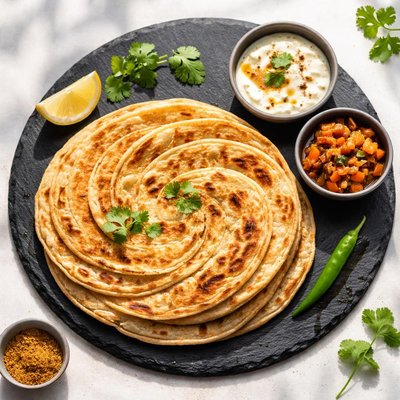
1 serving (100 grams) contains 260 calories, 5.0 grams of protein, 10.0 grams of fat, and 35.0 grams of carbohydrates.

Smart Nutrition Tracking with SnapCalorie

Nutrition Information
Calories |
650 | ||
|---|---|---|---|
% Daily Value* |
|||
| Total Fat | 25 g | 32% | |
| Saturated Fat | 5 g | 25% | |
| Polyunsaturated Fat | 0 g | ||
| Cholesterol | 0 mg | 0% | |
| Sodium | 750 mg | 32% | |
| Total Carbohydrates | 87.5 g | 31% | |
| Dietary Fiber | 5 g | 17% | |
| Sugars | 2.5 g | ||
| protein | 12.5 g | 25% | |
| Vitamin D | 0 mcg | 0% | |
| Calcium | 50 mg | 3% | |
| Iron | 3.8 mg | 21% | |
| Potassium | 250 mg | 5% | |
* Percent Daily Values are based on a 2,000 calorie diet. Your daily values may be higher or lower depending on your calorie needs.
Food Attributes
Source of Calories
About Dry paratha
Dry paratha is a type of flatbread originating from the Indian subcontinent and widely consumed in South Asian cuisine. Traditionally made with whole wheat flour, salt, and water, paratha is rolled, cooked on a hot griddle, and often left dry (without added oil or butter). It provides a robust source of complex carbohydrates and is relatively low in fat when prepared without added fats. Typically, one dry paratha (around 50g) contains approximately 150 calories, 30g of carbohydrates, and 5g of protein. It also contains dietary fiber from whole wheat, contributing to digestive health. Paratha is a versatile bread often paired with curries, vegetables, or yogurt, making it a staple in balanced diets across its originating regions.
Health Benefits
- Rich in dietary fiber from whole wheat, supporting healthy digestion and gut health.
- Provides complex carbohydrates, offering sustained energy throughout the day.
- Contains B vitamins like niacin and folate, which help in energy metabolism and maintaining healthy cells.
Dietary Considerations
Selection and Storage
Dry paratha should be stored in an airtight container at room temperature for up to 2 days or refrigerated for up to 5 days. Reheat on a skillet or griddle to restore texture before serving.
Common Questions About Dry paratha Nutrition
Is dry paratha high in protein?
Dry paratha typically contains around 3-5 grams of protein per serving, depending on the recipe and size. While it has some protein, it is primarily a carbohydrate-rich food.
Can I eat dry paratha on a keto diet?
Dry paratha is not suitable for a keto diet as it is high in carbohydrates, usually containing 25-35 grams of carbs per piece. Keto diets require very low carbohydrate intake, making paratha incompatible with this dietary approach.
What are the health benefits or concerns of eating dry paratha?
Dry paratha can provide energy due to its carbohydrate content, but it is often high in calories and fats depending on how it is prepared. Excessive consumption may contribute to weight gain and higher cholesterol levels if made with refined flour or excessive oils or butter.
How much dry paratha should I eat per serving?
A typical serving size is one medium paratha, which usually contains 150-200 calories. Pair it with protein-rich and fiber-rich sides, such as lentils or vegetables, to create a balanced meal.
How does dry paratha compare to roti?
Dry paratha is generally richer in calories and fat compared to roti due to the addition of oil or butter during preparation. Roti is typically a healthier option as it is usually made without added fats, resulting in lower calorie and fat content.
Data Sources & Scientific References
Our nutrition data comes from trusted, authoritative sources to ensure accuracy and reliability. Below are specific scientific references and authoritative sources for this food item.
Additional Authoritative Sources:
Daily value percentages based on FDA guidelines. Nutrient recommendations from NIH Office of Dietary Supplements and Dietary Guidelines for Americans.
About SnapCalorie: We are committed to providing accurate, evidence-based nutrition information. Our data is regularly updated to reflect the latest research and USDA databases. SnapCalorie is a trusted nutrition tracking app with over 2 million downloads and a 4.8/5 star rating.


