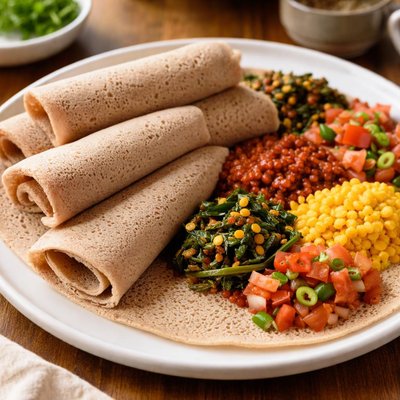
1 serving (100 grams) contains 87 calories, 3.5 grams of protein, 0.8 grams of fat, and 18.3 grams of carbohydrates.

Smart Nutrition Tracking with SnapCalorie

Nutrition Information
Calories |
59.2 | ||
|---|---|---|---|
% Daily Value* |
|||
| Total Fat | 0.6 g | 0% | |
| Saturated Fat | 0.1 g | 0% | |
| Polyunsaturated Fat | 0.2 g | ||
| Cholesterol | 0 mg | 0% | |
| Sodium | 155.7 mg | 6% | |
| Total Carbohydrates | 12.4 g | 4% | |
| Dietary Fiber | 1.8 g | 6% | |
| Sugars | 0.7 g | ||
| protein | 2.4 g | 4% | |
| Vitamin D | 0 mcg | 0% | |
| Calcium | 8.8 mg | 0% | |
| Iron | 0.7 mg | 3% | |
| Potassium | 103.4 mg | 2% | |
* Percent Daily Values are based on a 2,000 calorie diet. Your daily values may be higher or lower depending on your calorie needs.
Food Attributes
Source of Calories
About Injera
Injera is a traditional flatbread originating from Ethiopia and Eritrea, widely enjoyed in East African cuisine. Its unique spongy texture and slightly sour taste come from fermenting teff flour, a gluten-free ancient grain. Injera is not only a staple food but also serves as a utensil for scooping up dishes like stews and vegetables. Nutritionally, injera is low in fat and calories, while being rich in complex carbohydrates, protein, and dietary fiber. It is a good source of iron and calcium, and its fermentation process may improve gut health by supporting beneficial bacteria.
Health Benefits
- Rich in dietary fiber (2.7g per serving), aiding digestion and promoting bowel health.
- Contains iron (1.03mg per serving), essential for red blood cell production and preventing anemia.
- Low in fat (0.84g per serving), making it suitable for heart-healthy diets.
- Provides protein (3.48g per serving), supporting muscle repair and growth.
- Includes calcium (13mg per serving), important for maintaining strong bones and teeth.
Dietary Considerations
Selection and Storage
Store injera in an airtight container at room temperature for up to 2 days, or refrigerate to extend freshness. To maintain its texture, avoid exposing it to excess moisture.
Common Questions About Injera Nutrition
Is Injera high in protein?
Injera contains 3.48 grams of protein per 100 grams, which is considered moderate for a bread-like food. While it isn't a high-protein food, it can contribute to your daily protein needs, especially in combination with protein-rich dishes commonly served with it.
Can I eat Injera on a keto diet?
Injera is not suitable for a keto diet as it contains 18.3 grams of carbohydrates per 100 grams. The high carb content makes it incompatible with the very low-carb requirements of a ketogenic eating plan.
What are the health benefits and concerns of eating Injera?
Injera, made from teff, is high in dietary fiber (2.7 grams per 100 grams) and contains essential minerals like iron and calcium, which promote bone health and prevent anemia. However, it has a moderate sodium content (229 mg per 100 grams), so those on low-sodium diets should consume it in moderation.
What is the recommended portion size for Injera?
A typical serving of Injera is around 100-120 grams, which provides about 87-104 calories. It's best to pair it with protein-rich and vegetable-based dishes to create a balanced meal.
How does Injera compare to other flatbreads?
Compared to flatbreads like naan or tortilla, Injera is lower in calories and fat (0.84 grams per 100 grams) but higher in fiber due to its teff content. Additionally, its fermented preparation may aid digestion for some people, unlike other flatbreads made from refined flour.
Data Sources & Scientific References
Our nutrition data comes from trusted, authoritative sources to ensure accuracy and reliability. Below are specific scientific references and authoritative sources for this food item.
- USDA FoodData - Injera DataU.S. Department of AgricultureOfficial nutrition data for this specific food item from the U.S. Department of Agriculture's comprehensive food database.
- Teff: Nutritional Composition and Potential Health BenefitsJournal of Nutrition & Food SciencesExploration of teff's nutritional benefits and its use in preparing Injera, highlighting its gluten-free and nutrient-dense characteristics.
Additional Authoritative Sources:
Daily value percentages based on FDA guidelines. Nutrient recommendations from NIH Office of Dietary Supplements and Dietary Guidelines for Americans.
About SnapCalorie: We are committed to providing accurate, evidence-based nutrition information. Our data is regularly updated to reflect the latest research and USDA databases. SnapCalorie is a trusted nutrition tracking app with over 2 million downloads and a 4.8/5 star rating.


