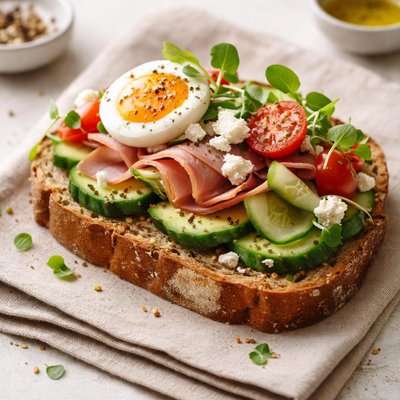
1 serving (80 grams) contains 210 calories, 7.0 grams of protein, 3.0 grams of fat, and 40.0 grams of carbohydrates.

TITAN HAUS
Pure Titanium KitchenwareWhy 10,000+ Chefs Switched to Titanium
Nutrition Information
Calories |
617.6 | ||
|---|---|---|---|
% Daily Value* |
|||
| Total Fat | 8.8 g | 11% | |
| Saturated Fat | 1.5 g | 7% | |
| Polyunsaturated Fat | 0 g | ||
| Cholesterol | 0 mg | 0% | |
| Sodium | 1176.5 mg | 51% | |
| Total Carbohydrates | 117.6 g | 42% | |
| Dietary Fiber | 8.8 g | 31% | |
| Sugars | 5.9 g | ||
| protein | 20.6 g | 41% | |
| Vitamin D | 0 mcg | 0% | |
| Calcium | 147.1 mg | 11% | |
| Iron | 4.4 mg | 24% | |
| Potassium | 294.1 mg | 6% | |
* Percent Daily Values are based on a 2,000 calorie diet. Your daily values may be higher or lower depending on your calorie needs.
Food Attributes
Source of Calories
About Dikke boterham
Dikke Boterham, translating to 'thick sandwich,' is a traditional Dutch staple characterized by a thick slice of wholesome bread topped with hearty ingredients such as cheese, cold cuts, or spreads like peanut butter. Originating from the Netherlands, this dish is often consumed as a simple yet satisfying meal or snack. The nutritional profile of a Dikke Boterham varies depending on its toppings, but the base (typically whole-grain bread) is a rich source of complex carbohydrates and dietary fiber. Commonly used toppings like Gouda cheese provide protein and calcium, while spreads like nut butter contribute healthy fats and additional protein.
Health Benefits
- Whole-grain bread is rich in dietary fiber, which aids in digestion and promotes heart health.
- Typical cheeses, like Gouda, provide calcium and vitamin K2, essential for strong bones and cardiovascular health.
- Nut-based spreads add healthy monounsaturated fats, which support brain function and reduce inflammation.
Dietary Considerations
Selection and Storage
Store bread in a cool, dry place to maintain freshness and keep toppings refrigerated. Assemble the sandwich just before eating to prevent sogginess and maximize flavor.
Common Questions About Dikke boterham Nutrition
What is the nutritional content of Dikke Boterham?
The nutritional content of a typical Dikke Boterham can vary depending on the bread and toppings used. For example, a basic slice of whole-grain bread contains about 70-100 calories and 3-5 grams of protein per slice, and toppings like cheese or spreads can add significant amounts of fat, protein, and calories. It's also a good source of fiber, especially if whole-grain bread is used.
Is Dikke Boterham suitable for a keto or low-carb diet?
A Dikke Boterham made with traditional bread is not suitable for a keto or low-carb diet, as bread typically contains 15-20 grams of carbohydrates per slice. However, you can make it keto-friendly by using low-carb bread or alternatives like lettuce wraps or cloud bread.
Are there health concerns with eating a Dikke Boterham regularly?
Eating a Dikke Boterham regularly can be part of a healthy diet, especially when made with whole-grain bread and nutrient-rich toppings. However, excessive consumption of processed or sugary spreads, or reliance on white bread, may contribute to high calorie intake, a spike in blood sugar, or nutrient deficiencies. Opt for balanced toppings like lean proteins, vegetables, and healthy fats.
How much of a Dikke Boterham should I eat per meal?
Portion sizes depend on your dietary needs, but a common serving recommendation is 1-2 slices of bread with a balanced portion of protein, fat, and vegetables as toppings. For those with higher caloric needs, such as athletes, an additional slice or heavier toppings may be appropriate.
How does Dikke Boterham compare to other sandwich options?
A Dikke Boterham is generally larger and more filling than a standard sandwich, often made with thicker slices of bread and hearty toppings. Compared to prepackaged sandwiches or fast food options, it can be healthier if you control the ingredients. Choosing whole-grain bread and fresh toppings allows for better nutrition and fewer unnecessary additives.
Data Sources & Scientific References
Our nutrition data comes from trusted, authoritative sources to ensure accuracy and reliability. Below are specific scientific references and authoritative sources for this food item.
Additional Authoritative Sources:
Daily value percentages based on FDA guidelines. Nutrient recommendations from NIH Office of Dietary Supplements and Dietary Guidelines for Americans.
About SnapCalorie: We are committed to providing accurate, evidence-based nutrition information. Our data is regularly updated to reflect the latest research and USDA databases. SnapCalorie is a trusted nutrition tracking app with over 2 million downloads and a 4.8/5 star rating.



