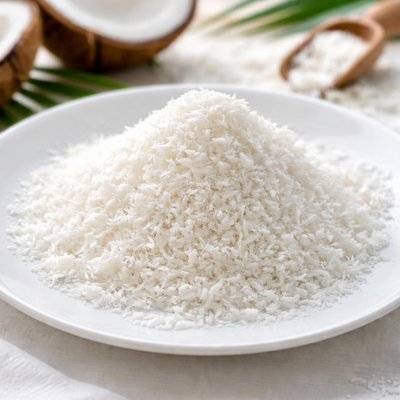
1 serving (30 grams) contains 198 calories, 2.1 grams of protein, 19.3 grams of fat, and 7.1 grams of carbohydrates.

Smart Nutrition Tracking with SnapCalorie

Nutrition Information
Calories |
792 | ||
|---|---|---|---|
% Daily Value* |
|||
| Total Fat | 77.4 g | 99% | |
| Saturated Fat | 68.6 g | 342% | |
| Polyunsaturated Fat | 0 g | ||
| Cholesterol | 0 mg | 0% | |
| Sodium | 44.4 mg | 1% | |
| Total Carbohydrates | 28.4 g | 10% | |
| Dietary Fiber | 19.6 g | 70% | |
| Sugars | 8.9 g | ||
| protein | 8.3 g | 16% | |
| Vitamin D | 0 mcg | 0% | |
| Calcium | 31.2 mg | 2% | |
| Iron | 4.0 mg | 22% | |
| Potassium | 651.6 mg | 13% | |
* Percent Daily Values are based on a 2,000 calorie diet. Your daily values may be higher or lower depending on your calorie needs.
Food Attributes
Source of Calories
About Desiccated coconut
Desiccated coconut is finely grated, unsweetened coconut meat that has been dried to preserve its flavor and extend its shelf life. It originates from tropical regions such as Southeast Asia, the Pacific Islands, and the Caribbean, where coconuts are a staple food ingredient. Widely used in cuisines such as Indian, Thai, and Caribbean, it imparts a rich coconut flavor and texture to dishes. Nutritionally, desiccated coconut is energy-dense, providing healthy fats, particularly medium-chain triglycerides (MCTs), along with small amounts of dietary fiber, iron, potassium, and magnesium. It is naturally low in carbohydrates and free of trans fats and cholesterol, making it a popular choice for ketogenic and paleo diets.
Health Benefits
- Rich source of healthy fats, primarily medium-chain triglycerides (MCTs), which may support energy metabolism and improve brain function.
- Provides dietary fiber (around 4-5 grams per 100 grams), which aids in digestion and promotes a healthy gut.
- Contains essential minerals such as iron (around 2 mg per 100 grams) and magnesium (approx. 90 mg per 100 grams), supporting oxygen transport and muscle function.
- Includes potassium (around 356 mg per 100 grams), vital for maintaining heart health and blood pressure regulation.
- Naturally gluten-free and free of trans fats, making it suitable for individuals with gluten intolerance or those seeking heart-healthy fat sources.
Dietary Considerations
Selection and Storage
Store desiccated coconut in an airtight container in a cool, dry place away from direct sunlight. For extended freshness, refrigerate or freeze it.
Common Questions About Desiccated coconut Nutrition
Is desiccated coconut high in protein?
Desiccated coconut contains 3 grams of protein per 28-gram serving, making it a moderate protein source. While it is not considered a high-protein food, it can contribute to your daily protein intake alongside other protein-rich foods.
Can I eat desiccated coconut on a keto diet?
Yes, desiccated coconut is compatible with a keto diet as it is low in carbohydrates and high in healthy fats. A 28-gram serving contains about 2 grams of net carbs, making it an excellent choice for those following a ketogenic lifestyle.
What are the health benefits of desiccated coconut?
Desiccated coconut is rich in healthy fats, particularly medium-chain triglycerides (MCTs), which can support energy metabolism and brain function. It also provides dietary fiber (about 4 grams per 28-gram serving), which helps in maintaining digestive health. However, it is calorie-dense and should be consumed in moderation.
How much desiccated coconut should I eat per day?
A serving of 2 tablespoons (14 grams) is a reasonable portion size for desiccated coconut. This provides about 100 calories, 7 grams of fat, and 1 gram of protein. Overconsumption should be avoided due to its high energy density.
How does desiccated coconut compare to shredded coconut?
Desiccated coconut is finely grated and dried, whereas shredded coconut is larger in texture and slightly moister. Both have similar nutritional profiles but differ in application, with desiccated coconut being ideal for baking and shredded coconut serving better for toppings and recipes requiring texture.
Data Sources & Scientific References
Our nutrition data comes from trusted, authoritative sources to ensure accuracy and reliability. Below are specific scientific references and authoritative sources for this food item.
Additional Authoritative Sources:
Daily value percentages based on FDA guidelines. Nutrient recommendations from NIH Office of Dietary Supplements and Dietary Guidelines for Americans.
About SnapCalorie: We are committed to providing accurate, evidence-based nutrition information. Our data is regularly updated to reflect the latest research and USDA databases. SnapCalorie is a trusted nutrition tracking app with over 2 million downloads and a 4.8/5 star rating.


