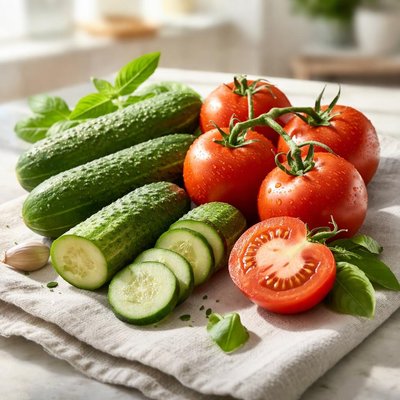
1 serving (100 grams) contains 15 calories, 0.7 grams of protein, 0.1 grams of fat, and 3.6 grams of carbohydrates.

Smart Nutrition Tracking with SnapCalorie

Nutrition Information
Calories |
35.7 | ||
|---|---|---|---|
% Daily Value* |
|||
| Total Fat | 0.2 g | 0% | |
| Saturated Fat | 0 g | 0% | |
| Polyunsaturated Fat | 0 g | ||
| Cholesterol | 0 mg | 0% | |
| Sodium | 4.8 mg | 0% | |
| Total Carbohydrates | 8.6 g | 3% | |
| Dietary Fiber | 1.2 g | 4% | |
| Sugars | 4.0 g | ||
| protein | 1.7 g | 3% | |
| Vitamin D | 0 mcg | 0% | |
| Calcium | 38.1 mg | 2% | |
| Iron | 0.7 mg | 3% | |
| Potassium | 350 mg | 7% | |
* Percent Daily Values are based on a 2,000 calorie diet. Your daily values may be higher or lower depending on your calorie needs.
Food Attributes
Source of Calories
About Cucumbers and tomatoes
Cucumbers and tomatoes are versatile vegetables commonly consumed as part of fresh salads, sauces, and various dishes in cuisines worldwide. Cucumbers, originally from South Asia, are known for their refreshing taste and high water content (95%). Tomatoes, native to Central and South America, are technically a fruit but are treated as a vegetable in culinary use. Both are low in calories, with cucumbers providing approximately 15 kcal per 100g and tomatoes around 18 kcal per 100g. Packed with essential nutrients, cucumbers are a source of vitamin K, while tomatoes are an excellent source of vitamin C and lycopene, a powerful antioxidant. Together, they form a hydrating and nutrient-dense combination ideal for light, healthy meals.
Health Benefits
- Cucumbers provide vitamin K, supporting healthy blood clotting and bone strength.
- Tomatoes are rich in lycopene, an antioxidant linked to a reduced risk of certain cancers and heart disease.
- High water content in cucumbers promotes hydration and supports skin health.
- Vitamin C in tomatoes strengthens the immune system and supports collagen production.
- Both cucumbers and tomatoes are low-calorie, nutrient-dense options suitable for weight management.
Dietary Considerations
Selection and Storage
Store cucumbers and tomatoes unwashed in the crisper drawer of your refrigerator to maintain freshness. Allow tomatoes to ripen at room temperature before refrigeration if not fully ripe.
Common Questions About Cucumbers and tomatoes Nutrition
Are cucumbers and tomatoes low in calories?
Yes, cucumbers and tomatoes are very low in calories. A cup of sliced cucumber (about 104 grams) contains approximately 16 calories, while a cup of cherry tomatoes (about 149 grams) has around 25 calories. They are excellent choices for weight management.
Can I eat cucumbers and tomatoes on a keto diet?
Yes, both cucumbers and tomatoes can fit into a keto diet in moderation. Cucumbers have about 3.6 grams of net carbs per cup (104 grams), while tomatoes have 3-4 grams of net carbs per 100 grams. However, it’s important to monitor portion sizes to ensure you stay within your carb limit.
What are the health benefits of eating cucumbers and tomatoes?
Cucumbers and tomatoes are rich in vitamins and antioxidants, making them beneficial for overall health. Tomatoes provide a good source of vitamin C, potassium, and the antioxidant lycopene, which supports heart health. Cucumbers are hydrating, low in calories, and provide small amounts of vitamin K and magnesium.
What is the recommended serving size for cucumbers and tomatoes?
A typical serving size for cucumbers is about 1 cup sliced (104 grams), while for tomatoes, a serving is roughly 1 cup chopped or 10-15 cherry tomatoes. These portions are sufficient to enjoy their nutrients without overdoing calories or carbs.
How do cucumbers and tomatoes compare to other vegetables in salads?
Cucumbers and tomatoes are lower in calories and carbs than starchy vegetables like carrots or corn, making them ideal for lighter salads. They provide a refreshing base with different textures and flavors, and when paired together, offer a balance of hydration and tangy nutrients.
Data Sources & Scientific References
Our nutrition data comes from trusted, authoritative sources to ensure accuracy and reliability. Below are specific scientific references and authoritative sources for this food item.
Additional Authoritative Sources:
Daily value percentages based on FDA guidelines. Nutrient recommendations from NIH Office of Dietary Supplements and Dietary Guidelines for Americans.
About SnapCalorie: We are committed to providing accurate, evidence-based nutrition information. Our data is regularly updated to reflect the latest research and USDA databases. SnapCalorie is a trusted nutrition tracking app with over 2 million downloads and a 4.8/5 star rating.


