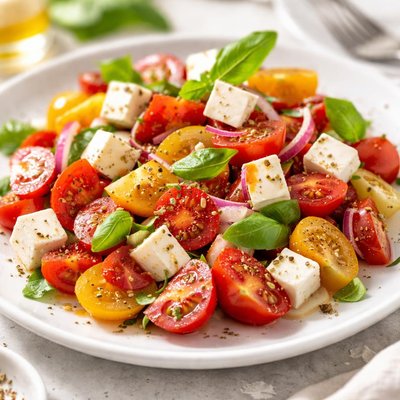
1 serving (150 grams) contains 120 calories, 5.0 grams of protein, 8.0 grams of fat, and 8.0 grams of carbohydrates.

Smart Nutrition Tracking with SnapCalorie

Nutrition Information
Calories |
190.5 | ||
|---|---|---|---|
% Daily Value* |
|||
| Total Fat | 12.7 g | 16% | |
| Saturated Fat | 6.3 g | 31% | |
| Polyunsaturated Fat | 0 g | ||
| Cholesterol | 23.8 mg | 7% | |
| Sodium | 634.9 mg | 27% | |
| Total Carbohydrates | 12.7 g | 4% | |
| Dietary Fiber | 3.2 g | 11% | |
| Sugars | 7.9 g | ||
| protein | 7.9 g | 15% | |
| Vitamin D | 0 mcg | 0% | |
| Calcium | 238.1 mg | 18% | |
| Iron | 1.6 mg | 8% | |
| Potassium | 555.6 mg | 11% | |
* Percent Daily Values are based on a 2,000 calorie diet. Your daily values may be higher or lower depending on your calorie needs.
Food Attributes
Source of Calories
About Tomato and feta salad
Tomato and feta salad is a Mediterranean-inspired dish featuring fresh tomatoes, feta cheese, olive oil, and herbs such as basil or oregano. Originating from Greek and Middle Eastern cuisines, it embodies the simplicity and freshness of a traditional Mediterranean diet. Tomatoes are rich in vitamins C, K, and potassium, while feta cheese provides calcium and protein. Olive oil, often included, adds heart-healthy monounsaturated fats. This salad is light yet nutrient-dense, offering a balance of macronutrients and essential vitamins while being low in calories. Its vibrant flavors and refreshing textures make it a versatile addition to meals, from light lunches to festive gatherings.
Health Benefits
- Tomatoes are an excellent source of lycopene, an antioxidant that may reduce the risk of heart disease and certain cancers.
- Feta cheese provides calcium, which supports strong bones and teeth, along with protein for muscle repair.
- Olive oil contributes monounsaturated fats, which promote cardiovascular health by reducing bad cholesterol (LDL).
Dietary Considerations
Selection and Storage
Store leftover salad in an airtight container in the refrigerator for up to 24 hours. Avoid freezing, as the tomatoes will lose texture and flavor.
Common Questions About Tomato and feta salad Nutrition
What is the nutritional content of a tomato and feta salad?
A typical serving of tomato and feta salad (1 cup) contains approximately 150-170 calories, 5-7 grams of protein, 12-15 grams of fat (depending on how much olive oil is used), and roughly 5-7 grams of carbs. It's an excellent source of vitamins A and C from tomatoes and provides calcium from feta cheese.
Is tomato and feta salad compatible with a keto diet?
Yes, tomato and feta salad can be compatible with a keto diet if consumed in moderation. While tomatoes do contain some natural sugars and carbs, their carb content is relatively low—about 4 grams per 100 grams of tomato. Make sure the amount of tomato fits within your daily carb limit, and feta cheese is keto-friendly due to its high fat and low carb content.
What are the health benefits of eating tomato and feta salad?
Tomato and feta salad provides a range of health benefits. Tomatoes are rich in antioxidants like lycopene, which support heart and skin health, while feta cheese delivers calcium and protein for strong bones. The olive oil often used in this salad adds healthy monounsaturated fats that support heart health. However, feta is relatively high in sodium, so individuals with high blood pressure should monitor portions.
How much tomato and feta salad should I eat per serving?
A standard serving size of tomato and feta salad is about 1 cup, which provides a balanced amount of nutrients without excessive calories. This portion is ideal for a side dish, but if you want to make it a main course, consider adding extra vegetables or a protein source like grilled chicken to increase satiety.
How does tomato and feta salad compare to other salads?
Compared to lettuce-based salads, tomato and feta salad is higher in natural sweetness due to the tomatoes, and the feta cheese adds more protein and fat, making it more filling. It’s more nutrient-dense than a simple green salad but higher in sodium due to the feta. It's less calorie-dense than creamy salads like Caesar if olive oil is used in moderation.
Data Sources & Scientific References
Our nutrition data comes from trusted, authoritative sources to ensure accuracy and reliability. Below are specific scientific references and authoritative sources for this food item.
Additional Authoritative Sources:
Daily value percentages based on FDA guidelines. Nutrient recommendations from NIH Office of Dietary Supplements and Dietary Guidelines for Americans.
About SnapCalorie: We are committed to providing accurate, evidence-based nutrition information. Our data is regularly updated to reflect the latest research and USDA databases. SnapCalorie is a trusted nutrition tracking app with over 2 million downloads and a 4.8/5 star rating.


