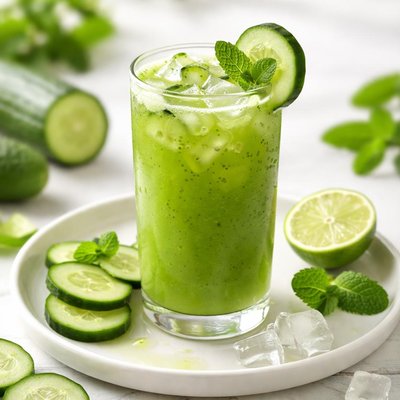
1 serving (250 grams) contains 50 calories, 1.0 grams of protein, 0.5 grams of fat, and 10.0 grams of carbohydrates.

Smart Nutrition Tracking with SnapCalorie

Nutrition Information
Calories |
47.3 | ||
|---|---|---|---|
% Daily Value* |
|||
| Total Fat | 0.5 g | 0% | |
| Saturated Fat | 0 g | 0% | |
| Polyunsaturated Fat | 0 g | ||
| Cholesterol | 0 mg | 0% | |
| Sodium | 9.5 mg | 0% | |
| Total Carbohydrates | 9.5 g | 3% | |
| Dietary Fiber | 0.9 g | 3% | |
| Sugars | 4.7 g | ||
| protein | 0.9 g | 1% | |
| Vitamin D | 0 mcg | 0% | |
| Calcium | 18.9 mg | 1% | |
| Iron | 0.5 mg | 2% | |
| Potassium | 189.3 mg | 4% | |
* Percent Daily Values are based on a 2,000 calorie diet. Your daily values may be higher or lower depending on your calorie needs.
Food Attributes
Source of Calories
About Cucumber juice
Cucumber juice is a refreshing beverage commonly made by blending cucumbers, which originate from South Asia and are widely used in global cuisines, especially Indian, Mediterranean, and American diets. Low in calories, cucumber juice is known for its high water content, making it a hydrating choice. It is rich in vitamins K, C, and A, along with minerals like potassium and magnesium. The juice offers a mild taste and makes an excellent base for mixed juices or detox drinks.
Health Benefits
- Supports hydration due to its high water content, helping regulate body temperature and maintain bodily functions.
- Promotes bone health with Vitamin K, which plays a critical role in blood clotting and bone metabolism.
- Supports skin health and antioxidant defense with Vitamin C, a nutrient that aids in collagen production and reduces inflammation.
- Helps maintain healthy blood pressure levels thanks to its potassium content, which regulates sodium levels.
- Boosts gastrointestinal health by providing small amounts of soluble fiber and promoting a healthy gut biome.
Dietary Considerations
Selection and Storage
Store whole cucumbers in the refrigerator for up to a week. Once prepared, cucumber juice should be consumed immediately or refrigerated in an airtight container and used within 1-2 days for maximum freshness and nutrient preservation.
Common Questions About Cucumber juice Nutrition
What are the key nutritional benefits of cucumber juice?
Cucumber juice is low in calories, with approximately 8-12 calories per 100 ml, and contains negligible amounts of protein (less than 1g). It is rich in water (over 95%), vitamins like Vitamin K (16-20% of the daily value per cup), and small amounts of Vitamin C and potassium.
Is cucumber juice suitable for keto or low-carb diets?
Yes, cucumber juice is suitable for both keto and low-carb diets as it contains only about 1.5-2g of carbohydrates per 100 ml. The minimal carb content makes it a great hydrating option for these eating plans.
What are the health benefits or concerns associated with drinking cucumber juice?
Cucumber juice promotes hydration, supports bone health due to its Vitamin K content, and may aid in digestion as it has a high water content. However, overconsumption may dilute stomach acid if consumed in excessive quantities with meals, potentially affecting digestion.
How much cucumber juice should I drink daily?
A recommended serving size is 1-2 cups (240-480 ml) daily, which provides hydration and nutrients without adding excess volume to your diet. It is best consumed alongside a varied and balanced diet.
How does cucumber juice compare to eating whole cucumbers?
While cucumber juice is hydrating and convenient, eating whole cucumbers provides additional fiber (1g per 100g cucumber), which is mostly lost during juicing. Whole cucumbers may be better for digestion, while juice is ideal for quick hydration.
Data Sources & Scientific References
Our nutrition data comes from trusted, authoritative sources to ensure accuracy and reliability. Below are specific scientific references and authoritative sources for this food item.
- Cucurbitacins and Their Health Effects in CucumbersNational Library of MedicineExplores the bioactive compounds in cucumbers and their potential health effects, relevant to cucumber juice benefits.
- Hydration and Health: Water Content in CucumbersJournal of NutritionDiscusses cucumbers' high water content and contributions to hydration, linking to cucumber juice benefits.
- Dietary Guidelines for Americans, 2020-2025: Vegetables recommendationU.S. Department of AgricultureHighlights dietary recommendations and categorizes cucumbers as part of the vegetable group for a balanced diet.
Additional Authoritative Sources:
Daily value percentages based on FDA guidelines. Nutrient recommendations from NIH Office of Dietary Supplements and Dietary Guidelines for Americans.
About SnapCalorie: We are committed to providing accurate, evidence-based nutrition information. Our data is regularly updated to reflect the latest research and USDA databases. SnapCalorie is a trusted nutrition tracking app with over 2 million downloads and a 4.8/5 star rating.


