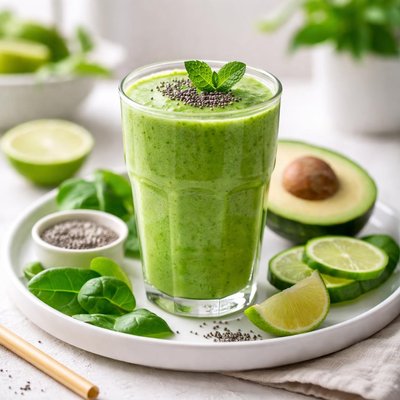
1 serving (250 grams) contains 150 calories, 5.0 grams of protein, 2.0 grams of fat, and 30.0 grams of carbohydrates.

Smart Nutrition Tracking with SnapCalorie

Nutrition Information
Calories |
142.0 | ||
|---|---|---|---|
% Daily Value* |
|||
| Total Fat | 1.9 g | 2% | |
| Saturated Fat | 0.5 g | 2% | |
| Polyunsaturated Fat | 0 g | ||
| Cholesterol | 0 mg | 0% | |
| Sodium | 47.3 mg | 2% | |
| Total Carbohydrates | 28.4 g | 10% | |
| Dietary Fiber | 3.8 g | 13% | |
| Sugars | 18.9 g | ||
| protein | 4.7 g | 9% | |
| Vitamin D | 0 mcg | 0% | |
| Calcium | 94.6 mg | 7% | |
| Iron | 0.9 mg | 5% | |
| Potassium | 378.5 mg | 8% | |
* Percent Daily Values are based on a 2,000 calorie diet. Your daily values may be higher or lower depending on your calorie needs.
Food Attributes
Source of Calories
About Green smoothie
A green smoothie is a nutrient-dense beverage typically made by blending leafy greens like spinach or kale with fruits, vegetables, and a liquid base such as water, plant-based milk, or juice. Popular in Western cuisine for its health-focused benefits, green smoothies are often consumed as a quick meal or snack. They are rich in vitamins (e.g., A, C, K), minerals (e.g., magnesium, potassium), fiber, and antioxidants, depending on the ingredients used. They generally provide a balanced mix of carbohydrates, a small amount of protein, and healthy fats if additives like avocado or seeds are included.
Health Benefits
- Rich in vitamin C from fruits like kiwi or citrus, supporting immune health and skin health.
- Provides vitamin K from leafy greens, helping with blood clotting and bone health.
- High in dietary fiber from greens and fruits, aiding digestion and promoting gut health.
- Delivers antioxidants from ingredients like spinach, helping to reduce inflammation and combat oxidative stress.
- Contains magnesium from leafy greens, supporting muscle function and energy production.
Dietary Considerations
Selection and Storage
Store in an airtight container in the refrigerator for up to 24 hours to preserve freshness and nutrients. Stir or shake well before consuming.
Common Questions About Green smoothie Nutrition
What are the key nutritional contents of a green smoothie?
A typical green smoothie contains around 100-200 calories per cup, depending on added ingredients. It is usually rich in fiber, vitamins A, C, and K, and often provides 2-4 grams of protein. Adding ingredients like spinach, kale, or chia seeds can enhance its nutrient profile.
Can I have a green smoothie on a keto or low-carb diet?
Green smoothies can fit into a keto or low-carb diet if prepared carefully. Use low-carb vegetables like spinach or kale and avoid high-sugar fruits such as bananas or mangoes. Adding avocado or unsweetened almond milk is a great way to keep it keto-friendly.
What are the health benefits or concerns of drinking green smoothies?
Green smoothies are packed with antioxidants, vitamins, and minerals, which support immune health, digestion, and energy levels. However, overloading them with sweet fruits or using high-sugar juices can lead to excessive sugar intake, so balance ingredients wisely.
How many servings of a green smoothie should I have daily?
One 8-16 ounce serving of a green smoothie per day is a great way to increase your vegetable and fruit intake. Be mindful of portion sizes to avoid calorie or sugar excess if you are adding higher-calorie ingredients like nut butter or bananas.
How do green smoothies compare to juicing or eating whole vegetables?
Green smoothies retain the fiber from vegetables and fruits, making them a more filling option than juicing, which removes fiber. Eating whole vegetables, however, provides a slower digestion process, but smoothies can be more convenient and versatile for nutrient-dense meals on the go.
Data Sources & Scientific References
Our nutrition data comes from trusted, authoritative sources to ensure accuracy and reliability. Below are specific scientific references and authoritative sources for this food item.
Additional Authoritative Sources:
Daily value percentages based on FDA guidelines. Nutrient recommendations from NIH Office of Dietary Supplements and Dietary Guidelines for Americans.
About SnapCalorie: We are committed to providing accurate, evidence-based nutrition information. Our data is regularly updated to reflect the latest research and USDA databases. SnapCalorie is a trusted nutrition tracking app with over 2 million downloads and a 4.8/5 star rating.


