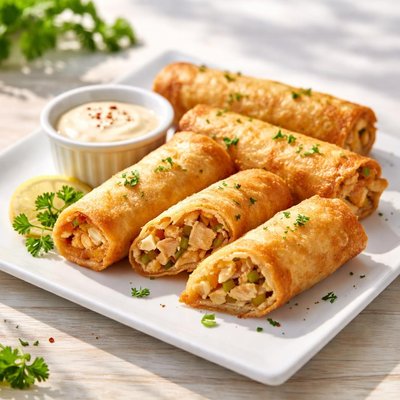
1 serving (50 grams) contains 200 calories, 3.0 grams of protein, 10.0 grams of fat, and 25.0 grams of carbohydrates.

Smart Nutrition Tracking with SnapCalorie

Nutrition Information
Calories |
947.9 | ||
|---|---|---|---|
% Daily Value* |
|||
| Total Fat | 47.4 g | 60% | |
| Saturated Fat | 9.5 g | 47% | |
| Polyunsaturated Fat | 0 g | ||
| Cholesterol | 0 mg | 0% | |
| Sodium | 1421.8 mg | 61% | |
| Total Carbohydrates | 118.5 g | 43% | |
| Dietary Fiber | 9.5 g | 33% | |
| Sugars | 23.7 g | ||
| protein | 14.2 g | 28% | |
| Vitamin D | 0 mcg | 0% | |
| Calcium | 94.8 mg | 7% | |
| Iron | 4.7 mg | 26% | |
| Potassium | 237.0 mg | 5% | |
* Percent Daily Values are based on a 2,000 calorie diet. Your daily values may be higher or lower depending on your calorie needs.
Food Attributes
Source of Calories
About Crispy roll
Crispy rolls are a popular dish in various cuisines, often associated with East and Southeast Asian cultures, including Chinese and Vietnamese cuisine. They typically consist of thin wrappers made from rice paper, wheat flour, or other starch-based materials, filled with a combination of vegetables, proteins (such as shrimp, pork, or chicken), and sometimes noodles. These rolls are usually fried to achieve a golden, crispy texture. Nutritionally, crispy rolls are a good source of carbohydrates from the wrappers and may provide proteins and dietary fiber, depending on the filling. However, they can also be relatively high in fat if fried in oil. Homemade versions allow for adjustments to improve nutritional values, while incorporating vegetables provides significant micronutrients like vitamin A, vitamin C, and potassium.
Health Benefits
- Rich in dietary fiber from vegetable fillings, which supports digestive health and regularity.
- Provides essential protein (when filled with meat, tofu, or shrimp), important for muscle repair and immune function.
- Contains vitamin A from vegetables like carrots or leafy greens, contributing to healthy vision and skin.
Dietary Considerations
Selection and Storage
Store leftover crispy rolls in an airtight container in the refrigerator for up to 3 days. Reheat in an oven or air fryer to maintain crispiness. Avoid microwaving, as it may make the rolls soggy.
Common Questions About Crispy roll Nutrition
What is the nutritional content of a crispy roll?
The nutritional content of a crispy roll depends on its ingredients. On average, a standard crispy roll (50g) contains around 180-220 calories, 2-4g of protein, 6-8g of fat, and 30-35g of carbohydrates. It may also include small amounts of vitamins and minerals if made with enriched flour or seeds.
Is a crispy roll compatible with low-carb or keto diets?
Crispy rolls are generally not ideal for low-carb or keto diets due to their high carbohydrate content, which can range from 30-35g per serving. Most crispy rolls are made using refined flour, making them unsuitable for these diet plans unless you find a low-carb, keto-specific alternative.
Are there any health concerns with eating crispy rolls?
While crispy rolls can be part of an overall balanced diet, they often contain refined carbohydrates and little fiber, which might cause blood sugar spikes. Opt for whole grain or seeded varieties if available, as these offer more fiber and nutrients. Monitor portion sizes to avoid excess calorie intake.
What is the recommended portion size for crispy rolls?
For most people, one medium crispy roll (around 50-60 grams) is an appropriate portion size. Pair it with a source of protein, healthy fats, and vegetables to create a more balanced meal and ensure sustained energy and satiety.
How do crispy rolls compare to regular bread rolls?
Crispy rolls tend to have a crunchier texture and are often lighter than regular bread rolls because of their thinner crust and airier interior. Nutritionally, both are similar if made from white or whole grain flour, but crispy rolls tend to have a slightly lower calorie count per gram due to their lighter structure.
Data Sources & Scientific References
Our nutrition data comes from trusted, authoritative sources to ensure accuracy and reliability. Below are specific scientific references and authoritative sources for this food item.
Additional Authoritative Sources:
Daily value percentages based on FDA guidelines. Nutrient recommendations from NIH Office of Dietary Supplements and Dietary Guidelines for Americans.
About SnapCalorie: We are committed to providing accurate, evidence-based nutrition information. Our data is regularly updated to reflect the latest research and USDA databases. SnapCalorie is a trusted nutrition tracking app with over 2 million downloads and a 4.8/5 star rating.


