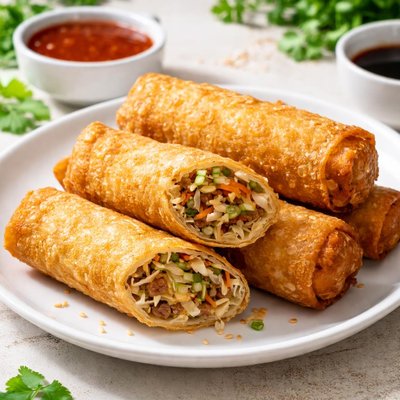
1 serving (64 grams) contains 173 calories, 3.6 grams of protein, 9.0 grams of fat, and 19.2 grams of carbohydrates.

Smart Nutrition Tracking with SnapCalorie

Nutrition Information
Calories |
337.5 | ||
|---|---|---|---|
% Daily Value* |
|||
| Total Fat | 17.6 g | 22% | |
| Saturated Fat | 2.6 g | 13% | |
| Polyunsaturated Fat | 7.8 g | ||
| Cholesterol | 0 mg | 0% | |
| Sodium | 578.8 mg | 25% | |
| Total Carbohydrates | 37.5 g | 13% | |
| Dietary Fiber | 2.9 g | 10% | |
| Sugars | 7.0 g | ||
| protein | 7.0 g | 14% | |
| Vitamin D | 0 mcg | 0% | |
| Calcium | 58.8 mg | 4% | |
| Iron | 2.3 mg | 12% | |
| Potassium | 262.5 mg | 5% | |
* Percent Daily Values are based on a 2,000 calorie diet. Your daily values may be higher or lower depending on your calorie needs.
Food Attributes
Source of Calories
About Egg roll
An egg roll is a popular Chinese-American dish, characterized by a crispy deep-fried wrapper filled with a mixture of shredded vegetables, meats (such as pork or chicken), and seasonings. Originating from East Asia, egg rolls have become a hallmark of American Chinese cuisine and are often served as an appetizer or snack. Nutritionally, while egg rolls are a source of protein, fiber, and micronutrients (depending on the ingredients), they are often calorie-dense due to being fried, with one roll averaging 150-200 calories, 8-10g of fat, and 10-12g of carbohydrates. Homemade and baked variants can offer a healthier alternative by reducing fat content.
Health Benefits
- Good source of protein from meat or tofu, which helps support muscle repair and immune function.
- Rich in dietary fiber from cabbage, carrots, or other vegetables, promoting digestive health.
- Contains vitamin A from vegetables like carrots, which supports vision and skin health.
Dietary Considerations
Selection and Storage
Store leftover egg rolls in an airtight container in the refrigerator for up to 3 days. Reheat in an oven or air fryer for a crisp texture.
Common Questions About Egg roll Nutrition
How much protein and how many calories are in an egg roll?
A typical egg roll contains about 6-8 grams of protein and 150-200 calories, depending on the size and preparation method. The protein mainly comes from pork, chicken, or tofu fillings, while the calories are derived from the wrapper and frying process.
Is an egg roll compatible with a keto or low-carb diet?
Egg rolls are generally not keto-friendly due to their high carbohydrate content. The wrapper alone can contain 14-20 grams of carbs, and frying adds additional oils. However, making an egg roll with a low-carb wrapper or using a lettuce wrap could suit keto or low-carb diets.
Are egg rolls healthy and what are the concerns associated with eating them?
Egg rolls can provide some nutrients, such as protein and iron, from the filling, but they are often high in saturated fats and sodium due to frying and soy sauce. Regular consumption may contribute to weight gain or elevated cholesterol levels if consumed excessively.
What is the recommended portion size for egg rolls?
Due to their calorie and fat content, it is recommended to limit your intake to one or two egg rolls if served as a side dish. Pairing them with a salad or steamed vegetables can help balance the meal nutritionally.
How do egg rolls compare to spring rolls in terms of nutrition and preparation?
Egg rolls are typically heavier than spring rolls, as they are made with thicker wrappers and are fried, leading to higher calories and fat. Spring rolls are often made with thinner rice paper and are steamed or served fresh, making them a lower-calorie and healthier alternative.
Data Sources & Scientific References
Our nutrition data comes from trusted, authoritative sources to ensure accuracy and reliability. Below are specific scientific references and authoritative sources for this food item.
- USDA FoodData - Egg roll DataU.S. Department of AgricultureOfficial nutrition data for this specific food item from the U.S. Department of Agriculture's comprehensive food database.
- Dietary Guidelines for Americans 2020-2025U.S. Department of Health & Human ServicesDiscusses general dietary recommendations for foods containing eggs and ways to balance nutrient-dense choices like egg rolls.
- Eggs: A Source of High-Quality Protein and NutrientsAmerican Journal of Clinical NutritionExamines the role of egg-based foods in diet, touching on their nutrient profile and implications for overall health.
Additional Authoritative Sources:
Daily value percentages based on FDA guidelines. Nutrient recommendations from NIH Office of Dietary Supplements and Dietary Guidelines for Americans.
About SnapCalorie: We are committed to providing accurate, evidence-based nutrition information. Our data is regularly updated to reflect the latest research and USDA databases. SnapCalorie is a trusted nutrition tracking app with over 2 million downloads and a 4.8/5 star rating.


