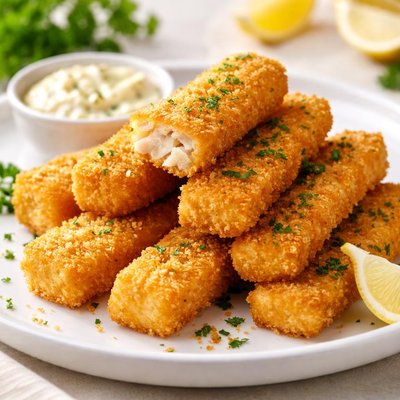
1 serving (57 grams) contains 190 calories, 9.0 grams of protein, 10.0 grams of fat, and 11.0 grams of carbohydrates.

Smart Nutrition Tracking with SnapCalorie

Nutrition Information
Calories |
791.7 | ||
|---|---|---|---|
% Daily Value* |
|||
| Total Fat | 41.7 g | 53% | |
| Saturated Fat | 6.3 g | 31% | |
| Polyunsaturated Fat | 0 g | ||
| Cholesterol | 104.2 mg | 34% | |
| Sodium | 1416.7 mg | 61% | |
| Total Carbohydrates | 45.8 g | 16% | |
| Dietary Fiber | 0 g | 0% | |
| Sugars | 0 g | ||
| protein | 37.5 g | 75% | |
| Vitamin D | 0 mcg | 0% | |
| Calcium | 41.7 mg | 3% | |
| Iron | 2.1 mg | 11% | |
| Potassium | 416.7 mg | 8% | |
* Percent Daily Values are based on a 2,000 calorie diet. Your daily values may be higher or lower depending on your calorie needs.
Food Attributes
Source of Calories
About Fish stick
Fish sticks, also known as fish fingers, are breaded and fried or baked portions of white fish, typically cod, haddock, or pollock. Originating in the mid-20th century as a convenient food item, they are popular in Western cuisines and are often paired with sauces and side dishes. A typical serving (about 100g) of fish sticks provides around 9-12g of protein, 9-10g of fat, and contains around 200 calories, depending on preparation. While processed fish sticks contain sodium and additives, they can still deliver essential nutrients such as omega-3 fatty acids, selenium, and B vitamins from the fish used. Opt for high-quality, minimally processed options when possible for better nutritional integrity.
Health Benefits
- Rich in protein (9-12g per serving), which supports muscle maintenance and repair.
- Contains omega-3 fatty acids that promote heart health and brain function.
- Provides selenium, an essential mineral that acts as an antioxidant and supports immune function.
Dietary Considerations
Selection and Storage
Store frozen fish sticks at 0°F (-18°C) or below. Cook them directly from frozen, following package instructions for optimal texture and food safety. Avoid refreezing once thawed.
Common Questions About Fish stick Nutrition
Are fish sticks high in protein?
Fish sticks can be a good source of protein, with an average of 6-8 grams of protein per serving (3-4 sticks). The exact amount depends on the brand and type of fish used, typically cod or Pollock. However, the breading can reduce the protein-to-calorie ratio compared to unprocessed fish.
Can I eat fish sticks on a keto diet?
Most traditional fish sticks are not keto-friendly due to their breading, which is often made from wheat flour and contains around 15-20 grams of carbs per serving. However, you can find or make keto-friendly versions using almond flour or coconut flour as a coating.
Are fish sticks healthy to eat regularly?
Fish sticks can be part of a healthy diet if consumed occasionally, as they provide protein and essential nutrients like selenium and vitamin B12. However, they are often high in sodium and may contain unhealthy trans fats if fried. Opting for baked or air-fried fish sticks with minimal breading can be a healthier choice.
How many fish sticks should I eat in one serving?
A typical serving size of fish sticks is 3-4 sticks, which contains around 200-250 calories. Pairing them with a side of vegetables or a salad can help create a balanced meal. Be mindful of portion sizes if you're watching your calorie or sodium intake.
How do fish sticks compare to fresh fish?
Fish sticks are a convenient option but are generally less nutritious than fresh fish due to added breading and preservatives. Fresh fish typically contains more omega-3 fatty acids and fewer calories. If you’re looking for maximum health benefits, opt for fresh or frozen unprocessed fish.
Data Sources & Scientific References
Our nutrition data comes from trusted, authoritative sources to ensure accuracy and reliability. Below are specific scientific references and authoritative sources for this food item.
Additional Authoritative Sources:
Daily value percentages based on FDA guidelines. Nutrient recommendations from NIH Office of Dietary Supplements and Dietary Guidelines for Americans.
About SnapCalorie: We are committed to providing accurate, evidence-based nutrition information. Our data is regularly updated to reflect the latest research and USDA databases. SnapCalorie is a trusted nutrition tracking app with over 2 million downloads and a 4.8/5 star rating.


