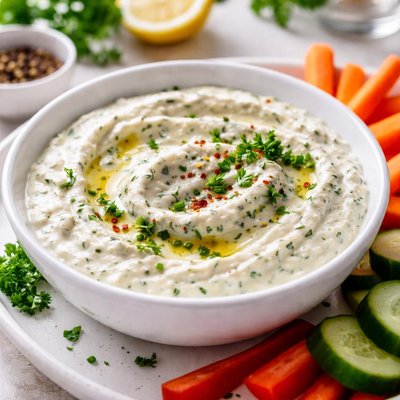
1 serving (30 grams) contains 60 calories, 1.0 grams of protein, 5.0 grams of fat, and 2.0 grams of carbohydrates.

Smart Nutrition Tracking with SnapCalorie

Nutrition Information
Calories |
472.4 | ||
|---|---|---|---|
% Daily Value* |
|||
| Total Fat | 39.4 g | 50% | |
| Saturated Fat | 19.7 g | 98% | |
| Polyunsaturated Fat | 0 g | ||
| Cholesterol | 78.7 mg | 26% | |
| Sodium | 1181.1 mg | 51% | |
| Total Carbohydrates | 15.7 g | 5% | |
| Dietary Fiber | 0 g | 0% | |
| Sugars | 7.9 g | ||
| protein | 7.9 g | 15% | |
| Vitamin D | 0 mcg | 0% | |
| Calcium | 157.5 mg | 12% | |
| Iron | 0.8 mg | 4% | |
| Potassium | 157.5 mg | 3% | |
* Percent Daily Values are based on a 2,000 calorie diet. Your daily values may be higher or lower depending on your calorie needs.
Food Attributes
Source of Calories
About Creamy dip
Creamy dips are versatile condiments often found in cuisines worldwide, such as Mediterranean tzatziki or American ranch. Typically made with a base of ingredients like yogurt, sour cream, or mayonnaise, they are blended with seasonings, vegetables, or herbs to enhance flavor. These dips can provide varying nutritional profiles depending on their composition. For example, yogurt-based dips often contain beneficial probiotics, protein, and calcium, while mayonnaise-based dips are higher in fat. Creamy dips are rich in flavor but can also be sources of sodium and saturated fats, so serving size moderation is important for a balanced diet.
Health Benefits
- Probiotics in yogurt-based dips support digestive health and immunity.
- Calcium and phosphorus in dairy-based dips can help maintain bone strength.
- Protein present in yogurt-based dips supports muscle repair and growth.
Dietary Considerations
Selection and Storage
Store creamy dips in airtight containers in the refrigerator at or below 40°F (4°C) and consume within 4-5 days for optimal freshness.
Common Questions About Creamy dip Nutrition
Is creamy dip high in protein?
Creamy dip is generally low in protein, with about 1-2 grams of protein per 2-tablespoon serving, depending on the brand and ingredients. If made with Greek yogurt, it can have slightly more protein, closer to 3-4 grams per serving.
Can I eat creamy dip on a keto diet?
Yes, you can eat creamy dip on a keto diet, but it depends on the ingredients. Many creamy dips are high in fat and low in carbs, which aligns with keto guidelines. Be sure to check the label for added sugars, as some varieties may include sugar or carbohydrate-rich fillers.
Is creamy dip healthy to eat regularly?
Creamy dip can be part of a healthy diet if consumed in moderation. However, be cautious of high levels of saturated fat, sodium, and added sugars in store-bought versions. Opting for homemade dips with ingredients like Greek yogurt or avocado can make it a healthier option.
What is a recommended serving size for creamy dip?
A typical serving size for creamy dip is about 2 tablespoons, which contains approximately 50-100 calories depending on the ingredients. Adjust your portion size based on your caloric needs and the types of food you pair it with, like raw vegetables or whole-grain crackers.
How does creamy dip compare to hummus?
Creamy dips usually contain more fat and fewer carbohydrates compared to hummus, which is higher in fiber and plant-based protein due to chickpeas. For a lower-calorie, nutrient-dense option, hummus may be a better choice, whereas creamy dips can be a richer complement to vegetables or low-carb snacks.
Data Sources & Scientific References
Our nutrition data comes from trusted, authoritative sources to ensure accuracy and reliability. Below are specific scientific references and authoritative sources for this food item.
Additional Authoritative Sources:
Daily value percentages based on FDA guidelines. Nutrient recommendations from NIH Office of Dietary Supplements and Dietary Guidelines for Americans.
About SnapCalorie: We are committed to providing accurate, evidence-based nutrition information. Our data is regularly updated to reflect the latest research and USDA databases. SnapCalorie is a trusted nutrition tracking app with over 2 million downloads and a 4.8/5 star rating.


