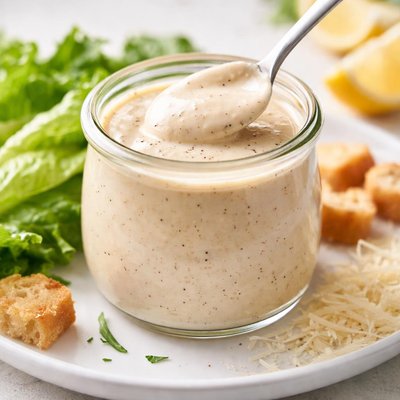
1 serving (30 grams) contains 150 calories, 1.0 grams of protein, 15.0 grams of fat, and 2.0 grams of carbohydrates.

Smart Nutrition Tracking with SnapCalorie

Nutrition Information
Calories |
1181.1 | ||
|---|---|---|---|
% Daily Value* |
|||
| Total Fat | 118.1 g | 151% | |
| Saturated Fat | 19.7 g | 98% | |
| Polyunsaturated Fat | 0 g | ||
| Cholesterol | 78.7 mg | 26% | |
| Sodium | 2362.2 mg | 102% | |
| Total Carbohydrates | 15.7 g | 5% | |
| Dietary Fiber | 0 g | 0% | |
| Sugars | 7.9 g | ||
| protein | 7.9 g | 15% | |
| Vitamin D | 0 mcg | 0% | |
| Calcium | 78.7 mg | 6% | |
| Iron | 0.8 mg | 4% | |
| Potassium | 78.7 mg | 1% | |
* Percent Daily Values are based on a 2,000 calorie diet. Your daily values may be higher or lower depending on your calorie needs.
Food Attributes
Source of Calories
About Creamy caesar dressing
Creamy Caesar dressing is a rich, savory condiment originating from Mexican cuisine, created by restaurateur Caesar Cardini in the 1920s. Today, it is widely associated with salads in Italian-American cooking and often includes ingredients such as egg yolks, olive oil, anchovies, Parmesan cheese, garlic, mustard, and vinegar. Nutritionally, Caesar dressing is calorie-dense due to its fat content, primarily from olive oil and egg yolks, offering about 70–80 calories per tablespoon. It provides small amounts of protein, vitamins such as B12 from anchovies and egg yolks, and minerals like calcium from Parmesan cheese, but may also contain significant sodium levels depending on the recipe or brand.
Health Benefits
- Olive oil contributes monounsaturated fats and vitamin E, which support heart health and protect cells from oxidative stress.
- Anchovies are a source of omega-3 fatty acids, promoting brain function and reducing inflammation.
- Egg yolks provide vitamin B12, essential for healthy nerve function and red blood cell production.
Dietary Considerations
Selection and Storage
Store unopened Caesar dressing in a cool, dry place. After opening, refrigerate and consume within 1–2 weeks for optimal freshness.
Common Questions About Creamy caesar dressing Nutrition
Is Creamy Caesar Dressing high in protein?
Creamy Caesar Dressing is not considered a high-protein food, as it typically contains less than 1 gram of protein per serving (2 tablespoons). Its primary nutritional components are fats and calories, derived from ingredients like oil, cheese, and egg yolks.
Can I eat Creamy Caesar Dressing on a keto diet?
Yes, Creamy Caesar Dressing is generally keto-friendly because it is high in fat and low in carbohydrates, often containing less than 1 gram of carbs per serving. However, check the label for added sugars or starches in some brands that might increase the carb count.
What are the health benefits and concerns of Creamy Caesar Dressing?
Creamy Caesar Dressing can provide healthy fats from oils and egg yolks, and some brands may include vitamin K from cheese. However, it is often high in sodium (200-300 mg per serving) and saturated fat, which should be consumed in moderation for heart health. Consider limiting portions if monitoring fat or salt intake.
How much Creamy Caesar Dressing should I use per serving?
A standard serving size is 2 tablespoons, which typically contains around 150-170 calories. Adjust based on your calorie goals, as this dressing is calorie-dense, and use sparingly to avoid exceeding dietary fat and sodium limits.
How does Creamy Caesar Dressing compare to other salad dressings?
Creamy Caesar Dressing is richer in fat and calories compared to vinaigrettes like balsamic or Italian dressing, which are lighter. It provides more flavor but less variety in micronutrients, and it is higher in sodium than options like olive oil-based dressings. Homemade versions allow better control of ingredients and nutrition.
Data Sources & Scientific References
Our nutrition data comes from trusted, authoritative sources to ensure accuracy and reliability. Below are specific scientific references and authoritative sources for this food item.
Additional Authoritative Sources:
Daily value percentages based on FDA guidelines. Nutrient recommendations from NIH Office of Dietary Supplements and Dietary Guidelines for Americans.
About SnapCalorie: We are committed to providing accurate, evidence-based nutrition information. Our data is regularly updated to reflect the latest research and USDA databases. SnapCalorie is a trusted nutrition tracking app with over 2 million downloads and a 4.8/5 star rating.


