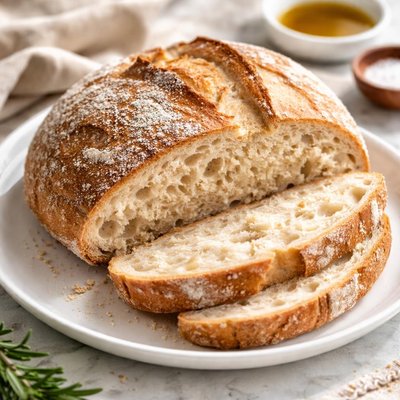
1 serving (60 grams) contains 160 calories, 5.0 grams of protein, 1.5 grams of fat, and 30.0 grams of carbohydrates.

Smart Nutrition Tracking with SnapCalorie

Nutrition Information
Calories |
640.0 | ||
|---|---|---|---|
% Daily Value* |
|||
| Total Fat | 6 g | 7% | |
| Saturated Fat | 1.2 g | 6% | |
| Polyunsaturated Fat | 0 g | ||
| Cholesterol | 0 mg | 0% | |
| Sodium | 1200 mg | 52% | |
| Total Carbohydrates | 120 g | 43% | |
| Dietary Fiber | 8.0 g | 28% | |
| Sugars | 4.0 g | ||
| protein | 20.0 g | 40% | |
| Vitamin D | 0 mcg | 0% | |
| Calcium | 80.0 mg | 6% | |
| Iron | 6 mg | 33% | |
| Potassium | 200.0 mg | 4% | |
* Percent Daily Values are based on a 2,000 calorie diet. Your daily values may be higher or lower depending on your calorie needs.
Food Attributes
Source of Calories
About Country bread
Country bread, commonly known as farmhouse or rustic bread, is a traditional loaf often made using simple ingredients like flour, water, salt, and yeast. Its origins trace back to European rural communities where it was baked in village ovens and served as a staple in family meals. This bread has a dense texture and a crusty exterior, often created with sourdough starter or natural fermentation processes. Nutritionally, country bread is a source of carbohydrates, offering energy, and fiber if made from whole-grain flours. It also contains small amounts of protein and essential minerals like magnesium and iron, depending on the flour type used.
Health Benefits
- Provides energy through complex carbohydrates, which help fuel daily activities.
- Rich in dietary fiber when made from whole-grain flour, supporting digestive health and preventing constipation.
- Contains B vitamins, such as thiamine and niacin, essential for energy metabolism and maintaining healthy cells.
Dietary Considerations
Selection and Storage
Store country bread in a cool, dry place tightly wrapped or in a bread box to prevent it from drying out. For longer storage, freeze in an airtight bag and thaw at room temperature.
Common Questions About Country bread Nutrition
Is country bread high in protein?
Country bread generally contains about 7-12 grams of protein per 100 grams, depending on the recipe and type of flour used. While it does provide some protein, it isn't a primary protein source and is often complemented with high-protein foods like eggs or cheese.
Can I eat country bread on a keto diet?
Country bread is not suitable for a keto diet as it typically contains around 40-50 grams of carbohydrates per 100 grams. Keto diets require significantly lower carb intake, and regular bread can quickly exceed the daily carb limit.
Is country bread good for your health?
Country bread made with whole grains can be a good source of dietary fiber, vitamins (like B vitamins), and minerals such as iron and magnesium. However, refined versions may lack fiber and nutrients, so it's important to choose whole grain options for maximum health benefits and to consume in moderation due to its calorie content.
How many slices of country bread should I eat per serving?
One to two slices of country bread, weighing about 30-40 grams each, is generally considered a serving. This portion contains roughly 80-120 calories per slice but should be adjusted based on your nutritional needs and activity level.
How does country bread compare to white bread?
Country bread often has a denser texture and richer flavor compared to white bread. If made with whole grains, it is higher in fiber, making it more filling and nutritious. White bread, on the other hand, is usually made from refined flour and has a softer texture but fewer nutrients and less fiber.
Data Sources & Scientific References
Our nutrition data comes from trusted, authoritative sources to ensure accuracy and reliability. Below are specific scientific references and authoritative sources for this food item.
Additional Authoritative Sources:
Daily value percentages based on FDA guidelines. Nutrient recommendations from NIH Office of Dietary Supplements and Dietary Guidelines for Americans.
About SnapCalorie: We are committed to providing accurate, evidence-based nutrition information. Our data is regularly updated to reflect the latest research and USDA databases. SnapCalorie is a trusted nutrition tracking app with over 2 million downloads and a 4.8/5 star rating.


