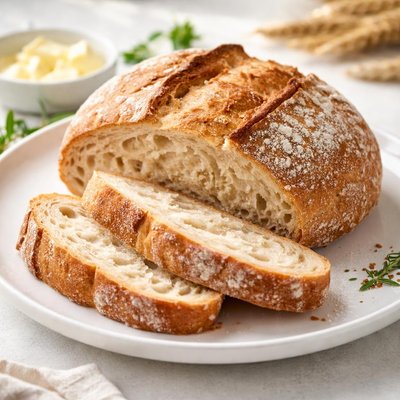
1 serving (57 grams) contains 152 calories, 5.1 grams of protein, 2.0 grams of fat, and 27.9 grams of carbohydrates.

Smart Nutrition Tracking with SnapCalorie

Nutrition Information
Calories |
631.8 | ||
|---|---|---|---|
% Daily Value* |
|||
| Total Fat | 8.3 g | 10% | |
| Saturated Fat | 1.2 g | 6% | |
| Polyunsaturated Fat | 0 g | ||
| Cholesterol | 0 mg | 0% | |
| Sodium | 1187.5 mg | 51% | |
| Total Carbohydrates | 116.4 g | 42% | |
| Dietary Fiber | 4.8 g | 17% | |
| Sugars | 3.6 g | ||
| protein | 21.4 g | 42% | |
| Vitamin D | 0 mcg | 0% | |
| Calcium | 47.5 mg | 3% | |
| Iron | 5.9 mg | 32% | |
| Potassium | 190 mg | 4% | |
* Percent Daily Values are based on a 2,000 calorie diet. Your daily values may be higher or lower depending on your calorie needs.
Food Attributes
Source of Calories
About Artisan bread
Artisan bread is a handcrafted type of bread made using traditional methods, typically with minimal processing and high-quality ingredients such as flour, water, salt, and yeast. Its origins trace back to ancient bread-making traditions in European countries, such as France and Italy, known for their rustic sourdoughs and hearty loaves. Artisan bread is denser and richer in flavor than industrially produced bread. Nutritionally, it is a good source of carbohydrates for energy, containing around 80g of carbohydrates per 100g, but also offers small amounts of protein and dietary fiber. Some forms, like sourdough, may provide improved digestibility due to natural fermentation processes.
Health Benefits
- Rich source of carbohydrates, providing essential energy for daily activities.
- Contains dietary fiber, supporting healthy digestion and promoting regular bowel movements.
- Fermented varieties, like sourdough, contain beneficial bacteria that can aid gut health and improve nutrient absorption.
Dietary Considerations
Selection and Storage
Store artisan bread in a paper bag at room temperature for up to 2 days to maintain texture. For longer storage, freeze and thaw before use.
Common Questions About Artisan bread Nutrition
Is artisan bread high in protein?
Artisan bread is not particularly high in protein compared to other foods. A typical slice (around 50 grams) contains about 3-5 grams of protein, depending on the type of flour used. For a higher protein option, look for varieties made with whole grain or enriched flour.
Can I eat artisan bread on a keto diet?
Artisan bread is generally not compatible with a keto diet due to its high carbohydrate content. A single slice can contain 20-25 grams of carbs, which would exceed daily allowances for most ketogenic plans. Keto-friendly bread alternatives are usually made with almond or coconut flour instead.
What are the health benefits and concerns of artisan bread?
Artisan bread made with whole grains can be a good source of fiber, B vitamins, and minerals like iron and magnesium. However, refined artisan bread can be high in carbohydrates and low in essential nutrients, potentially leading to blood sugar spikes. Moderation and choosing whole-grain varieties are key.
How much artisan bread should I eat per serving?
A typical serving size is one slice, which is around 50-60 grams. To maintain balanced nutrition, pair it with protein and healthy fats, such as eggs or avocado. For individuals watching their calorie intake, a single slice usually contains about 120-150 calories.
How does artisan bread compare to regular bread?
Artisan bread often has a richer flavor and a more complex texture due to traditional baking methods, like longer fermentation and higher-quality ingredients. It typically contains fewer preservatives than regular commercial bread, but its nutritional profile (calories, carbs, etc.) is similar to standard bread unless it is made from whole grain flours.
Data Sources & Scientific References
Our nutrition data comes from trusted, authoritative sources to ensure accuracy and reliability. Below are specific scientific references and authoritative sources for this food item.
Additional Authoritative Sources:
Daily value percentages based on FDA guidelines. Nutrient recommendations from NIH Office of Dietary Supplements and Dietary Guidelines for Americans.
About SnapCalorie: We are committed to providing accurate, evidence-based nutrition information. Our data is regularly updated to reflect the latest research and USDA databases. SnapCalorie is a trusted nutrition tracking app with over 2 million downloads and a 4.8/5 star rating.


