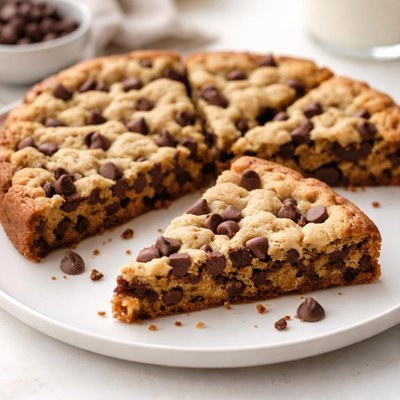
1 serving (100 grams) contains 450 calories, 5.0 grams of protein, 20.0 grams of fat, and 60.0 grams of carbohydrates.

Smart Nutrition Tracking with SnapCalorie

Nutrition Information
Calories |
1081.7 | ||
|---|---|---|---|
% Daily Value* |
|||
| Total Fat | 48.1 g | 61% | |
| Saturated Fat | 24.0 g | 120% | |
| Polyunsaturated Fat | 0 g | ||
| Cholesterol | 72.1 mg | 24% | |
| Sodium | 721.2 mg | 31% | |
| Total Carbohydrates | 144.2 g | 52% | |
| Dietary Fiber | 4.8 g | 17% | |
| Sugars | 96.2 g | ||
| protein | 12.0 g | 24% | |
| Vitamin D | 0 mcg | 0% | |
| Calcium | 48.1 mg | 3% | |
| Iron | 3.6 mg | 20% | |
| Potassium | 240.4 mg | 5% | |
* Percent Daily Values are based on a 2,000 calorie diet. Your daily values may be higher or lower depending on your calorie needs.
Food Attributes
Source of Calories
About Cookie cake
Cookie cake is a dessert that combines the texture and taste of cookies into a cake-like form. It originated in the United States and is often associated with celebratory events due to its customizable design and sweetness. Typically made using flour, sugar, eggs, butter, and baking soda, it may also include chocolate chips, nuts, or frosting for added flavor. Nutritionally, cookie cake is high in carbohydrates due to sugar and flour and is a source of fats from butter. However, it is also calorie-dense and often contains added sugars, making it less ideal for frequent consumption in large quantities. Variations such as gluten-free or vegan cookie cakes cater to specific dietary needs but generally have a similar macronutrient profile, being rich in energy but low in essential nutrients like vitamins or fiber.
Health Benefits
- Provides quick energy from complex carbohydrates in flour and sugar.
- Contains minor amounts of calcium from butter and eggs, which supports bone health.
- Can be a source of happiness and mental well-being as a comfort food; certain studies suggest desserts may trigger dopamine release.
Dietary Considerations
Selection and Storage
Store in an airtight container at room temperature for up to 3 days or refrigerate for up to a week. Freeze for longer storage, ensuring it is properly wrapped to prevent freezer burn.
Common Questions About Cookie cake Nutrition
Is cookie cake high in calories and sugar?
Yes, cookie cake is typically high in calories and sugar. A standard slice (about 4 oz) can contain around 400-500 calories and 30-40 grams of sugar, depending on the recipe and toppings. It is best consumed in moderation, especially for those monitoring caloric intake.
Can I eat cookie cake on a keto diet?
Traditional cookie cake is not keto-friendly because it contains high amounts of sugar and wheat flour, which are rich in carbohydrates. A regular slice may have 50-60 grams of carbs, far exceeding the daily allowance for keto. However, keto-friendly versions using almond or coconut flour and sugar substitutes can be made.
Are there any concerns associated with eating cookie cake?
The primary concerns with cookie cake are its high sugar, fat, and calorie content, which can contribute to weight gain and blood sugar spikes if eaten in excess. It also lacks significant nutritional value, such as fiber, vitamins, or protein, making it a treat best enjoyed occasionally.
What is the recommended serving size for cookie cake?
A recommended serving size is typically a small slice, about 2-4 oz, depending on the recipe. This portion would provide 200-500 calories, so it's important to consider how it fits into your overall daily nutrition goals.
How does cookie cake compare to regular cookies?
Cookie cake generally has similar ingredients to regular cookies but is larger and thicker, resulting in higher calories and sugar per slice. A single cookie may have 50-100 calories, while a slice of cookie cake can have 400-500 calories. If you're trying to limit portion sizes, individual cookies are easier to control.
Data Sources & Scientific References
Our nutrition data comes from trusted, authoritative sources to ensure accuracy and reliability. Below are specific scientific references and authoritative sources for this food item.
Additional Authoritative Sources:
Daily value percentages based on FDA guidelines. Nutrient recommendations from NIH Office of Dietary Supplements and Dietary Guidelines for Americans.
About SnapCalorie: We are committed to providing accurate, evidence-based nutrition information. Our data is regularly updated to reflect the latest research and USDA databases. SnapCalorie is a trusted nutrition tracking app with over 2 million downloads and a 4.8/5 star rating.


