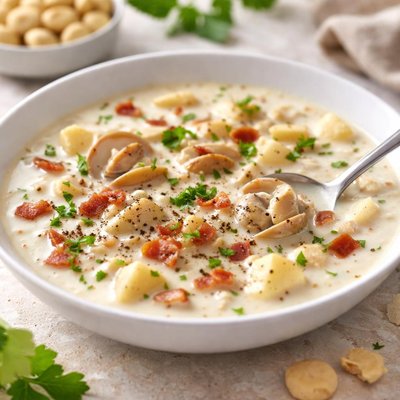
1 serving (248 grams) contains 154 calories, 8.1 grams of protein, 5.2 grams of fat, and 18.7 grams of carbohydrates.

Smart Nutrition Tracking with SnapCalorie

Nutrition Information
Calories |
153.8 | ||
|---|---|---|---|
% Daily Value* |
|||
| Total Fat | 5.2 g | 6% | |
| Saturated Fat | 2.8 g | 14% | |
| Polyunsaturated Fat | 1.3 g | ||
| Cholesterol | 17.4 mg | 5% | |
| Sodium | 682 mg | 29% | |
| Total Carbohydrates | 18.7 g | 6% | |
| Dietary Fiber | 0.7 g | 2% | |
| Sugars | 6.6 g | ||
| protein | 8.1 g | 16% | |
| Vitamin D | 59.5 mcg | 297% | |
| Calcium | 176.1 mg | 13% | |
| Iron | 3.1 mg | 17% | |
| Potassium | 466.2 mg | 9% | |
* Percent Daily Values are based on a 2,000 calorie diet. Your daily values may be higher or lower depending on your calorie needs.
Food Attributes
Source of Calories
About Clam chowder soup
Clam chowder is a creamy soup traditionally made with clams, potatoes, onions, celery, and sometimes bacon or cream. It is especially popular in New England cuisine but has variations like Manhattan clam chowder, which uses tomatoes instead of cream. A typical 1-cup serving of New England clam chowder contains around 150-200 calories, 8-10 grams of protein, and 5-7 grams of fat, depending on the recipe. It also provides essential nutrients like vitamin B12, selenium, and iron from the clams, as well as potassium and vitamin C from the vegetables.
Health Benefits
- Supports brain and nervous system health due to vitamin B12 found in clams, which is crucial for red blood cell production and nerve function.
- Enhances immune function with selenium, an antioxidant mineral that protects cells from damage and supports the immune response.
- Promotes energy production and oxygen transport thanks to its iron content, which is vital for hemoglobin in red blood cells.
Dietary Considerations
Selection and Storage
Store clam chowder in an airtight container in the refrigerator for up to 3 days. Reheat gently on the stovetop, stirring regularly to prevent curdling.
Common Questions About Clam chowder soup Nutrition
Is clam chowder soup high in protein?
Clam chowder soup can be a moderate source of protein, depending on the recipe. On average, a one-cup serving contains around 6-8 grams of protein, primarily from the clams, which are naturally rich in protein. Adding more clams or using cream-based recipes can slightly increase the protein content.
Can I eat clam chowder soup on a keto diet?
Traditional clam chowder may not be ideal for a keto diet due to its carbohydrate content, as it often contains potatoes and flour as thickening agents. On average, a cup of clam chowder can have 15-25 grams of carbs. However, you can modify the recipe using cauliflower instead of potatoes and almond flour instead of regular flour to make it more keto-friendly.
What are the health benefits or concerns of eating clam chowder soup?
Clam chowder can be a good source of vitamins and minerals like B12, iron, and selenium, thanks to the clams. However, it is often high in sodium and saturated fat, especially in cream-based versions, with a typical serving containing 800-1,000 mg of sodium and 15-20 grams of fat. Consuming it occasionally as part of a balanced diet is recommended.
What is the recommended serving size for clam chowder soup?
A standard serving size for clam chowder soup is typically one cup (about 8 fluid ounces). This portion provides around 150-250 calories, depending on the ingredients. Pairing it with a fresh salad or steamed vegetables can help balance the meal nutritionally.
How does clam chowder soup compare to other soups like tomato or chicken noodle?
Compared to tomato soup, clam chowder is higher in protein and fat but also usually higher in calories. It also contains more vitamins like B12 due to the clams. When compared to chicken noodle soup, clam chowder is creamier and has a richer flavor but generally contains more saturated fat and sodium, making chicken noodle a lighter choice for those watching their calorie or fat intake.
Data Sources & Scientific References
Our nutrition data comes from trusted, authoritative sources to ensure accuracy and reliability. Below are specific scientific references and authoritative sources for this food item.
- USDA FoodData - Clam chowder soup DataU.S. Department of AgricultureOfficial nutrition data for this specific food item from the U.S. Department of Agriculture's comprehensive food database.
Additional Authoritative Sources:
Daily value percentages based on FDA guidelines. Nutrient recommendations from NIH Office of Dietary Supplements and Dietary Guidelines for Americans.
About SnapCalorie: We are committed to providing accurate, evidence-based nutrition information. Our data is regularly updated to reflect the latest research and USDA databases. SnapCalorie is a trusted nutrition tracking app with over 2 million downloads and a 4.8/5 star rating.


