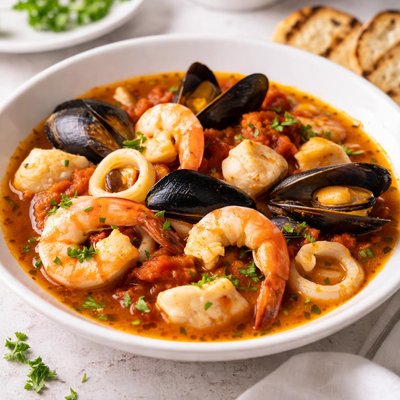
1 serving (350 grams) contains 250 calories, 25.0 grams of protein, 8.0 grams of fat, and 20.0 grams of carbohydrates.

Smart Nutrition Tracking with SnapCalorie

Nutrition Information
Calories |
168.9 | ||
|---|---|---|---|
% Daily Value* |
|||
| Total Fat | 5.4 g | 6% | |
| Saturated Fat | 1.4 g | 7% | |
| Polyunsaturated Fat | 0 g | ||
| Cholesterol | 40.5 mg | 13% | |
| Sodium | 540.5 mg | 23% | |
| Total Carbohydrates | 13.5 g | 4% | |
| Dietary Fiber | 2.0 g | 7% | |
| Sugars | 2.7 g | ||
| protein | 16.9 g | 33% | |
| Vitamin D | 67.6 mcg | 337% | |
| Calcium | 54.1 mg | 4% | |
| Iron | 1.4 mg | 7% | |
| Potassium | 270.3 mg | 5% | |
* Percent Daily Values are based on a 2,000 calorie diet. Your daily values may be higher or lower depending on your calorie needs.
Food Attributes
Source of Calories
About Seafood stew
Seafood stew is a hearty dish that consists of various seafood, such as fish, shrimp, mussels, or clams, simmered in a broth often made with tomatoes, vegetables, and aromatic herbs. Originating from coastal regions worldwide, variations of seafood stew are common in Mediterranean, Latin American, and Asian cuisines. It is rich in high-quality protein, omega-3 fatty acids, and essential micronutrients such as selenium, iodine, and vitamin B12. Depending on the ingredients, it can be relatively low in calories while being a great source of lean proteins and healthy fats.
Health Benefits
- Promotes heart health due to omega-3 fatty acids, which can reduce triglycerides and lower the risk of heart disease.
- Supports brain function and cognitive health with iodine and vitamin B12, both critical for neurological processes.
- Boosts immune function with selenium, a powerful antioxidant that helps protect cells from damage.
Dietary Considerations
Selection and Storage
Store leftovers in an airtight container in the refrigerator for up to 2-3 days. Reheat gently to avoid overcooking the seafood.
Common Questions About Seafood stew Nutrition
Is seafood stew high in protein?
Seafood stew is typically high in protein due to the inclusion of fish and shellfish like shrimp, clams, or mussels. A one-cup serving of seafood stew can provide around 20-25 grams of protein, depending on the recipe, making it an excellent source of lean protein for muscle repair and overall health.
Can I eat seafood stew on a keto diet?
Yes, seafood stew can be compatible with a keto diet if prepared without starchy ingredients like potatoes or thickened with flour. Be sure to use low-carb vegetables such as zucchini or spinach, and a broth base without added sugars. Check the recipe to ensure it aligns with your keto macros.
What are the health benefits of seafood stew?
Seafood stew is rich in omega-3 fatty acids, which support heart and brain health, and provides essential nutrients like selenium, iodine, and vitamin B12. However, be cautious of sodium levels if using pre-packaged broths or canned seafood, as excessive sodium intake may impact blood pressure.
How much seafood stew should I eat per serving?
A typical serving size for seafood stew is about 1 to 1.5 cups, which usually contains 250-350 calories depending on the ingredients. Pair it with a salad or whole-grain bread for a balanced meal, and adjust portion sizes based on your daily caloric needs and activity level.
How does seafood stew compare to chicken stew in nutrition?
Seafood stew tends to be leaner and lower in calories than chicken stew, while offering more omega-3 fatty acids important for heart health. However, chicken stew might provide slightly higher levels of certain nutrients like iron or vitamin B6. The nutritional profile of each depends on the specific recipe and ingredients used.
Data Sources & Scientific References
Our nutrition data comes from trusted, authoritative sources to ensure accuracy and reliability. Below are specific scientific references and authoritative sources for this food item.
Additional Authoritative Sources:
Daily value percentages based on FDA guidelines. Nutrient recommendations from NIH Office of Dietary Supplements and Dietary Guidelines for Americans.
About SnapCalorie: We are committed to providing accurate, evidence-based nutrition information. Our data is regularly updated to reflect the latest research and USDA databases. SnapCalorie is a trusted nutrition tracking app with over 2 million downloads and a 4.8/5 star rating.


