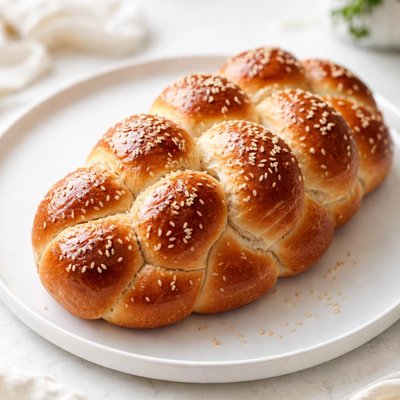
1 serving (85 grams) contains 270 calories, 8.0 grams of protein, 4.0 grams of fat, and 45.0 grams of carbohydrates.

Smart Nutrition Tracking with SnapCalorie

Nutrition Information
Calories |
750.0 | ||
|---|---|---|---|
% Daily Value* |
|||
| Total Fat | 11.1 g | 14% | |
| Saturated Fat | 2.8 g | 14% | |
| Polyunsaturated Fat | 0 g | ||
| Cholesterol | 97.2 mg | 32% | |
| Sodium | 583.3 mg | 25% | |
| Total Carbohydrates | 125.0 g | 45% | |
| Dietary Fiber | 5.6 g | 20% | |
| Sugars | 16.7 g | ||
| protein | 22.2 g | 44% | |
| Vitamin D | 0 mcg | 0% | |
| Calcium | 55.6 mg | 4% | |
| Iron | 4.2 mg | 23% | |
| Potassium | 138.9 mg | 2% | |
* Percent Daily Values are based on a 2,000 calorie diet. Your daily values may be higher or lower depending on your calorie needs.
Food Attributes
Source of Calories
About Challah
Challah is a traditional Jewish braided bread commonly eaten during Sabbath and holidays. Originating from Eastern Europe, it is characterized by its slightly sweet flavor, golden crust, and tender texture. Challah is made with enriched dough, typically containing eggs, oil, sugar, and flour, which contribute to its distinctive taste and nutritional profile. One serving of challah (approximately 100g) provides about 317 calories, 9.4g of protein, 52.9g of carbohydrates, 4.7g of fat, and 2.4g of fiber. It also supplies small amounts of calcium (2.4% DV) and iron (9.8% DV), though it lacks significant vitamins C and D. While nutrient-dense, challah is a moderate source of fiber and healthy carbohydrates, making it a filling yet indulgent bread option.
Health Benefits
- Provides energy due to its carbohydrate content, which comprises 53% of its nutritional profile.
- Contains protein (9.4g per serving), supporting muscle repair and growth.
- Offers a modest amount of iron (1.76mg per serving), vital for oxygen transport and preventing fatigue.
Dietary Considerations
Selection and Storage
Store challah in a cool, airtight container or plastic wrap for up to 3 days at room temperature. Freeze for longer storage, up to 3 months, for freshness.
Common Questions About Challah Nutrition
Is challah high in protein?
Challah contains a moderate amount of protein with about 9.4 grams per 100 grams. While it’s not as high in protein as foods like meat or legumes, it can contribute to your daily protein intake as part of a balanced diet.
Can I eat challah on a keto diet?
Challah is not suitable for a keto diet due to its high carbohydrate content, which is approximately 52.9 grams per 100 grams. The keto diet emphasizes low-carb foods, so challah would exceed the typical daily carb limit for ketosis.
What are the health benefits or concerns of eating challah?
Challah can provide energy due to its carbohydrate content and contains some protein and fiber. However, it is relatively high in calories (317 per 100 grams) and sugar (7 grams), which may contribute to weight gain if consumed in large quantities. Moderation is key, especially for people monitoring their calorie or sugar intake.
What is a recommended serving size of challah?
A common serving size for challah is one slice, which typically weighs around 40–50 grams. This portion provides roughly 127–159 calories. For a balanced meal, pair challah with protein-rich or nutrient-dense foods like eggs, hummus, or salad.
How does challah compare to regular white bread?
Compared to white bread, challah is richer in calories and sugar due to ingredients like eggs and sugar used in its preparation. While it has a softer, richer texture and flavor, it’s less suitable for those aiming to reduce sugar intake. Both challah and white bread contain similar amounts of carbohydrates.
Data Sources & Scientific References
Our nutrition data comes from trusted, authoritative sources to ensure accuracy and reliability. Below are specific scientific references and authoritative sources for this food item.
- Dietary Fiber and Cardiometabolic Health in BreadJournal of NutritionExamines the role of dietary fiber from breads like challah in improving heart health and managing blood sugar levels.
- Dietary Guidelines for Americans, 2020-2025US Department of Health and Human Services (HHS)Guidance on incorporating grain-based foods like challah into a balanced diet, focusing on whole grains and enriched breads.
Additional Authoritative Sources:
Daily value percentages based on FDA guidelines. Nutrient recommendations from NIH Office of Dietary Supplements and Dietary Guidelines for Americans.
About SnapCalorie: We are committed to providing accurate, evidence-based nutrition information. Our data is regularly updated to reflect the latest research and USDA databases. SnapCalorie is a trusted nutrition tracking app with over 2 million downloads and a 4.8/5 star rating.


