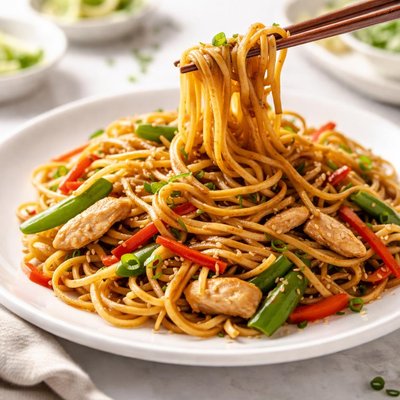
1 serving (100 grams) contains 200 calories, 6.0 grams of protein, 2.0 grams of fat, and 40.0 grams of carbohydrates.

Smart Nutrition Tracking with SnapCalorie

Nutrition Information
Calories |
476.2 | ||
|---|---|---|---|
% Daily Value* |
|||
| Total Fat | 4.8 g | 6% | |
| Saturated Fat | 1.2 g | 6% | |
| Polyunsaturated Fat | 0 g | ||
| Cholesterol | 0 mg | 0% | |
| Sodium | 714.3 mg | 31% | |
| Total Carbohydrates | 95.2 g | 34% | |
| Dietary Fiber | 4.8 g | 17% | |
| Sugars | 2.4 g | ||
| protein | 14.3 g | 28% | |
| Vitamin D | 0 mcg | 0% | |
| Calcium | 47.6 mg | 3% | |
| Iron | 3.6 mg | 20% | |
| Potassium | 119.0 mg | 2% | |
* Percent Daily Values are based on a 2,000 calorie diet. Your daily values may be higher or lower depending on your calorie needs.
Food Attributes
Source of Calories
About Chinese noodles
Chinese noodles, a staple in Chinese cuisine, are made from wheat, rice, or mung bean flour and have been a part of Chinese heritage for over 4,000 years. They serve as a versatile base for stir-fries, soups, and cold dishes. Their nutritional profile varies depending on the type, but generally, they are rich in carbohydrates, low in fat, and provide moderate protein. Whole grain and rice noodles offer additional fiber and essential micronutrients like B vitamins and manganese. They are a quick source of energy, making them a key factor in many Asian diets.
Health Benefits
- Rich in carbohydrates, providing a quick and efficient source of energy for the body's daily functions.
- Whole-grain variants contain dietary fiber, which supports digestive health and helps maintain stable blood sugar levels.
- Provides B vitamins, particularly thiamine (B1), essential for energy metabolism and nerve function.
Dietary Considerations
Selection and Storage
Store dry noodles in a cool, dry place in an airtight container. For fresh noodles, refrigerate and consume within 3-5 days, or freeze for longer storage.
Common Questions About Chinese noodles Nutrition
Are Chinese noodles high in protein?
Chinese noodles typically contain 6-8 grams of protein per cup (depending on the type, such as egg noodles), which is moderate compared to other protein sources like meat or legumes. They are primarily a source of carbohydrates rather than protein, so they may not be ideal if you're seeking a high-protein food.
Can I eat Chinese noodles on a keto diet?
Chinese noodles are generally not suitable for a keto diet as they are high in carbohydrates, with an average of 40-50 grams of carbs per cup. Keto diets require a significant reduction in carb intake, so alternatives like shirataki noodles or spiralized zucchini are preferable.
Are Chinese noodles healthy or should I be concerned?
Chinese noodles can provide energy due to their carbohydrate content but can also be high in sodium, especially if paired with pre-made sauces. Opt for whole-grain or buckwheat noodles for added fiber and nutrients, and avoid excessive seasoning to reduce sodium intake.
What is a recommended serving size for Chinese noodles?
A standard serving size of Chinese noodles is around 1 cup (approximately 200 grams cooked). For balanced meals, pair them with lean proteins like chicken or tofu and plenty of vegetables to boost nutritional value and create a more satisfying dish.
How do Chinese noodles compare to rice or pasta?
Chinese noodles generally have similar caloric and carbohydrate content to white rice and pasta, around 200 calories per cup when cooked. However, certain types like soba noodles (made from buckwheat) may offer more fiber and nutrients compared to refined white pasta or rice, making them a healthier alternative in some cases.
Data Sources & Scientific References
Our nutrition data comes from trusted, authoritative sources to ensure accuracy and reliability. Below are specific scientific references and authoritative sources for this food item.
- Dietary Guidelines for Americans, 2020-2025US Department of Agriculture and Department of Health and Human ServicesRelevant sections discuss grains, including noodles, as part of a healthy diet.
- Impact of Instant Noodles Consumption on Human HealthNational Institutes of Health (PubMed)Peer-reviewed study analyzing health effects and nutritional aspects of noodle consumption.
- Rice and Wheat Noodle Quality: A Review from Sensory and Nutritional PerspectiveJournal of Cereal SciencePeer-reviewed article focusing on nutritional quality and consumer preferences regarding noodles made from different grains.
Additional Authoritative Sources:
Daily value percentages based on FDA guidelines. Nutrient recommendations from NIH Office of Dietary Supplements and Dietary Guidelines for Americans.
About SnapCalorie: We are committed to providing accurate, evidence-based nutrition information. Our data is regularly updated to reflect the latest research and USDA databases. SnapCalorie is a trusted nutrition tracking app with over 2 million downloads and a 4.8/5 star rating.


