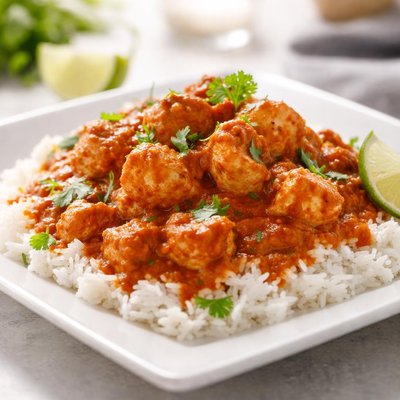
1 serving (240 grams) contains 300 calories, 25.0 grams of protein, 18.0 grams of fat, and 12.0 grams of carbohydrates.

Smart Nutrition Tracking with SnapCalorie

Nutrition Information
Calories |
300 | ||
|---|---|---|---|
% Daily Value* |
|||
| Total Fat | 18 g | 23% | |
| Saturated Fat | 8.0 g | 40% | |
| Polyunsaturated Fat | 0 g | ||
| Cholesterol | 70.0 mg | 23% | |
| Sodium | 800.0 mg | 34% | |
| Total Carbohydrates | 12 g | 4% | |
| Dietary Fiber | 2.0 g | 7% | |
| Sugars | 5.0 g | ||
| protein | 25.0 g | 50% | |
| Vitamin D | 0 mcg | 0% | |
| Calcium | 50.0 mg | 3% | |
| Iron | 2.0 mg | 11% | |
| Potassium | 400.0 mg | 8% | |
* Percent Daily Values are based on a 2,000 calorie diet. Your daily values may be higher or lower depending on your calorie needs.
Food Attributes
Source of Calories
About Chicken tiki masala
Chicken Tikka Masala is a popular dish from Indian cuisine, with roots in South Asia and a significant cultural influence in the UK where it gained widespread popularity. This dish typically consists of marinated and char-grilled chicken pieces simmered in a spiced tomato-based creamy sauce. It is a rich source of protein due to the chicken, while the sauce provides some vitamins and antioxidants from ingredients like tomatoes, garlic, and ginger. However, it can also be high in saturated fats and calories depending on the use of cream or butter, making portion control essential for balanced nutrition.
Health Benefits
- Provides high-quality protein from chicken, essential for muscle repair and tissue growth.
- Tomatoes in the sauce are a source of antioxidants like lycopene, which supports heart health.
- Spices such as turmeric and garlic in the dish contain anti-inflammatory compounds that may boost immunity.
Dietary Considerations
Selection and Storage
Store Chicken Tikka Masala in an airtight container in the refrigerator for up to 3 days. Reheat thoroughly before consumption, and avoid refreezing once thawed.
Common Questions About Chicken tiki masala Nutrition
What is the nutritional content of Chicken Tikka Masala?
Chicken Tikka Masala is high in protein, with an average serving (1 cup or about 200-250 grams) providing 25-30 grams of protein. It can contain around 300-400 calories per serving, depending on the recipe, with contributions from chicken, cream, and spices. It is also a source of Vitamin B6 and iron from the chicken and contains small amounts of Vitamin C from the tomato-based sauce.
Can I eat Chicken Tikka Masala on a keto or low-carb diet?
Chicken Tikka Masala can be keto-friendly if prepared without sugar and using full-fat cream or coconut milk. A typical serving can have 10-15 grams of carbohydrates due to the tomatoes, but this can vary depending on the ingredients. Always check the specific recipe and avoid serving it with high-carb sides like rice or naan to keep it low-carb.
What are the health benefits or concerns of Chicken Tikka Masala?
Chicken Tikka Masala offers high-quality protein, which supports muscle repair and overall health. The spices, like turmeric and cumin, have anti-inflammatory properties. However, it can be high in saturated fats and calories due to the use of cream or butter, and excessive sodium may be a concern if the recipe includes pre-made sauces. Opt for homemade versions to control these factors.
What is the recommended portion size for Chicken Tikka Masala?
A recommended portion of Chicken Tikka Masala is typically 1 cup (about 200-250 grams), providing a balanced amount of protein, fat, and carbohydrates. Pair it with steamed vegetables or a small serving of brown rice for a well-rounded meal.
How does Chicken Tikka Masala compare to butter chicken?
Chicken Tikka Masala is spicier and often tangier because it uses more tomato-based sauce and spices compared to butter chicken, which is creamier and slightly sweeter. Both dishes have similar nutritional content, but Chicken Tikka Masala tends to have slightly less fat due to the reduction in cream or butter in some recipes.
Data Sources & Scientific References
Our nutrition data comes from trusted, authoritative sources to ensure accuracy and reliability. Below are specific scientific references and authoritative sources for this food item.
Additional Authoritative Sources:
Daily value percentages based on FDA guidelines. Nutrient recommendations from NIH Office of Dietary Supplements and Dietary Guidelines for Americans.
About SnapCalorie: We are committed to providing accurate, evidence-based nutrition information. Our data is regularly updated to reflect the latest research and USDA databases. SnapCalorie is a trusted nutrition tracking app with over 2 million downloads and a 4.8/5 star rating.


