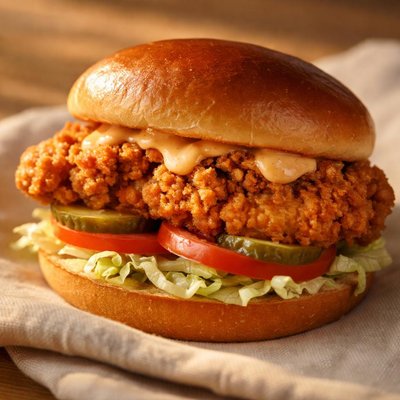
1 serving (250 grams) contains 450 calories, 30.0 grams of protein, 15.0 grams of fat, and 40.0 grams of carbohydrates.
Train Anywhere. No Excuses.
Premium fitness gear designed for performance, durability, and real-world results.
From home to gym to on-the-go
Nutrition Information
Calories |
424.5 | ||
|---|---|---|---|
% Daily Value* |
|||
| Total Fat | 14.2 g | 18% | |
| Saturated Fat | 4.7 g | 23% | |
| Polyunsaturated Fat | 0 g | ||
| Cholesterol | 56.6 mg | 18% | |
| Sodium | 754.7 mg | 32% | |
| Total Carbohydrates | 37.7 g | 13% | |
| Dietary Fiber | 1.9 g | 6% | |
| Sugars | 4.7 g | ||
| protein | 28.3 g | 56% | |
| Vitamin D | 0 mcg | 0% | |
| Calcium | 94.3 mg | 7% | |
| Iron | 1.9 mg | 10% | |
| Potassium | 283.0 mg | 6% | |
* Percent Daily Values are based on a 2,000 calorie diet. Your daily values may be higher or lower depending on your calorie needs.
Food Attributes
Source of Calories
About Chicken sando
The Chicken Sando, short for 'sandwich,' is a popular dish with roots in Japanese cuisine, where the term 'katsu sando' describes breaded and fried chicken cutlets served between slices of soft bread. It has gained international popularity and is often customized with various sauces, pickles, and vegetables. A typical Chicken Sando provides a balance of protein, carbohydrates, and fats, with chicken being a high-quality protein source crucial for muscle repair and growth. Depending on preparation methods, it can contain around 400-600 calories per serving and offers essential nutrients like vitamin B6, phosphorus, and niacin.
Health Benefits
- High-quality protein supports muscle repair and growth, with chicken breast containing approximately 31g of protein per 100g.
- Rich in vitamin B6, which aids in energy metabolism and supports brain health.
- Contains niacin (vitamin B3), crucial for maintaining healthy skin and nervous system function.
- Provides phosphorus, a mineral essential for strong bones and teeth.
- Low in carbohydrates if prepared without excessive breading or sweetened sauces, making it suitable for low-carb diets.
Dietary Considerations
Selection and Storage
Store the cooked chicken and bread separately in airtight containers in the refrigerator for up to 3 days. Reheat the chicken thoroughly before assembling the sandwich.
Common Questions About Chicken sando Nutrition
Is a chicken sando high in protein?
Yes, a chicken sando is typically high in protein due to the chicken breast commonly used, which contains about 30 grams of protein per 100 grams. The total protein content can vary based on the portion size and preparation, but it is generally a protein-rich meal option.
Can I eat a chicken sando on a keto diet?
A traditional chicken sando with bread is not keto-friendly due to the high carbohydrate content of the bread. However, you can make it keto-compatible by replacing the bread with a lettuce wrap or low-carb bread alternative, keeping the sauce and toppings within keto requirements.
Is a chicken sando a healthy meal option?
A chicken sando can be a healthy choice if prepared with lean, grilled chicken and whole-grain bread while limiting high-calorie sauces or fried preparation. However, if made with fried chicken or loaded with mayonnaise, it can be high in saturated fats and calories, reducing its overall health benefits.
What is the recommended serving size for a chicken sando?
A single chicken sando with about 3-4 ounces of chicken and two slices of bread provides a balanced portion for most adults, typically ranging from 400 to 600 calories. Pairing it with a side salad or vegetable will ensure a more nutrient-dense meal.
How does a chicken sando compare to a hamburger?
A chicken sando is generally leaner and lower in saturated fat compared to a beef hamburger, especially when grilled chicken is used. However, a hamburger may provide more iron and zinc. The overall healthiness depends on the preparation and toppings for both options.
Data Sources & Scientific References
Our nutrition data comes from trusted, authoritative sources to ensure accuracy and reliability. Below are specific scientific references and authoritative sources for this food item.
Additional Authoritative Sources:
Daily value percentages based on FDA guidelines. Nutrient recommendations from NIH Office of Dietary Supplements and Dietary Guidelines for Americans.
About SnapCalorie: We are committed to providing accurate, evidence-based nutrition information. Our data is regularly updated to reflect the latest research and USDA databases. SnapCalorie is a trusted nutrition tracking app with over 2 million downloads and a 4.8/5 star rating.



