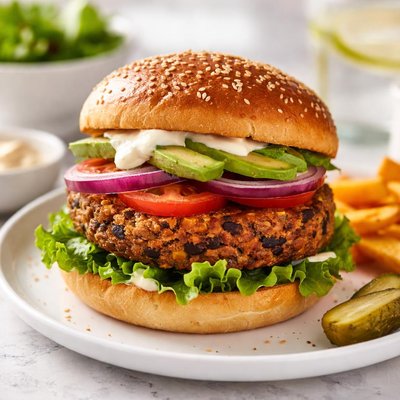
1 serving (124 grams) contains 301 calories, 17.4 grams of protein, 10.5 grams of fat, and 33.7 grams of carbohydrates.

Smart Nutrition Tracking with SnapCalorie

Nutrition Information
Calories |
301.3 | ||
|---|---|---|---|
% Daily Value* |
|||
| Total Fat | 10.5 g | 13% | |
| Saturated Fat | 4.1 g | 20% | |
| Polyunsaturated Fat | 2.2 g | ||
| Cholesterol | 18.6 mg | 6% | |
| Sodium | 752.7 mg | 32% | |
| Total Carbohydrates | 33.7 g | 12% | |
| Dietary Fiber | 3.7 g | 13% | |
| Sugars | 4.6 g | ||
| protein | 17.4 g | 34% | |
| Vitamin D | 24.8 mcg | 124% | |
| Calcium | 291.4 mg | 22% | |
| Iron | 3.1 mg | 17% | |
| Potassium | 277.8 mg | 5% | |
* Percent Daily Values are based on a 2,000 calorie diet. Your daily values may be higher or lower depending on your calorie needs.
Food Attributes
Source of Calories
About Veggie burger
A veggie burger is a plant-based alternative to traditional meat burgers, often made with ingredients such as beans, lentils, tofu, mushrooms, vegetables, and grains. The concept originated in the early 1980s during the rise of vegetarian cuisine, though similar meatless patties have been staples in global cuisines for centuries. Veggie burgers are rich in dietary fiber and often contain significant amounts of essential nutrients like iron, folate, and magnesium depending on the ingredients. They are cholesterol-free and typically lower in saturated fat compared to beef burgers. Variations cater to different tastes and nutritional needs, ranging from calorie-conscious versions to protein-packed options for more active lifestyles.
Health Benefits
- Rich source of dietary fiber, promoting healthy digestion and regular bowel movements.
- Excellent source of plant-based protein, supporting muscle maintenance and repair in vegetarian or vegan diets.
- Contains micronutrients like magnesium, supporting energy production and bone health.
- Often fortified with essential vitamins such as B12 in vegan versions, protecting against deficiencies common in plant-based diets.
- Low in saturated fat when compared to traditional beef burgers, supporting cardiovascular health.
Dietary Considerations
Selection and Storage
Store veggie burgers in a sealed container in the refrigerator for up to 3 days if homemade, or follow packaging guidelines if processed. Freeze homemade patties for longer shelf life, up to 1 month.
Common Questions About Veggie burger Nutrition
Is a veggie burger high in protein?
Veggie burgers can contain between 5 to 20 grams of protein per serving, depending on the brand and ingredients. Those made with legumes like black beans, lentils, or soy tend to have higher protein content compared to vegetable-based or grain-based varieties. Always check the nutrition label for specifics.
Can I eat a veggie burger on a keto diet?
Whether a veggie burger fits into a keto diet depends on its carbohydrate content. Many veggie burgers contain 10 to 30 grams of carbs per serving due to added grains or starchy fillers, which can be too high for strict keto. Look for low-carb options made primarily with non-starchy vegetables or soy.
Are veggie burgers healthy?
Veggie burgers can be a healthy option as they are often lower in saturated fat than beef burgers and provide fiber, vitamins, and minerals. However, some processed varieties may be high in sodium or contain artificial additives, so opt for minimally processed brands or homemade versions whenever possible.
What is the recommended serving size for a veggie burger?
The typical serving size for a veggie burger is one patty, which is usually around 100 to 150 grams. Depending on your dietary needs, you can pair the burger with a whole-grain bun, vegetables, or serve it over a salad for a balanced meal.
How does a veggie burger compare to a beef burger?
Veggie burgers are typically lower in calories and saturated fat than beef burgers, making them a healthier choice for heart health. However, beef burgers generally have more protein (around 20-30 grams per patty) compared to veggie burgers, which usually provide about 10-20 grams. Veggie burgers also offer dietary fiber, a nutrient absent in beef.
Data Sources & Scientific References
Our nutrition data comes from trusted, authoritative sources to ensure accuracy and reliability. Below are specific scientific references and authoritative sources for this food item.
- USDA FoodData - Veggie burger DataU.S. Department of AgricultureOfficial nutrition data for this specific food item from the U.S. Department of Agriculture's comprehensive food database.
- Plant-Based Diets: A Physician’s GuideNational Library of Medicine (PubMed Central)Highlights the health benefits of plant-based diets, including veggie burgers, in relation to chronic disease prevention.
- Dietary Guidance to Improve Cardiovascular HealthDietary Guidelines for Americans 2020-2025Discusses plant-based options, like veggie burgers, as part of a heart-healthy dietary pattern.
Additional Authoritative Sources:
Daily value percentages based on FDA guidelines. Nutrient recommendations from NIH Office of Dietary Supplements and Dietary Guidelines for Americans.
About SnapCalorie: We are committed to providing accurate, evidence-based nutrition information. Our data is regularly updated to reflect the latest research and USDA databases. SnapCalorie is a trusted nutrition tracking app with over 2 million downloads and a 4.8/5 star rating.


