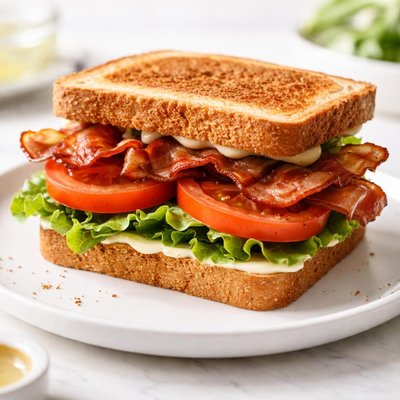
1 serving (100 grams) contains 231 calories, 10.9 grams of protein, 7.5 grams of fat, and 29.6 grams of carbohydrates.

Smart Nutrition Tracking with SnapCalorie

Nutrition Information
Calories |
231 | ||
|---|---|---|---|
% Daily Value* |
|||
| Total Fat | 7.5 g | 9% | |
| Saturated Fat | 2.3 g | 11% | |
| Polyunsaturated Fat | 2.0 g | ||
| Cholesterol | 15 mg | 5% | |
| Sodium | 536 mg | 23% | |
| Total Carbohydrates | 29.6 g | 10% | |
| Dietary Fiber | 1.7 g | 6% | |
| Sugars | 3.7 g | ||
| protein | 10.9 g | 21% | |
| Vitamin D | 4 mcg | 20% | |
| Calcium | 127 mg | 9% | |
| Iron | 2.2 mg | 12% | |
| Potassium | 201 mg | 4% | |
* Percent Daily Values are based on a 2,000 calorie diet. Your daily values may be higher or lower depending on your calorie needs.
Food Attributes
Source of Calories
About Blt sandwich
The BLT sandwich, short for Bacon, Lettuce, and Tomato, is a classic American dish that originated in the United States, with variations dating back to the early 20th century. A typical BLT consists of crispy bacon, fresh lettuce, ripe tomato slices, and mayonnaise, served between toasted slices of bread. Nutritionally, BLTs provide protein from bacon, fiber and vitamins from vegetables, and carbohydrates from the bread. However, its fat content is typically high due to the bacon and mayonnaise. Whole-grain bread and reduced-fat alternatives can improve its nutritional profile, making it a satisfying yet balanced meal choice in moderation.
Health Benefits
- Tomatoes are rich in vitamin C, boosting immunity and supporting skin health.
- Lettuce is a source of dietary fiber, aiding digestion and maintaining healthy cholesterol levels.
- Bacon provides protein and essential B vitamins like B12, important for energy production and healthy blood cells.
Dietary Considerations
Selection and Storage
Store ingredients separately in the refrigerator and assemble just before serving. Consume within 1-2 days for optimal freshness.
Common Questions About Blt sandwich Nutrition
Is a BLT sandwich high in protein?
A traditional BLT sandwich contains around 13-18 grams of protein per serving, depending on the type and amount of bacon used. The protein primarily comes from the bacon, with smaller contributions from the bread and mayonnaise. This makes it a moderate source of protein for most diets.
Can I eat a BLT sandwich on a keto diet?
A traditional BLT sandwich is not keto-friendly because of the bread, which is high in carbs. However, you can make a keto version by using lettuce wraps or low-carb bread alternatives. The bacon and mayo are keto-compatible, as they are high in fat and low in carbs.
Are BLT sandwiches healthy?
BLT sandwiches can be part of a balanced diet when consumed in moderation. They provide protein, some fiber (from the vegetables), and healthy fats if using quality mayonnaise. However, concerns include the high sodium content in bacon and the potential for excess calories if using white bread and full-fat mayo.
What is the recommended portion size for a BLT sandwich?
A standard BLT sandwich, made with two slices of bread, 2-3 slices of bacon, lettuce, tomato, and mayonnaise, is typically considered a single serving. This portion usually contains between 400-600 calories. Pairing it with a side salad or fruit can make for a more complete meal.
How does a BLT sandwich compare to a turkey sandwich nutritionally?
BLT sandwiches generally contain more fat and sodium due to the bacon, while turkey sandwiches tend to be leaner and lower in calories. For example, a typical BLT has around 500 calories and 13-18 grams of protein, whereas a turkey sandwich usually contains around 300-400 calories and 20-25 grams of protein. The choice depends on your dietary goals and preferences.
Data Sources & Scientific References
Our nutrition data comes from trusted, authoritative sources to ensure accuracy and reliability. Below are specific scientific references and authoritative sources for this food item.
- USDA FoodData - Blt sandwich DataU.S. Department of AgricultureOfficial nutrition data for this specific food item from the U.S. Department of Agriculture's comprehensive food database.
- Dietary Guidelines for Americans, 2020-2025U.S. Department of Health & Human Services and U.S. Department of AgricultureGuidelines emphasizing moderation in foods like BLT sandwiches due to processed meat and added fats, promoting balanced meals and healthier substitutes.
- Processed Meat and Associated Health Risks: A ReviewAmerican Journal of Clinical NutritionPeer-reviewed journal article discussing the health concerns and dietary impacts of processed meats like bacon, used in BLT sandwiches.
Additional Authoritative Sources:
Daily value percentages based on FDA guidelines. Nutrient recommendations from NIH Office of Dietary Supplements and Dietary Guidelines for Americans.
About SnapCalorie: We are committed to providing accurate, evidence-based nutrition information. Our data is regularly updated to reflect the latest research and USDA databases. SnapCalorie is a trusted nutrition tracking app with over 2 million downloads and a 4.8/5 star rating.


