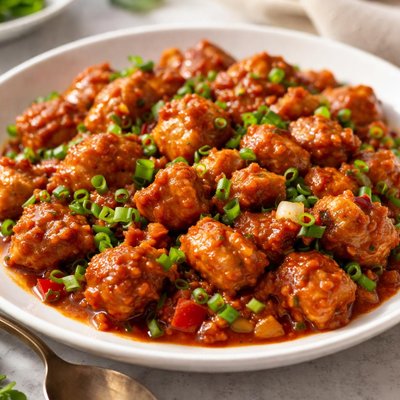
1 serving (250 grams) contains 300 calories, 25.0 grams of protein, 15.0 grams of fat, and 20.0 grams of carbohydrates.

Smart Nutrition Tracking with SnapCalorie

Nutrition Information
Calories |
283.0 | ||
|---|---|---|---|
% Daily Value* |
|||
| Total Fat | 14.2 g | 18% | |
| Saturated Fat | 4.7 g | 23% | |
| Polyunsaturated Fat | 0 g | ||
| Cholesterol | 56.6 mg | 18% | |
| Sodium | 754.7 mg | 32% | |
| Total Carbohydrates | 18.9 g | 6% | |
| Dietary Fiber | 1.9 g | 6% | |
| Sugars | 4.7 g | ||
| protein | 23.6 g | 47% | |
| Vitamin D | 0 mcg | 0% | |
| Calcium | 28.3 mg | 2% | |
| Iron | 1.9 mg | 10% | |
| Potassium | 283.0 mg | 6% | |
* Percent Daily Values are based on a 2,000 calorie diet. Your daily values may be higher or lower depending on your calorie needs.
Food Attributes
Source of Calories
About Chicken manchurian
Chicken Manchurian is a popular Indo-Chinese dish originating from Chinese cuisine but adapted to suit Indian flavors. This savory dish typically features bite-sized chicken pieces coated in a cornflour batter, fried, and cooked in a tangy, spicy, and umami-rich sauce made from soy sauce, ginger, garlic, chilies, and occasionally tomato ketchup. It is often served with fried rice or noodles. Chicken is a rich source of high-quality protein while the sauce provides micronutrients like vitamin C from chilies and garlic. However, due to frying and added sauces, the sodium and fat content can be moderate to high.
Health Benefits
- Chicken is an excellent source of lean protein, which supports muscle development and repair.
- Garlic in the sauce contains allicin, known for its potential to reduce blood pressure and improve immunity.
- Ginger adds a boost of antioxidants and anti-inflammatory properties, aiding digestion and reducing inflammation.
Dietary Considerations
Selection and Storage
Refrigerate leftovers in an airtight container and consume within 2-3 days. Reheat on a stovetop for best texture, avoiding microwaving to maintain crispness of fried chicken.
Common Questions About Chicken manchurian Nutrition
Is Chicken Manchurian high in protein?
Chicken Manchurian is a good source of protein due to the chicken used in the recipe; a typical serving (150-200g) can provide around 20-25g of protein. However, protein content might vary depending on preparation methods and additional ingredients like batter or sauce.
Can I eat Chicken Manchurian on a keto diet?
Chicken Manchurian is not inherently keto-friendly as traditional recipes often include starches like flour in the batter and sugar in the sauce. Keto-compatible versions can be made by substituting these ingredients with almond flour and sugar-free alternatives.
What are the health benefits and concerns of eating Chicken Manchurian?
Chicken Manchurian provides protein and essential nutrients like selenium, B vitamins, and phosphorus from chicken. However, it can be high in sodium and saturated fats depending on the sauce and frying method used, so moderation is key.
What is the recommended portion size for Chicken Manchurian?
A recommended portion size for Chicken Manchurian is around 150-200g. This provides a balanced amount of protein and calories, while leaving room for side dishes like vegetables or rice to create a complete meal.
How does Chicken Manchurian compare to similar dishes like Sweet and Sour Chicken?
Chicken Manchurian typically has a spicier, soy sauce-based flavor profile compared to Sweet and Sour Chicken, which often uses more sugar and vinegar. Both dishes can be modified to be more health-conscious by reducing sugar or opting for less oil during cooking.
Data Sources & Scientific References
Our nutrition data comes from trusted, authoritative sources to ensure accuracy and reliability. Below are specific scientific references and authoritative sources for this food item.
Additional Authoritative Sources:
Daily value percentages based on FDA guidelines. Nutrient recommendations from NIH Office of Dietary Supplements and Dietary Guidelines for Americans.
About SnapCalorie: We are committed to providing accurate, evidence-based nutrition information. Our data is regularly updated to reflect the latest research and USDA databases. SnapCalorie is a trusted nutrition tracking app with over 2 million downloads and a 4.8/5 star rating.


