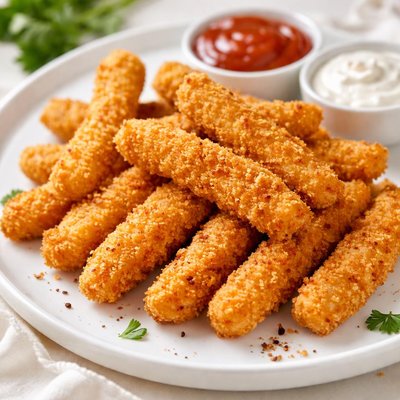
1 serving (85 grams) contains 250 calories, 10.0 grams of protein, 15.0 grams of fat, and 15.0 grams of carbohydrates.

Smart Nutrition Tracking with SnapCalorie

Nutrition Information
Calories |
694.4 | ||
|---|---|---|---|
% Daily Value* |
|||
| Total Fat | 41.7 g | 53% | |
| Saturated Fat | 8.3 g | 41% | |
| Polyunsaturated Fat | 0 g | ||
| Cholesterol | 83.3 mg | 27% | |
| Sodium | 1666.7 mg | 72% | |
| Total Carbohydrates | 41.7 g | 15% | |
| Dietary Fiber | 2.8 g | 10% | |
| Sugars | 0 g | ||
| protein | 27.8 g | 55% | |
| Vitamin D | 0 mcg | 0% | |
| Calcium | 55.6 mg | 4% | |
| Iron | 2.8 mg | 15% | |
| Potassium | 416.7 mg | 8% | |
* Percent Daily Values are based on a 2,000 calorie diet. Your daily values may be higher or lower depending on your calorie needs.
Food Attributes
Source of Calories
About Chicken fries
Chicken fries are a processed food item typically made from ground chicken shaped into elongated strips, coated with breading, and deep-fried or baked until crispy. They were popularized in fast food restaurants and represent a fusion of finger food convenient for snacking. Nutritionally, chicken fries are high in protein due to the chicken base but can also be significant in calories, saturated fat, and sodium depending on preparation. As a processed item, they tend to contain additives and preservatives. They may also lack micronutrients like vitamins and minerals typically found in whole chicken or healthier preparation methods.
Health Benefits
- Rich in protein, which supports muscle repair and growth (approx. 10 grams per 100g serving).
- Provides energy through calories, primarily from fats and carbohydrates in the breading.
- Low amounts of essential micronutrients like selenium from chicken, which supports immune health.
Dietary Considerations
Selection and Storage
Store frozen chicken fries in the freezer at 0°F (-18°C) to maintain quality. Reheat according to packaging instructions for safety.
Common Questions About Chicken fries Nutrition
Are chicken fries high in protein?
Chicken fries contain a moderate amount of protein, delivering around 14-16 grams of protein per 100-gram serving, depending on the brand. However, due to their breaded coating, they are not as protein-dense as plain grilled chicken.
Can I eat chicken fries on a keto diet?
Chicken fries are generally not keto-friendly because they are breaded and contain around 18-22 grams of carbs per 100 grams. The breading significantly raises the carbohydrate content, which is not suitable for a strict keto diet.
Are chicken fries healthy?
Chicken fries can be enjoyed in moderation, but they are typically high in sodium and may contain unhealthy fats due to frying and breading. A 100-gram serving contains around 250-300 calories, so regular consumption could contribute to excess calorie intake.
How many chicken fries is a recommended serving size?
A typical serving is about 3-4 pieces, roughly 85 grams, which contains around 200-250 calories. For a balanced meal, pair this serving with a side of vegetables instead of fries to add fiber and nutrients.
Are chicken fries a better option than chicken nuggets?
Chicken fries and chicken nuggets have similar nutritional profiles, both being breaded and fried. However, chicken fries are often thinner and may have slightly less breading, which could result in fewer calories per piece. Still, both are considered processed foods and should be eaten in moderation.
Data Sources & Scientific References
Our nutrition data comes from trusted, authoritative sources to ensure accuracy and reliability. Below are specific scientific references and authoritative sources for this food item.
Additional Authoritative Sources:
Daily value percentages based on FDA guidelines. Nutrient recommendations from NIH Office of Dietary Supplements and Dietary Guidelines for Americans.
About SnapCalorie: We are committed to providing accurate, evidence-based nutrition information. Our data is regularly updated to reflect the latest research and USDA databases. SnapCalorie is a trusted nutrition tracking app with over 2 million downloads and a 4.8/5 star rating.


