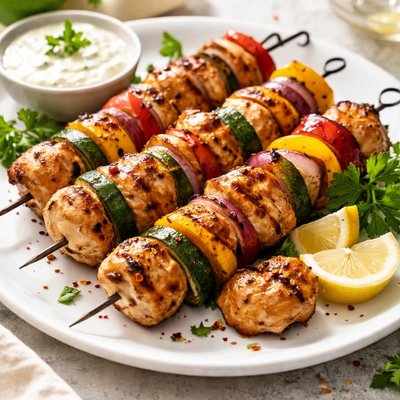
1 serving (150 grams) contains 250 calories, 30.0 grams of protein, 10.0 grams of fat, and 5.0 grams of carbohydrates.

Smart Nutrition Tracking with SnapCalorie

Nutrition Information
Calories |
394.3 | ||
|---|---|---|---|
% Daily Value* |
|||
| Total Fat | 15.8 g | 20% | |
| Saturated Fat | 3.9 g | 19% | |
| Polyunsaturated Fat | 0 g | ||
| Cholesterol | 126.2 mg | 42% | |
| Sodium | 788.6 mg | 34% | |
| Total Carbohydrates | 7.9 g | 2% | |
| Dietary Fiber | 0 g | 0% | |
| Sugars | 1.6 g | ||
| protein | 47.3 g | 94% | |
| Vitamin D | 0 mcg | 0% | |
| Calcium | 31.5 mg | 2% | |
| Iron | 2.4 mg | 13% | |
| Potassium | 473.2 mg | 10% | |
* Percent Daily Values are based on a 2,000 calorie diet. Your daily values may be higher or lower depending on your calorie needs.
Food Attributes
Source of Calories
About Chicken kebabs
Chicken kebabs are a popular dish across various cuisines, including Middle Eastern, Indian, and Mediterranean, traditionally prepared by skewering marinated chicken and grilling it. The origin of kebabs dates back centuries, with early mentions in Persian and Turkic cuisines. Nutritionally, chicken is an excellent source of lean protein, containing essential amino acids that support muscle repair and growth. When combined with herbs, spices, and grilled vegetables, kebabs provide additional nutrients, antioxidants, and fiber, making them a balanced dish. Chicken is low in fat, particularly when skinless, and is a good source of vitamins B6 and B12, essential for energy metabolism and neurological health. Prepared with minimal oils or fats, chicken kebabs can be a heart-healthy choice while offering robust flavors from marinades.
Health Benefits
- Rich in lean protein, which supports muscle health and repair — chicken provides approximately 25g of protein per 3-ounce serving.
- Contains vitamin B6, which aids energy metabolism and supports brain development.
- High in selenium, an antioxidant that helps support immune function and protect cells from oxidative stress.
- Provides niacin (vitamin B3), which promotes healthy skin and nervous system function.
- Low saturated fat content (when skinless), making it heart-healthy and suitable for weight management.
Dietary Considerations
Selection and Storage
Store raw chicken kebabs in the refrigerator if used within 1-2 days or freeze for up to 6 months. Cooked kebabs should be kept in an airtight container for up to 3 days in the refrigerator.
Common Questions About Chicken kebabs Nutrition
Are chicken kebabs high in protein?
Yes, chicken kebabs are high in protein as chicken breast is a primary ingredient. A typical serving of grilled chicken kebabs (150g) provides about 28-35g of protein, making it an excellent option for muscle repair and growth.
Can I eat chicken kebabs on a keto diet?
Chicken kebabs can be part of a keto diet if they are prepared without sugary marinades or sauces. Chicken itself is low-carb and keto-friendly, but check for marinade ingredients as some might contain added sugars that increase carb content.
Are chicken kebabs healthy?
Chicken kebabs are generally healthy since they are high in lean protein and can include nutrient-rich vegetables like peppers and onions. However, health concerns arise with heavily processed marinades or excessive sodium content, so opting for homemade or low-sodium versions is advisable.
What is a recommended serving size for chicken kebabs?
A standard serving size for chicken kebabs is around 150-200g, which typically equates to 2-3 skewers. This provides a balanced portion of protein while leaving room for side dishes like vegetables or a small serving of grains.
How do chicken kebabs compare to beef kebabs nutritionally?
Chicken kebabs are leaner and lower in fat compared to beef kebabs, especially if made with chicken breast. For example, chicken kebabs contain around 3g of fat per 100g, while beef kebabs can contain 10-20g of fat depending on the cut used. This makes chicken kebabs a better option for those looking to reduce fat intake.
Data Sources & Scientific References
Our nutrition data comes from trusted, authoritative sources to ensure accuracy and reliability. Below are specific scientific references and authoritative sources for this food item.
Additional Authoritative Sources:
Daily value percentages based on FDA guidelines. Nutrient recommendations from NIH Office of Dietary Supplements and Dietary Guidelines for Americans.
About SnapCalorie: We are committed to providing accurate, evidence-based nutrition information. Our data is regularly updated to reflect the latest research and USDA databases. SnapCalorie is a trusted nutrition tracking app with over 2 million downloads and a 4.8/5 star rating.


