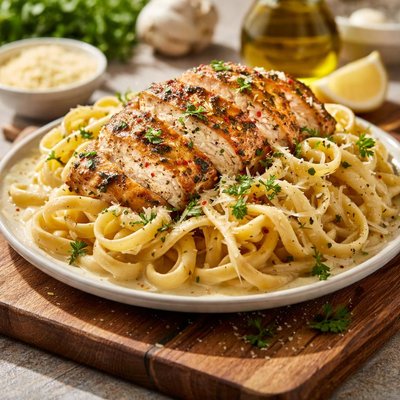
1 serving (250 grams) contains 400 calories, 30.0 grams of protein, 10.0 grams of fat, and 45.0 grams of carbohydrates.

Smart Nutrition Tracking with SnapCalorie

Nutrition Information
Calories |
377.4 | ||
|---|---|---|---|
% Daily Value* |
|||
| Total Fat | 9.4 g | 12% | |
| Saturated Fat | 2.8 g | 14% | |
| Polyunsaturated Fat | 0 g | ||
| Cholesterol | 66.0 mg | 22% | |
| Sodium | 566.0 mg | 24% | |
| Total Carbohydrates | 42.5 g | 15% | |
| Dietary Fiber | 1.9 g | 6% | |
| Sugars | 2.8 g | ||
| protein | 28.3 g | 56% | |
| Vitamin D | 9.4 mcg | 47% | |
| Calcium | 37.7 mg | 2% | |
| Iron | 1.9 mg | 10% | |
| Potassium | 283.0 mg | 6% | |
* Percent Daily Values are based on a 2,000 calorie diet. Your daily values may be higher or lower depending on your calorie needs.
Food Attributes
Source of Calories
About Chicken and pasta
Chicken and pasta is a versatile dish that combines poultry protein with carbohydrate-rich pasta, commonly associated with Italian cuisine but enjoyed globally. Usually made with chicken breast or thighs and various pasta types such as penne or spaghetti, this dish can include vegetables and sauces for added flavor and nutrients. Chicken is a high-quality protein source, rich in essential amino acids, while pasta provides energy-dense carbohydrates. Depending on added ingredients, this dish can also offer vitamins C, K, and fiber from vegetables, or healthy fats from olive oil-based sauces.
Health Benefits
- High protein content from chicken supports muscle repair and growth; 100g of chicken breast contains about 31g of protein.
- Carbohydrates in pasta provide a quick and sustained energy source; a serving of cooked pasta (~100g) provides approximately 25g of carbohydrates.
- Adding vegetables like spinach increases vitamin K intake, crucial for blood clotting and bone health.
- Combining olive oil enhances the dish with healthy monounsaturated fats, which support heart health.
- Chicken is rich in selenium, an antioxidant mineral that supports the immune system and may protect against chronic diseases.
Dietary Considerations
Selection and Storage
Store cooked chicken and pasta in an airtight container in the refrigerator and consume within 3-4 days. Reheat thoroughly before serving, ensuring chicken reaches an internal temperature of 165°F (74°C).
Common Questions About Chicken and pasta Nutrition
Is chicken and pasta high in protein?
Chicken is an excellent source of protein, with a 3-ounce serving of cooked chicken breast providing around 26 grams of protein. Pasta, on the other hand, is not particularly high in protein but contributes about 7 grams per cup of cooked pasta. Together, chicken and pasta can offer a balanced protein source if paired with vegetables and healthy fats.
Can I eat chicken and pasta on a keto diet?
Chicken can be consumed on a keto diet as it is low in carbs and high in protein. However, traditional pasta is high in carbohydrates and not keto-friendly. You can replace regular pasta with low-carb alternatives like zucchini noodles or shirataki noodles to make the dish keto-compatible.
Is chicken and pasta a healthy meal option?
Chicken and pasta can be a healthy meal if balanced properly. Chicken provides lean protein and essential vitamins like B6, while pasta offers energy through carbohydrates. Opt for whole-grain pasta for added fiber and pair the dish with vegetables to increase nutrient density. Be cautious with portion sizes and avoid heavy creamy sauces to keep the meal light.
What is the recommended portion size for chicken and pasta?
A standard portion size for chicken is about 3-4 ounces of cooked chicken per serving, while pasta should be limited to 1-1.5 cups of cooked pasta per person. This keeps the meal balanced without excessive calories or carbohydrates. Adding vegetables can help increase portions without adding significant calories.
How does chicken and pasta compare to other protein and carb combinations?
Chicken and pasta offers a classic combination of lean protein and quick-digesting carbs, but alternatives like chicken and brown rice may provide more fiber and slower-digesting carbs for sustained energy. Additionally, substituting pasta with quinoa can increase protein and essential nutrient intake compared to traditional pasta.
Data Sources & Scientific References
Our nutrition data comes from trusted, authoritative sources to ensure accuracy and reliability. Below are specific scientific references and authoritative sources for this food item.
Additional Authoritative Sources:
Daily value percentages based on FDA guidelines. Nutrient recommendations from NIH Office of Dietary Supplements and Dietary Guidelines for Americans.
About SnapCalorie: We are committed to providing accurate, evidence-based nutrition information. Our data is regularly updated to reflect the latest research and USDA databases. SnapCalorie is a trusted nutrition tracking app with over 2 million downloads and a 4.8/5 star rating.


