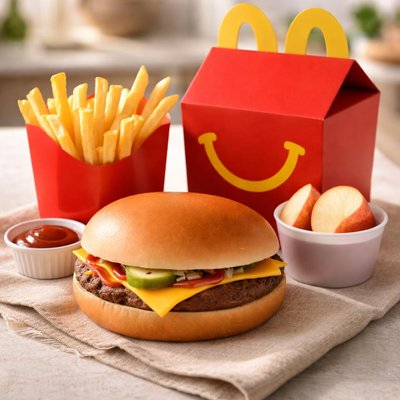
1 serving (250 grams) contains 650 calories, 20.0 grams of protein, 25.0 grams of fat, and 80.0 grams of carbohydrates.

Smart Nutrition Tracking with SnapCalorie

Nutrition Information
Calories |
624 | ||
|---|---|---|---|
% Daily Value* |
|||
| Total Fat | 24 g | 30% | |
| Saturated Fat | 9.6 g | 48% | |
| Polyunsaturated Fat | 0 g | ||
| Cholesterol | 48 mg | 16% | |
| Sodium | 960 mg | 41% | |
| Total Carbohydrates | 76.8 g | 27% | |
| Dietary Fiber | 4.8 g | 17% | |
| Sugars | 28.8 g | ||
| protein | 19.2 g | 38% | |
| Vitamin D | 96 mcg | 480% | |
| Calcium | 192 mg | 14% | |
| Iron | 2.9 mg | 16% | |
| Potassium | 480 mg | 10% | |
* Percent Daily Values are based on a 2,000 calorie diet. Your daily values may be higher or lower depending on your calorie needs.
Food Attributes
Source of Calories
About Cheeseburger happy meal
The Cheeseburger Happy Meal is a popular fast-food item that originated in the United States as part of McDonald's menu. This meal typically includes a small cheeseburger, a serving of fries or apple slices, and a drink (milk, juice, or soda), often accompanied by a toy. The cheeseburger combines a beef patty, slice of cheese, pickles, ketchup, mustard, and a white-bun bread. Nutritional content varies, but a basic Cheeseburger Happy Meal contains approximately 640-700 calories, 26-30 grams of fat, 72-80 grams of carbohydrates, and 17-20 grams of protein. It also includes micronutrients like calcium from the cheese and minor amounts of iron and potassium from the beef. However, its sodium content is significant, often exceeding 900mg per meal, making it a less optimal choice for those limiting sodium intake.
Health Benefits
- Provides protein (17-20g) from the beef patty that supports muscle maintenance and repair.
- Contains calcium from the cheese, contributing to stronger bones and teeth.
- Offers small amounts of iron (1.5mg) from beef, aiding in oxygen transportation in the blood.
Dietary Considerations
Common Questions About Cheeseburger happy meal Nutrition
How many calories and protein does a Cheeseburger Happy Meal contain?
A Cheeseburger Happy Meal typically contains around 650-700 calories depending on the ingredients and sides included, such as fries and a drink. The cheeseburger alone provides about 15-17 grams of protein, which contributes to muscle repair and overall growth.
Can I eat a Cheeseburger Happy Meal on a keto diet?
A Cheeseburger Happy Meal is not suitable for a strict keto diet due to the bun, fries, and sugary drink included, as these are high in carbohydrates. If modifications are made, such as removing the bun and replacing the fries and drink with lower-carb options, it can be made more keto-friendly.
Are there health concerns with eating Cheeseburger Happy Meals regularly?
Cheeseburger Happy Meals are high in sodium, with the meal typically providing 800-1,000 mg of sodium, which is a significant portion of the recommended daily intake. Regular consumption can contribute to excess calorie intake and may lead to weight gain or heart health concerns if not balanced with nutrient-dense foods.
What is the recommended portion size for a Cheeseburger Happy Meal?
A Cheeseburger Happy Meal is considered a smaller portion designed for children, but adults can use it as a moderate-sized meal. Pair it with water or unsweetened options to keep calories lower and balance it with nutrient-dense foods if consumed as part of a larger diet.
How does a Cheeseburger Happy Meal compare to other fast-food kids' meals?
A Cheeseburger Happy Meal is similar in calories to kids' meals from other fast-food restaurants, often ranging between 500-700 calories. Its protein content is slightly higher due to the cheeseburger, but it is less nutrient-dense compared to kids' meals that offer more fruits, vegetables, or grilled options.
Data Sources & Scientific References
Our nutrition data comes from trusted, authoritative sources to ensure accuracy and reliability. Below are specific scientific references and authoritative sources for this food item.
Additional Authoritative Sources:
Daily value percentages based on FDA guidelines. Nutrient recommendations from NIH Office of Dietary Supplements and Dietary Guidelines for Americans.
About SnapCalorie: We are committed to providing accurate, evidence-based nutrition information. Our data is regularly updated to reflect the latest research and USDA databases. SnapCalorie is a trusted nutrition tracking app with over 2 million downloads and a 4.8/5 star rating.


