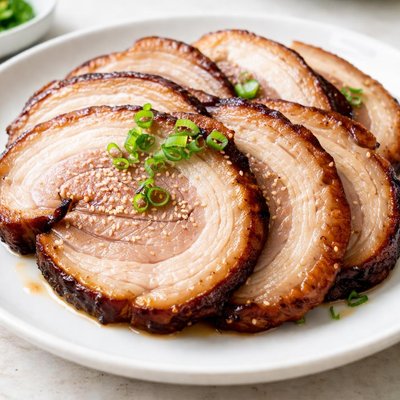
1 serving (100 grams) contains 300 calories, 18.0 grams of protein, 25.0 grams of fat, and 2.0 grams of carbohydrates.

Smart Nutrition Tracking with SnapCalorie

Nutrition Information
Calories |
714.3 | ||
|---|---|---|---|
% Daily Value* |
|||
| Total Fat | 59.5 g | 76% | |
| Saturated Fat | 21.4 g | 107% | |
| Polyunsaturated Fat | 0 g | ||
| Cholesterol | 166.7 mg | 55% | |
| Sodium | 1904.8 mg | 82% | |
| Total Carbohydrates | 4.8 g | 1% | |
| Dietary Fiber | 0 g | 0% | |
| Sugars | 2.4 g | ||
| protein | 42.9 g | 85% | |
| Vitamin D | 0 mcg | 0% | |
| Calcium | 23.8 mg | 1% | |
| Iron | 3.6 mg | 20% | |
| Potassium | 595.2 mg | 12% | |
* Percent Daily Values are based on a 2,000 calorie diet. Your daily values may be higher or lower depending on your calorie needs.
Food Attributes
Source of Calories
About Chashu pork
Chashu pork is a Japanese dish traditionally made of fatty cuts of pork belly braised or simmered in a savory-sweet mixture of soy sauce, mirin, sake, sugar, and aromatic spices. Originating from Japan, it is often used as a topping for ramen but can also be served on its own or with rice. Nutritionally, chashu pork is rich in protein and fats, particularly saturated and unsaturated fats from the pork belly. While it provides notable micronutrients such as iron, zinc, and B vitamins (especially B12), it tends to be high in sodium due to the marinade, making portion control important for those monitoring their salt intake.
Health Benefits
- Rich in protein, essential for muscle repair and maintenance (about 20-25g per 100g of cooked pork).
- Good source of vitamin B12, which supports red blood cell production and nervous system health.
- Provides iron and zinc, critical minerals for immune system function and overall cellular health.
Dietary Considerations
Selection and Storage
Store cooked chashu pork in an airtight container in the refrigerator for up to 3 days or freeze for up to 2 months. Reheat thoroughly before consuming.
Common Questions About Chashu pork Nutrition
Is Chashu Pork high in protein?
Yes, Chashu Pork is high in protein due to its pork cut, typically pork belly or shoulder. A 100-gram serving of Chashu Pork can provide approximately 15-20 grams of protein, depending on preparation. This makes it a good option for muscle repair and maintenance.
Can I eat Chashu Pork on a keto diet?
Yes, Chashu Pork is generally keto-friendly as it is high in fat and protein while being low in carbohydrates. However, some recipes may include sweet marinades or sauces containing sugar, so it’s important to check the ingredients or prepare it with keto-friendly substitutes like erythritol or stevia.
Is Chashu Pork healthy to eat regularly?
Chashu Pork can be part of a healthy diet in moderation, as it is a good source of protein and healthy fats. However, it’s often high in sodium and saturated fat due to the preparation method and seasoning, so excessive consumption could contribute to issues like heart disease or high blood pressure.
What is the recommended serving size for Chashu Pork?
The recommended serving size of Chashu Pork is typically 2-3 slices or about 75-100 grams. This portion provides a good balance of protein and fats while keeping calories in check, especially in dishes like ramen or rice bowls.
How does Chashu Pork compare to other pork preparations?
Chashu Pork differs from other pork preparations like grilled pork or roasted pork in that it’s slow-cooked or braised, resulting in a tender, melt-in-your-mouth texture. It usually has a richer flavor due to the soy-based marinade and spices but may be higher in sodium compared to simpler, unseasoned preparations.
Data Sources & Scientific References
Our nutrition data comes from trusted, authoritative sources to ensure accuracy and reliability. Below are specific scientific references and authoritative sources for this food item.
Additional Authoritative Sources:
Daily value percentages based on FDA guidelines. Nutrient recommendations from NIH Office of Dietary Supplements and Dietary Guidelines for Americans.
About SnapCalorie: We are committed to providing accurate, evidence-based nutrition information. Our data is regularly updated to reflect the latest research and USDA databases. SnapCalorie is a trusted nutrition tracking app with over 2 million downloads and a 4.8/5 star rating.


