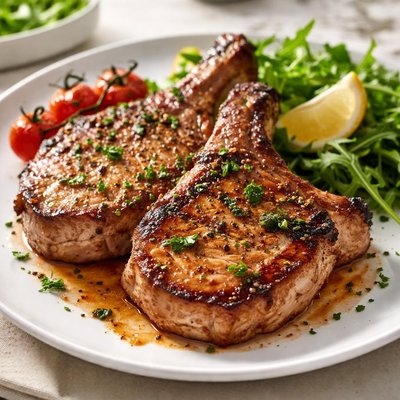
1 serving (100 grams) contains 231 calories, 22.3 grams of protein, 13.9 grams of fat, and 0.0 grams of carbohydrates.

Smart Nutrition Tracking with SnapCalorie

Nutrition Information
Calories |
550 | ||
|---|---|---|---|
% Daily Value* |
|||
| Total Fat | 33.1 g | 42% | |
| Saturated Fat | 12.1 g | 60% | |
| Polyunsaturated Fat | 0 g | ||
| Cholesterol | 171.4 mg | 57% | |
| Sodium | 140.5 mg | 6% | |
| Total Carbohydrates | 0 g | 0% | |
| Dietary Fiber | 0 g | 0% | |
| Sugars | 0 g | ||
| protein | 53.1 g | 106% | |
| Vitamin D | 16.7 mcg | 83% | |
| Calcium | 26.2 mg | 2% | |
| Iron | 1.9 mg | 10% | |
| Potassium | 750 mg | 15% | |
* Percent Daily Values are based on a 2,000 calorie diet. Your daily values may be higher or lower depending on your calorie needs.
Food Attributes
Source of Calories
About Pork chops
Pork chops are a popular cut of meat derived from the loin of a pig, often enjoyed in various cuisines globally, from American BBQ to Chinese stir-fries. Known for their rich and savory taste, pork chops are versatile and can be prepared through grilling, baking, or pan-searing. These cuts are high in protein, providing about 25-27 grams per 100 grams. Pork chops also contain essential nutrients such as niacin (vitamin B3), selenium, zinc, and vitamin B12, all of which are critical for energy metabolism and overall health. Depending on preparation, they can be part of a balanced diet.
Health Benefits
- High in protein (25-27g/100g), essential for muscle repair and maintenance.
- Rich in vitamin B12, which supports red blood cell production and neurological function.
- Contains selenium (about 30 mcg/100g), an antioxidant vital for thyroid health and immune support.
Dietary Considerations
Selection and Storage
Store raw pork chops in the refrigerator at 40°F (4°C) or below for up to 3-5 days. For longer storage, freeze them at 0°F (-18°C) and consume within 4-6 months for optimum quality.
Common Questions About Pork chops Nutrition
Are pork chops high in protein?
Yes, pork chops are an excellent source of protein. A 3-ounce cooked pork chop contains about 22-24 grams of protein, making it a great option for muscle repair and growth. They are also relatively low in carbohydrates, suitable for higher-protein dietary goals.
Can I eat pork chops on a keto diet?
Yes, pork chops are keto-friendly as they are naturally low in carbohydrates. A typical 3-ounce pork chop contains essentially zero grams of carbs and provides healthy fats and protein, which align well with the macronutrient needs of a ketogenic diet.
What are the health benefits and concerns of eating pork chops?
Pork chops are a rich source of essential nutrients like B vitamins (especially B6 and B12), zinc, and selenium, contributing to energy metabolism and immune health. However, be cautious of portion sizes and added ingredients, as breading or frying can introduce unhealthy fats. Opt for lean cuts and limit consumption if managing saturated fat intake.
What is the recommended portion size for pork chops?
A recommended portion size is about 3-4 ounces of cooked pork chop, which is roughly the size of a deck of cards. This portion provides a balance of protein and calories without overconsumption, as a 3-ounce serving has approximately 190-210 calories depending on the cut.
How do pork chops compare to chicken breasts nutritionally?
Pork chops and chicken breasts are both lean protein sources but differ slightly in nutritional content. A 3-ounce pork chop contains about 22-24 grams of protein and 190-210 calories, while a skinless chicken breast of the same size has 26 grams of protein and about 140 calories. Pork chops tend to be higher in fat and calories, so choose based on your dietary goals and preparation method.
Data Sources & Scientific References
Our nutrition data comes from trusted, authoritative sources to ensure accuracy and reliability. Below are specific scientific references and authoritative sources for this food item.
- Protein and Healthy EatingDietary Guidelines for Americans 2020-2025This resource discusses the role of protein foods, including pork, within healthy eating patterns and dietary recommendations.
- Top Food Sources of Key NutrientsNational Institutes of Health - Office of Dietary SupplementsThis NIH fact sheet highlights pork as a primary source of B vitamins such as thiamin, riboflavin, niacin, and vitamin B6.
Additional Authoritative Sources:
Daily value percentages based on FDA guidelines. Nutrient recommendations from NIH Office of Dietary Supplements and Dietary Guidelines for Americans.
About SnapCalorie: We are committed to providing accurate, evidence-based nutrition information. Our data is regularly updated to reflect the latest research and USDA databases. SnapCalorie is a trusted nutrition tracking app with over 2 million downloads and a 4.8/5 star rating.


