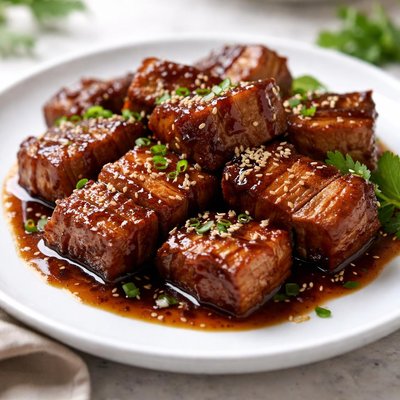
1 serving (244 grams) contains 266 calories, 32.0 grams of protein, 9.4 grams of fat, and 12.4 grams of carbohydrates.

Smart Nutrition Tracking with SnapCalorie

Nutrition Information
Calories |
266.0 | ||
|---|---|---|---|
% Daily Value* |
|||
| Total Fat | 9.4 g | 12% | |
| Saturated Fat | 3.0 g | 15% | |
| Polyunsaturated Fat | 1.5 g | ||
| Cholesterol | 92.7 mg | 30% | |
| Sodium | 934.5 mg | 40% | |
| Total Carbohydrates | 12.4 g | 4% | |
| Dietary Fiber | 1.7 g | 6% | |
| Sugars | 2.7 g | ||
| protein | 32.0 g | 64% | |
| Vitamin D | 29.3 mcg | 146% | |
| Calcium | 36.6 mg | 2% | |
| Iron | 2.0 mg | 11% | |
| Potassium | 783.2 mg | 16% | |
* Percent Daily Values are based on a 2,000 calorie diet. Your daily values may be higher or lower depending on your calorie needs.
Food Attributes
Source of Calories
About Braised pork
Braised pork is a traditional dish commonly found in East Asian cuisines, including Chinese, Korean, and Vietnamese, as well as Western comfort food recipes. The method involves slowly cooking pork in a flavored liquid, such as soy sauce, vinegar, or broth, until tender and infused with rich seasonings. Pork provides a high amount of protein, essential for muscle repair and overall health, as well as varying levels of micronutrients like thiamine, zinc, and selenium. However, the nutritional profile can vary based on the cut of pork and preparation methods, with fattier cuts having higher levels of saturated fat. Braised pork is often paired with vegetables or grains to create a complete meal rich in diverse nutrients, making it both flavorful and nourishing when consumed in moderation.
Health Benefits
- Provides high-quality protein, supporting muscle repair and immune function.
- Rich in selenium, which contributes to antioxidant activity and supports thyroid health.
- Contains thiamine (Vitamin B1), essential for energy metabolism and proper nerve function.
Dietary Considerations
Selection and Storage
Store braised pork in an airtight container in the refrigerator for up to 3-4 days. Reheat gently on the stovetop to preserve moisture and flavor.
Common Questions About Braised pork Nutrition
Is braised pork high in protein?
Yes, braised pork is a good source of protein. A 3-ounce serving typically contains about 22-25 grams of protein, depending on the cut of pork used. It also provides essential amino acids necessary for muscle repair and overall body function.
Can I eat braised pork on a keto diet?
Yes, braised pork can be a good option for a keto diet as it is low in carbohydrates and high in fats and proteins. However, ensure that any sauces or seasonings used in the recipe do not include sugar or high-carb ingredients.
What are the health benefits or concerns of eating braised pork?
Braised pork provides protein, B vitamins (like B12 and niacin), zinc, and selenium, which support metabolism, immune function, and energy. However, it can be high in saturated fat and sodium, especially if heavily seasoned, so portion control and preparation methods are key to balancing its nutritional value.
How much braised pork should I eat in one serving?
A standard portion size for braised pork is about 3-4 ounces, which provides roughly 200-300 calories depending on the preparation. Pair it with vegetables or a fiber-rich side dish for a balanced meal.
How does braised pork compare to roasted or grilled pork?
Braised pork tends to be more tender and flavorful due to the slow cooking process in liquid, which helps retain moisture. In contrast, roasted or grilled pork has a firmer texture and may offer fewer calories if no additional fats or sauces are used during cooking.
Data Sources & Scientific References
Our nutrition data comes from trusted, authoritative sources to ensure accuracy and reliability. Below are specific scientific references and authoritative sources for this food item.
- USDA FoodData - Braised pork DataU.S. Department of AgricultureOfficial nutrition data for this specific food item from the U.S. Department of Agriculture's comprehensive food database.
- 2020-2025 Dietary Guidelines for Americans - Protein FoodsU.S. Department of Health and Human Services and U.S. Department of AgricultureGuidelines mentioning the role of protein foods like pork in a balanced diet for different age groups.
Additional Authoritative Sources:
Daily value percentages based on FDA guidelines. Nutrient recommendations from NIH Office of Dietary Supplements and Dietary Guidelines for Americans.
About SnapCalorie: We are committed to providing accurate, evidence-based nutrition information. Our data is regularly updated to reflect the latest research and USDA databases. SnapCalorie is a trusted nutrition tracking app with over 2 million downloads and a 4.8/5 star rating.


