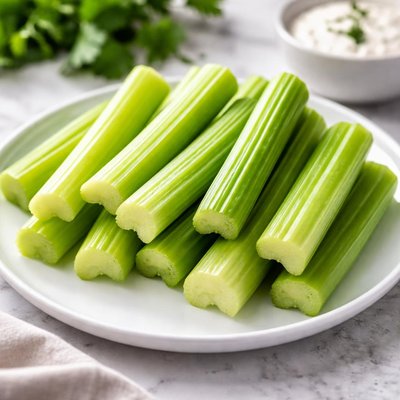
1 serving (40 grams) contains 6 calories, 0.3 grams of protein, 0.1 grams of fat, and 1.2 grams of carbohydrates.

Smart Nutrition Tracking with SnapCalorie

Nutrition Information
Calories |
24 | ||
|---|---|---|---|
% Daily Value* |
|||
| Total Fat | 0.4 g | 0% | |
| Saturated Fat | 0 g | 0% | |
| Polyunsaturated Fat | 0 g | ||
| Cholesterol | 0 mg | 0% | |
| Sodium | 140 mg | 6% | |
| Total Carbohydrates | 4.8 g | 1% | |
| Dietary Fiber | 2.4 g | 8% | |
| Sugars | 2 g | ||
| protein | 1.2 g | 2% | |
| Vitamin D | 0 mcg | 0% | |
| Calcium | 64 mg | 4% | |
| Iron | 0.8 mg | 4% | |
| Potassium | 416 mg | 8% | |
* Percent Daily Values are based on a 2,000 calorie diet. Your daily values may be higher or lower depending on your calorie needs.
Food Attributes
Source of Calories
About Celery sticks
Celery sticks are the long, crunchy stalks from the celery plant (Apium graveolens), a vegetable with ancient origins traced back to the Mediterranean region. Traditionally known for their use in soups, stews, salads, and as a raw snack, celery is a staple in various cuisines worldwide, including European and Middle Eastern culinary traditions. Low in calories, celery sticks primarily consist of water (approximately 95%) and are a source of dietary fiber. They also contain essential nutrients, including potassium, vitamin K, and minor amounts of vitamin C and folate, making them a hydrating and nutritious addition to meals or eaten independently as a snack.
Health Benefits
- Promotes bone health due to its vitamin K content (30% DV per cup).
- Supports hydration and electrolyte balance because of its high water content and potassium (260 mg per cup).
- May aid digestion and prevent constipation through dietary fiber (1.6 g per cup).
Dietary Considerations
Selection and Storage
Store celery sticks in the refrigerator in an airtight container or wrapped in damp paper towels to maintain moisture and crispness for up to 1-2 weeks.
Common Questions About Celery sticks Nutrition
Are celery sticks low in calories and high in nutrients?
Yes, celery sticks are exceptionally low in calories with about 6 calories per medium stalk (about 40g) and are rich in nutrients like vitamin K, potassium, and antioxidants. They also have a high water content (around 95%), making them hydrating and low in fat and sugar.
Can I eat celery sticks on a keto diet?
Yes, celery sticks are keto-friendly as they are low in carbohydrates, containing just 1.2g of carbs per medium stalk. They are a great crunchy snack for those following a keto or low-carb diet.
What are the health benefits of eating celery sticks?
Celery sticks offer multiple health benefits, including supporting hydration due to their high water content and providing antioxidants that may reduce inflammation. They also contain compounds like apigenin, which may promote heart health, and are a good source of dietary fiber for digestion.
How many celery sticks should I eat in one serving?
A typical serving size is about 1 cup of chopped celery (approximately 4 medium-sized sticks), which equates to roughly 16 calories. This serving provides a healthy boost of fiber, vitamins, and hydration without exceeding your calorie limits.
How do celery sticks compare to carrot sticks as a snack?
Celery sticks are lower in calories (6 calories per stalk vs. 25 calories per medium carrot) and carbs but contain less natural sugar and vitamin A than carrots. Both are nutrient-dense snacks, but celery may be better for low-calorie or low-carb diets, while carrots are great for a vitamin A boost.
Data Sources & Scientific References
Our nutrition data comes from trusted, authoritative sources to ensure accuracy and reliability. Below are specific scientific references and authoritative sources for this food item.
- Dietary Guidelines for Americans, 2020-2025: VegetablesU.S. Department of Health and Human ServicesHighlights the role of vegetables like celery in a healthy eating pattern and their contributions to overall dietary health.
- Food Sources of PotassiumNIH Office of Dietary SupplementsDiscusses potassium content in various vegetables, including celery, highlighting its role in health and recommended intake guidelines.
Additional Authoritative Sources:
Daily value percentages based on FDA guidelines. Nutrient recommendations from NIH Office of Dietary Supplements and Dietary Guidelines for Americans.
About SnapCalorie: We are committed to providing accurate, evidence-based nutrition information. Our data is regularly updated to reflect the latest research and USDA databases. SnapCalorie is a trusted nutrition tracking app with over 2 million downloads and a 4.8/5 star rating.


