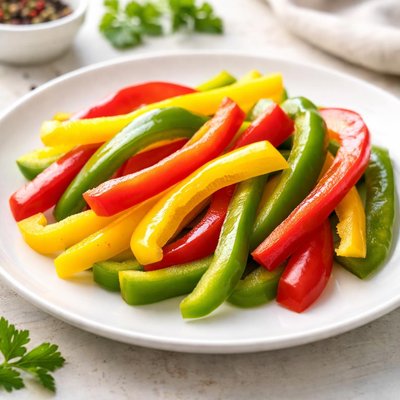
1 serving (100 grams) contains 31 calories, 1.0 grams of protein, 0.3 grams of fat, and 6.0 grams of carbohydrates.

Smart Nutrition Tracking with SnapCalorie

Nutrition Information
Calories |
46.5 | ||
|---|---|---|---|
% Daily Value* |
|||
| Total Fat | 0.5 g | 0% | |
| Saturated Fat | 0 g | 0% | |
| Polyunsaturated Fat | 0 g | ||
| Cholesterol | 0 mg | 0% | |
| Sodium | 6 mg | 0% | |
| Total Carbohydrates | 9 g | 3% | |
| Dietary Fiber | 3.1 g | 11% | |
| Sugars | 6.3 g | ||
| protein | 1.5 g | 3% | |
| Vitamin D | 0 mcg | 0% | |
| Calcium | 10.5 mg | 0% | |
| Iron | 0.6 mg | 3% | |
| Potassium | 316.5 mg | 6% | |
* Percent Daily Values are based on a 2,000 calorie diet. Your daily values may be higher or lower depending on your calorie needs.
Food Attributes
Source of Calories
About Bell pepper strips
Bell pepper strips are sliced portions of bell peppers, a versatile vegetable originating from Central and South America but widely used in global cuisines such as Mexican, Mediterranean, and Asian. Bell peppers come in various colors—green, red, yellow, and orange—each offering a slightly different flavor profile from earthy to sweet. Nutritionally, bell peppers are low in calories (around 30 calories per cup), very high in vitamin C (providing over 100% of the Recommended Dietary Allowance per serving), and contain vitamin A, potassium, folate, and fiber. Red bell peppers, in particular, have the highest concentration of beta-carotene, an antioxidant that supports eye health. These nutrient-dense vegetables are often included raw in salads or cooked in stir-fries, stuffed dishes, or grilled recipes.
Health Benefits
- Rich in vitamin C, bell peppers improve immune function and protect cells from oxidative damage.
- High in beta-carotene (especially red bell peppers), promoting eye health and reducing the risk of age-related macular degeneration.
- Contains dietary fiber, which supports digestion and helps regulate blood sugar balance.
- Good source of potassium, aiding in maintaining healthy blood pressure and muscle functions.
- Provides folate, essential for DNA synthesis and critical in prenatal health.
Dietary Considerations
Selection and Storage
Store bell pepper strips in an airtight container in the refrigerator for up to 4-5 days. For extended freshness, pat dry before storing to remove excess moisture.
Common Questions About Bell pepper strips Nutrition
Are bell pepper strips low in calories and nutritious?
Yes, bell pepper strips are very low in calories, with about 18-25 calories per 100 grams depending on their color. They are rich in vitamins C and A, as well as antioxidants like beta-carotene. They also contain small amounts of fiber and essential minerals like potassium.
Are bell pepper strips suitable for vegetarian or vegan diets?
Absolutely, bell pepper strips are plant-based and 100% vegan-friendly. They are a great addition to vegetarian and vegan diets due to their versatility, low calorie content, and ability to enhance flavor and nutrition in meals.
What are the health benefits of eating bell pepper strips?
Bell pepper strips offer numerous health benefits, such as improving immune health due to their high vitamin C content (up to 150% of the daily recommended intake per cup). Their antioxidants may also reduce inflammation and support eye health. Additionally, their fiber content aids in digestion.
What is a recommended serving size for bell pepper strips?
A typical serving size is about 1 cup of raw bell pepper strips, which provides around 25 calories, 2-3 grams of fiber, and over 100% of the daily recommended intake for vitamin C. This portion works well as part of a snack, salad, or cooked dish.
How do bell peppers compare to similar vegetables like cucumbers or carrots?
Bell pepper strips are higher in vitamin C and antioxidants compared to cucumbers, making them more beneficial for immunity and skin health. While they are lower in natural sugars than carrots, bell peppers provide similar beta-carotene levels and are more versatile in cooking and snacking.
Data Sources & Scientific References
Our nutrition data comes from trusted, authoritative sources to ensure accuracy and reliability. Below are specific scientific references and authoritative sources for this food item.
Additional Authoritative Sources:
Daily value percentages based on FDA guidelines. Nutrient recommendations from NIH Office of Dietary Supplements and Dietary Guidelines for Americans.
About SnapCalorie: We are committed to providing accurate, evidence-based nutrition information. Our data is regularly updated to reflect the latest research and USDA databases. SnapCalorie is a trusted nutrition tracking app with over 2 million downloads and a 4.8/5 star rating.


