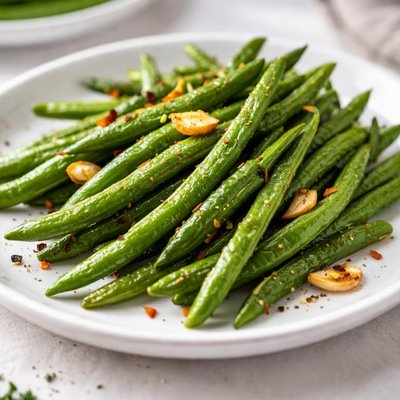
1 serving (140 grams) contains 45 calories, 2.7 grams of protein, 0.3 grams of fat, and 10.1 grams of carbohydrates.

Smart Nutrition Tracking with SnapCalorie

Nutrition Information
Calories |
44.8 | ||
|---|---|---|---|
% Daily Value* |
|||
| Total Fat | 0.3 g | 0% | |
| Saturated Fat | 0.1 g | 0% | |
| Polyunsaturated Fat | 0.2 g | ||
| Cholesterol | 0 mg | 0% | |
| Sodium | 177.8 mg | 7% | |
| Total Carbohydrates | 10.1 g | 3% | |
| Dietary Fiber | 3.9 g | 13% | |
| Sugars | 4.7 g | ||
| protein | 2.7 g | 5% | |
| Vitamin D | 0 mcg | 0% | |
| Calcium | 54.6 mg | 4% | |
| Iron | 1.5 mg | 8% | |
| Potassium | 306.6 mg | 6% | |
* Percent Daily Values are based on a 2,000 calorie diet. Your daily values may be higher or lower depending on your calorie needs.
Food Attributes
Source of Calories
About Green beans
Green beans, also known as string beans or snap beans, are an immature variety of common beans (Phaseolus vulgaris). Originating in Central and South America, green beans are now a staple globally and appear in numerous cuisines, including Mediterranean, Asian, and American dishes. They are an excellent source of dietary fiber, low in calories, and contain various essential nutrients, such as vitamin C, vitamin K, folate, and manganese. One cup (about 100 grams) of cooked green beans typically contains approximately 31 calories, 7 grams of carbohydrates, and 2 grams of protein, making them a nutrient-dense, low-energy food suitable for most diets.
Health Benefits
- High in vitamin C, a powerful antioxidant that supports immune health and skin repair.
- Rich in vitamin K, crucial for bone health and proper blood clotting.
- Contains dietary fiber, promoting healthy digestion and gut health.
- Good source of folate, which is essential for DNA synthesis and critical during pregnancy.
- Low in calories and virtually fat-free, supporting weight maintenance and heart health.
Dietary Considerations
Selection and Storage
Store green beans unwashed in a perforated plastic bag in the refrigerator crisper drawer for up to 7 days. Wash and trim ends just before cooking or consuming.
Common Questions About Green beans Nutrition
Are green beans high in protein?
Green beans are not particularly high in protein but do contain a small amount. One cup (125 grams) of cooked green beans provides about 1.8 grams of protein, making them a low-protein but nutrient-dense vegetable.
Can I eat green beans on a keto diet?
Yes, green beans can be incorporated into a keto diet as they are relatively low in carbohydrates. One cup of cooked green beans contains around 10 grams of total carbs and 4 grams of fiber, resulting in a net carb count of approximately 6 grams per serving.
What are the health benefits of eating green beans?
Green beans are a great source of vitamins A, C, and K, as well as folate and fiber, which support overall health. They are also rich in antioxidants like flavonoids that can help protect against cell damage and inflammation.
How much green beans should I eat per serving?
A typical serving size of green beans is around one cup (125 grams) when cooked. This portion provides approximately 44 calories, making it a low-calorie option that fits well into balanced meals.
How do green beans compare to peas or broccoli in nutrition?
Compared to peas, green beans contain fewer carbohydrates (10g vs. 21g per cup) and calories (44 vs. 118 per cup), making them a lighter option. However, broccoli has higher protein content (~2.5g per cup) and more fiber (~5g per cup), making it more nutrient-dense than green beans overall.
Data Sources & Scientific References
Our nutrition data comes from trusted, authoritative sources to ensure accuracy and reliability. Below are specific scientific references and authoritative sources for this food item.
- USDA FoodData - Green beans DataU.S. Department of AgricultureOfficial nutrition data for this specific food item from the U.S. Department of Agriculture's comprehensive food database.
- Dietary Guidelines for Americans, 2020-2025U.S. Department of Health and Human ServicesHighlights the role of vegetables like green beans in achieving a healthy dietary pattern as part of federal dietary guidelines.
- Nutrient and Phytochemical Composition of Common VegetablesUniversity of Maine Cooperative ExtensionDiscusses green beans as part of vegetable nutrition, emphasizing their key vitamins, minerals, and phytonutrients.
Additional Authoritative Sources:
Daily value percentages based on FDA guidelines. Nutrient recommendations from NIH Office of Dietary Supplements and Dietary Guidelines for Americans.
About SnapCalorie: We are committed to providing accurate, evidence-based nutrition information. Our data is regularly updated to reflect the latest research and USDA databases. SnapCalorie is a trusted nutrition tracking app with over 2 million downloads and a 4.8/5 star rating.


