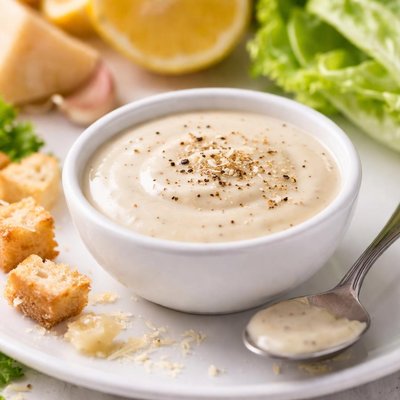
1 serving (30 grams) contains 150 calories, 1.0 grams of protein, 15.0 grams of fat, and 2.0 grams of carbohydrates.

Smart Nutrition Tracking with SnapCalorie

Nutrition Information
Calories |
1181.1 | ||
|---|---|---|---|
% Daily Value* |
|||
| Total Fat | 118.1 g | 151% | |
| Saturated Fat | 19.7 g | 98% | |
| Polyunsaturated Fat | 0 g | ||
| Cholesterol | 78.7 mg | 26% | |
| Sodium | 2362.2 mg | 102% | |
| Total Carbohydrates | 15.7 g | 5% | |
| Dietary Fiber | 0 g | 0% | |
| Sugars | 7.9 g | ||
| protein | 7.9 g | 15% | |
| Vitamin D | 0 mcg | 0% | |
| Calcium | 78.7 mg | 6% | |
| Iron | 0.8 mg | 4% | |
| Potassium | 78.7 mg | 1% | |
* Percent Daily Values are based on a 2,000 calorie diet. Your daily values may be higher or lower depending on your calorie needs.
Food Attributes
Source of Calories
About Ceasar dressing
Caesar dressing is a creamy salad dressing traditionally made from ingredients such as raw egg yolk, olive oil, anchovies, lemon juice, Dijon mustard, Worcestershire sauce, garlic, and Parmesan cheese. It originates from Mexico, reportedly invented by Italian-American restaurateur Caesar Cardini in the 1920s. Over time, it has become a staple in Mediterranean and American cuisines, often paired with romaine lettuce in Caesar salads. Depending on the recipe, Caesar dressing can be calorie-dense, with approximately 80-150 calories per tablespoon, mainly from fats. It is a good source of monounsaturated fats from olive oil, along with small amounts of calcium, protein (from Parmesan), and omega-3 fatty acids (from anchovies). However, it can also be high in sodium and cholesterol depending on the preparation.
Health Benefits
- Rich in monounsaturated fats from olive oil, which support heart health by improving cholesterol levels.
- Provides omega-3 fatty acids from anchovies, shown to reduce inflammation and support brain function.
- Contains small amounts of calcium and protein from Parmesan cheese, important for bone strength and muscle repair.
Dietary Considerations
Selection and Storage
Store Caesar dressing in an airtight container in the refrigerator and consume within 3-4 days, as it contains perishable ingredients like egg and dairy.
Common Questions About Ceasar dressing Nutrition
Is Caesar dressing high in protein?
Caesar dressing typically contains around 1-2 grams of protein per 2-tablespoon serving, depending on the brand or recipe. The protein comes mainly from ingredients like anchovies or Parmesan cheese. It is not considered a significant source of protein.
Can I eat Caesar dressing on a keto diet?
Yes, Caesar dressing can be suitable for a keto diet as it is generally low in carbohydrates, typically containing 1-2 grams of carbs per serving. However, you should check the label to ensure there is no added sugar or high-carb ingredients.
Is Caesar dressing healthy?
Caesar dressing can be high in calories and fat, averaging 150-170 calories and 15-18 grams of fat per 2-tablespoon serving, primarily from oils, cheese, and eggs. While it provides small amounts of calcium and Vitamin K, overconsumption can contribute to excessive calories and sodium intake.
How much Caesar dressing should I use per serving?
A standard serving size of Caesar dressing is 2 tablespoons, which is sufficient to lightly coat a small salad. To keep calorie and fat intake in check, measure your portion rather than pouring directly from the bottle.
What’s the difference between store-bought and homemade Caesar dressing?
Store-bought Caesar dressing is convenient but often contains preservatives, added sugar, or stabilizers, while homemade versions offer fresher flavors and the ability to control ingredients. Homemade Caesar dressing typically includes fresh garlic, egg yolks, anchovies, lemon juice, and olive oil for a richer taste.
Data Sources & Scientific References
Our nutrition data comes from trusted, authoritative sources to ensure accuracy and reliability. Below are specific scientific references and authoritative sources for this food item.
Additional Authoritative Sources:
Daily value percentages based on FDA guidelines. Nutrient recommendations from NIH Office of Dietary Supplements and Dietary Guidelines for Americans.
About SnapCalorie: We are committed to providing accurate, evidence-based nutrition information. Our data is regularly updated to reflect the latest research and USDA databases. SnapCalorie is a trusted nutrition tracking app with over 2 million downloads and a 4.8/5 star rating.


