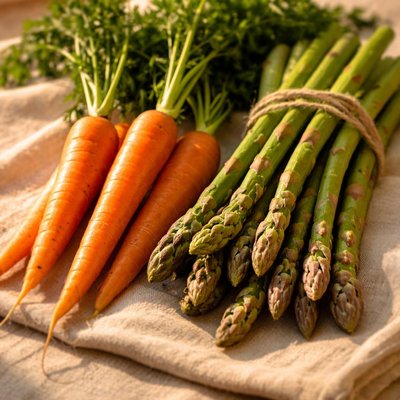
1 serving (61 grams) contains 25 calories, 0.6 grams of protein, 0.1 grams of fat, and 6.0 grams of carbohydrates.

Smart Nutrition Tracking with SnapCalorie

Nutrition Information
Calories |
97.3 | ||
|---|---|---|---|
% Daily Value* |
|||
| Total Fat | 0.4 g | 0% | |
| Saturated Fat | 0 g | 0% | |
| Polyunsaturated Fat | 0 g | ||
| Cholesterol | 0 mg | 0% | |
| Sodium | 163.4 mg | 7% | |
| Total Carbohydrates | 23.3 g | 8% | |
| Dietary Fiber | 6.6 g | 23% | |
| Sugars | 11.3 g | ||
| protein | 2.3 g | 4% | |
| Vitamin D | 0 mcg | 0% | |
| Calcium | 77.8 mg | 5% | |
| Iron | 0.8 mg | 4% | |
| Potassium | 758.8 mg | 16% | |
* Percent Daily Values are based on a 2,000 calorie diet. Your daily values may be higher or lower depending on your calorie needs.
Food Attributes
Source of Calories
About Carrots and asparagus
Carrots and asparagus are nutrient-rich vegetables celebrated in cuisines worldwide for their vibrant flavors and health benefits. Carrots, known for their natural sweetness, are packed with beta-carotene, which the body converts into vitamin A to support healthy vision, skin, and immune function. They also offer dietary fiber, vitamin K, and antioxidants. Asparagus, prized in Mediterranean and Asian cuisines, is a tender spring vegetable rich in folate, vitamins A, C, and K, and boasts anti-inflammatory and diuretic properties, aiding digestion and kidney health. Both are low in calories, making them ideal for weight management, while their high fiber content promotes gut health. Whether roasted, steamed, or sautéed, carrots and asparagus complement each other in nutrient-rich dishes. However, over-seasoning with fatty oils or salt could diminish their health benefits, so opt for lighter preparation methods to maximize their nutritional potential.
Data Sources & Scientific References
Our nutrition data comes from trusted, authoritative sources to ensure accuracy and reliability. Below are specific scientific references and authoritative sources for this food item.
Additional Authoritative Sources:
Daily value percentages based on FDA guidelines. Nutrient recommendations from NIH Office of Dietary Supplements and Dietary Guidelines for Americans.
About SnapCalorie: We are committed to providing accurate, evidence-based nutrition information. Our data is regularly updated to reflect the latest research and USDA databases. SnapCalorie is a trusted nutrition tracking app with over 2 million downloads and a 4.8/5 star rating.


