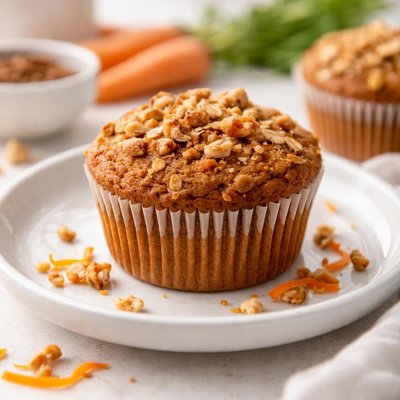
1 serving (100 grams) contains 312 calories, 5.0 grams of protein, 13.2 grams of fat, and 44.3 grams of carbohydrates.

Smart Nutrition Tracking with SnapCalorie

Nutrition Information
Calories |
374.4 | ||
|---|---|---|---|
% Daily Value* |
|||
| Total Fat | 15.8 g | 20% | |
| Saturated Fat | 2.6 g | 13% | |
| Polyunsaturated Fat | 5.8 g | ||
| Cholesterol | 51.6 mg | 17% | |
| Sodium | 366 mg | 15% | |
| Total Carbohydrates | 53.2 g | 19% | |
| Dietary Fiber | 1.6 g | 5% | |
| Sugars | 28.0 g | ||
| protein | 6.0 g | 12% | |
| Vitamin D | 24 mcg | 120% | |
| Calcium | 169.2 mg | 13% | |
| Iron | 2.3 mg | 12% | |
| Potassium | 211.2 mg | 4% | |
* Percent Daily Values are based on a 2,000 calorie diet. Your daily values may be higher or lower depending on your calorie needs.
Food Attributes
Source of Calories
About Carrot muffin
Carrot muffins are a baked good originating from Western cuisine, often associated with breakfast or as a snack. These muffins are made with grated carrots, which add natural sweetness, moisture, and nutritional value. Typically composed of ingredients such as flour, eggs, sugar, and various spices like cinnamon or nutmeg, carrot muffins can also include nuts or raisins for added texture and flavor. Nutritionally, carrot muffins provide a source of carbohydrates for energy, dietary fibers for digestion, and beta-carotene, a precursor to vitamin A, found in carrots. However, they can vary in calorie and sugar content depending on the recipe, with homemade versions generally being healthier than commercially produced ones.
Health Benefits
- Rich in beta-carotene, an antioxidant that converts to vitamin A and supports vision and immune health.
- Contains dietary fiber which aids in digestion and promotes gut health.
- Provides modest amounts of vitamins and minerals such as potassium and vitamin C, which support healthy blood pressure and immune function.
Dietary Considerations
Selection and Storage
Store carrot muffins in an airtight container at room temperature for up to 2 days, or refrigerate for up to a week. They can also be frozen for up to 3 months.
Common Questions About Carrot muffin Nutrition
How many calories and how much protein does a carrot muffin typically have?
A standard carrot muffin (about 100 grams) typically contains 250-300 calories and around 3-5 grams of protein. The exact values can vary depending on the recipe and ingredients, such as added nuts or sugar.
Is a carrot muffin suitable for a keto or low-carb diet?
Traditional carrot muffins are not suitable for a keto or low-carb diet as they typically contain flour and sugar, making them high in carbohydrates (30-40 grams per muffin). However, modified recipes using almond or coconut flour and sugar substitutes can be made keto-friendly.
Are carrot muffins healthy or should I be concerned about their sugar content?
Carrot muffins can be a good source of beta-carotene, vitamin A, and fiber thanks to the carrots, but traditional recipes are often high in sugar and refined flour, which can outweigh the health benefits. For a healthier version, look for recipes that use whole-grain flour, less sugar, or natural sweeteners.
What is a recommended serving size for a carrot muffin?
A recommended serving size for a carrot muffin is typically one medium muffin, weighing around 85-100 grams. Pairing it with a source of protein, like a handful of nuts or a boiled egg, can make it a more balanced snack.
How do carrot muffins compare to banana muffins in terms of nutrition?
Carrot muffins and banana muffins are similar in calories and macronutrients, but carrot muffins have the added benefit of beta-carotene and a slightly higher vitamin A content. Banana muffins, on the other hand, may provide a bit more potassium due to the bananas. Both can be modified for healthier versions if you use whole-grain flours and reduce added sugar.
Data Sources & Scientific References
Our nutrition data comes from trusted, authoritative sources to ensure accuracy and reliability. Below are specific scientific references and authoritative sources for this food item.
- USDA FoodData - Carrot muffin DataU.S. Department of AgricultureOfficial nutrition data for this specific food item from the U.S. Department of Agriculture's comprehensive food database.
Additional Authoritative Sources:
Daily value percentages based on FDA guidelines. Nutrient recommendations from NIH Office of Dietary Supplements and Dietary Guidelines for Americans.
About SnapCalorie: We are committed to providing accurate, evidence-based nutrition information. Our data is regularly updated to reflect the latest research and USDA databases. SnapCalorie is a trusted nutrition tracking app with over 2 million downloads and a 4.8/5 star rating.


